
Most small subdivisions do not feel like heritage projects. You are removing a fence, putting in a driveway and cutting a building pad. But heritage approval in New South Wales is not triggered by the address or the zoning. It is triggered by disturbing the ground, and almost every subdivision does exactly that.
Getting this right is not expensive. Getting it wrong is, because it moves a step you could have priced into a risk you cannot control.
What the law protects, and what harm means
NSW Environment and Heritage states plainly that Aboriginal cultural heritage is protected under the National Parks and Wildlife Act 1974. The same page defines harm broadly: moving an object from its original location, or damaging, defacing or destroying it. Digging a trench, stripping topsoil and cutting a pad can each be harm if an object is present.
The page is equally clear that if you are proposing activities that may cause harm to Aboriginal objects or a declared Aboriginal Place, you need an Aboriginal heritage impact permit before you begin. That is the outcome you are trying to establish is not required, and you establish it by doing the assessment properly rather than by assuming.
Due diligence is a process, not a paragraph
The route that avoids an AHIP for most straightforward sites is due diligence. The Due Diligence Code of Practice sets out the steps: identify whether Aboriginal objects are, or are likely to be, present; determine whether your activity is likely to harm them; and decide whether an application for an AHIP is required. As the publication page puts it, following the code - which is adopted under the National Parks and Wildlife Regulation 2009 - is regarded as due diligence, and it gives a defence against prosecution if an object is later harmed unknowingly.
The code's first question is the one that decides whether any of this applies to you: will the activity disturb the ground surface or any culturally modified trees? The second is whether there are confirmed site records on the Aboriginal Heritage Information Management System, any other information you already know of, or landscape features that are likely to indicate presence. The code names features that raise the likelihood, including land within 200 metres of water, ridgelines and sand bodies. A site search result may be relied on for due diligence purposes for 12 months, which is why last year's desktop study will not carry a new project.
Where the defence stops
Two limits matter for feasibility. First, due diligence does not apply to a declared Aboriginal Place: if one is involved, a permit is required. Second, the defence is not available where you already know there is an object and cannot avoid harming it. If the desktop assessment and site inspection show objects present or likely, the code directs you to further investigation and impact assessment - an archaeological assessment prepared under the companion code of practice, an AHIMS search less than 12 months old, and Aboriginal community consultation in line with the consultation requirements. Test excavation carried out in accordance with that code is not treated as harm; excavation that departs from it is.
A site test to run during due diligence
- Ask whether the project will disturb the ground surface at all, and where.
- Commission a current AHIMS search rather than relying on an old report.
- Check the site against the landscape features the code identifies, including distance to water.
- Check whether any part of the land is a declared Aboriginal Place.
- Write the heritage assessment as a dated feasibility line with a contingency and a time allowance.
- Confirm the assessment is done before exchange if you can, so you are not buying an approval problem.
- Record who is responsible for the step and by when, and hold the evidence in the project file.
The trap
Treating heritage as a compliance box that only applies to large or sensitive sites. The trigger is ground disturbance on land where objects may be present - which includes plenty of ordinary suburban lots near a creek or on a ridge. The second trap is leaving the assessment until after you have lodged, when the finding arrives as a request for further information and an unexplained delay to the program.
You are not expected to solve this yourself. The practical next step is to brief an Aboriginal cultural heritage consultant or archaeologist who prepares due diligence assessments and AHIMS searches for NSW development sites, working with your town planner, and ask them to confirm what applies to your specific lot and whether an assessment or an AHIP is needed. They carry out the assessment; you price the answer.
Sources and boundaries
Sources checked 1 October 2026. Jurisdiction and limits: New South Wales. The legal framework, the meaning of harm, the due diligence defence, the AHIMS search, the limits on that defence and the assessment requirements come from the Due Diligence Code of Practice for the Protection of Aboriginal Objects in New South Wales and from current NSW Environment and Heritage guidance. Whether a particular site requires an AHIP, and the significance of any objects or declared Aboriginal Place, are site-specific questions outside this article.
- NSW Environment and Heritage — Harm to Aboriginal objects and Places. Used for: That Aboriginal cultural heritage is protected under the National Parks and Wildlife Act 1974, the definition of harm, that due diligence cannot be used for declared Aboriginal Places, and the requirement for a report with an AHIMS search less than 12 months old (updated 3 July 2026) (Checked 1 October 2026)
- NSW Environment and Heritage — Due Diligence Code of Practice for the Protection of Aboriginal Objects in New South Wales. Used for: That following the code, which is adopted under the National Parks and Wildlife Regulation 2009, is regarded as due diligence and gives a defence against prosecution, and that a key step is checking AHIMS (Checked 1 October 2026)
- Due Diligence Code of Practice for the Protection of Aboriginal Objects in New South Wales (PDF, 33 pages). Used for: The five-step due diligence process, the landscape features that indicate likely objects, that a search result may be relied on for 12 months, the low impact activity defence, and that the defence is not available for known objects or Aboriginal Places (Checked 1 October 2026)
This article is general education, not personalised planning, legal, financial, tax or building advice. Requirements and outcomes vary by jurisdiction, site, contract, structure and circumstances. Check current information with the relevant authority and appropriately qualified advisers.
 Learn with Jason & AmyBuild practical small-scale property development skills with experienced mentors.Enquire now
Rate this article
Guest rating: select 1 star for poor or 5 stars for great. No account is required.
Leave a comment
Join the discussion. Your email address will not be published.
Frequently asked questions
Does a small subdivision really need a heritage assessment?
It depends on whether the works disturb the ground and on whether objects are or may be present. The Due Diligence Code of Practice's first question is whether the activity will disturb the ground surface or any culturally modified trees, and the second is whether there are site records, other information or landscape features indicating likely presence. A heritage consultant confirms the answer for a specific lot.
What is AHIMS and why does the age of the search matter?
AHIMS is the Aboriginal Heritage Information Management System, maintained by the NSW Government, and searching it is a key step in due diligence. The code states that for due diligence purposes a search result may be relied on for 12 months, so an older desktop study does not support a decision on a new project.
When is the due diligence defence not available?
The defence does not apply to a declared Aboriginal Place, where a permit is required, and it is not available where you already know there is an Aboriginal object and that harm cannot be avoided. In those situations the code directs you to further investigation and impact assessment rather than the due diligence pathway.
Can test excavation avoid harm altogether?
Where a test excavation follows the Code of Practice for the Archaeological Investigation of Aboriginal Objects in NSW, the work is not treated as harm and an AHIP is not needed for the excavation itself. Excavation that does not follow the code, or that occurs where the code does not apply, would require a permit.
Does finding nothing on AHIMS mean I can proceed without more work?
Not on its own. AHIMS records what has been recorded; it does not survey your site. The code also asks you to consider landscape features likely to indicate the presence of Aboriginal objects and any other information you already hold. A consultant's desktop assessment and site inspection are what convert those inputs into a defensible conclusion.
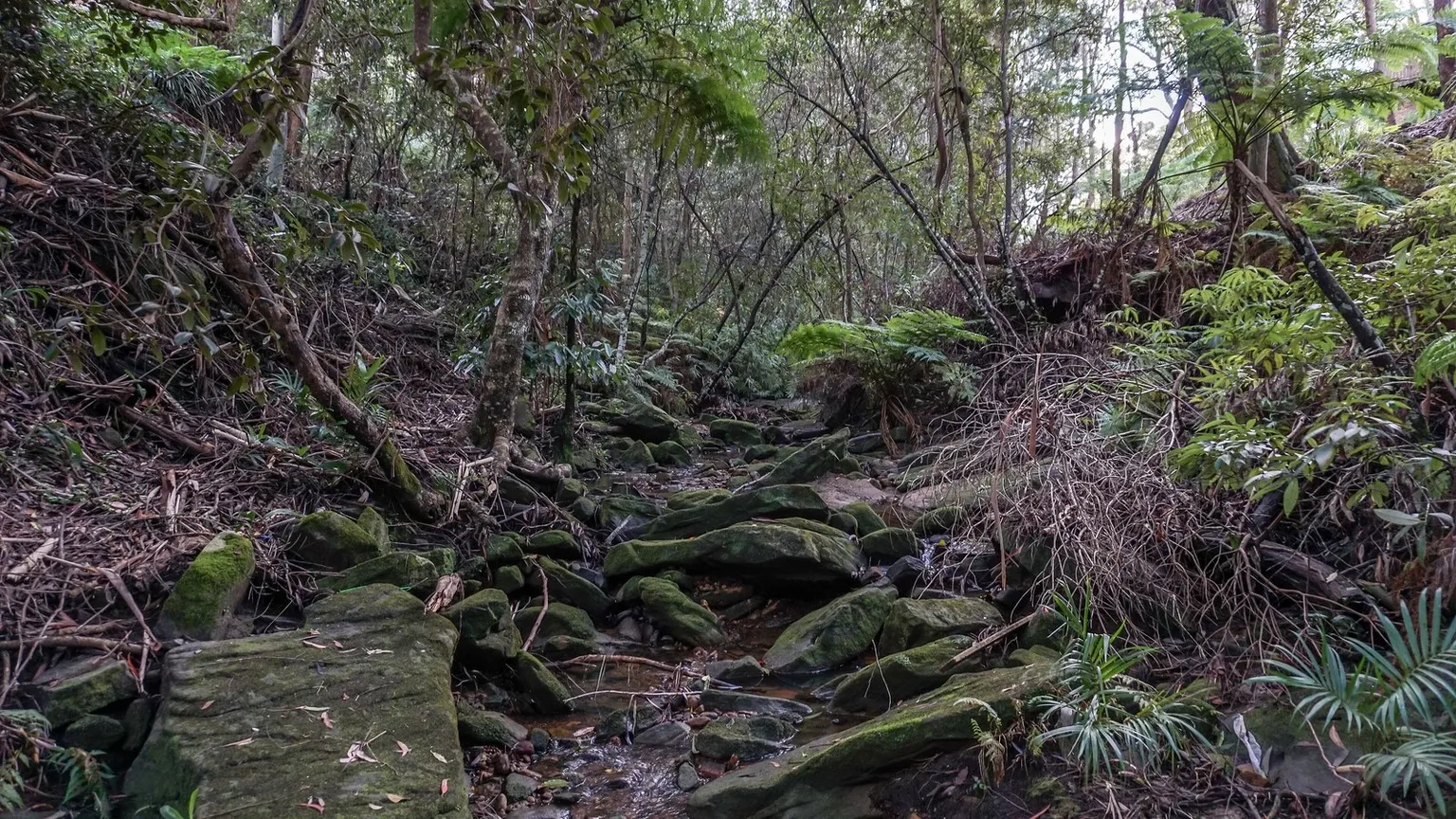
Photo: Ausdangergirl, CC BY-SA 4.0, via Wikimedia Commons.
Loading comments…