
Reported project outcome
$280KReported project profit from a three-townhouse joint venture.
Cheng & EleaProperty development education · Australian courses & mentoring
Spot the opportunity. Test the numbers. Learn how subdivision and small-scale development can create value.
Learn with Jason and Amy: Australian developers, practical mentors and your guides from first idea to project exit.

See the opportunity behind the listing.
Check the costs, constraints and demand.
Turn the opportunity into a profitable project.
Student proof
Press play. Meet the people behind the projects and hear what they learned.
Reported project outcome
$280KReported project profit from a three-townhouse joint venture.
Cheng & EleaReported project outcome
9 figuresReported development-business case study.
SimonReported project outcome
$600KReported profit from one project.
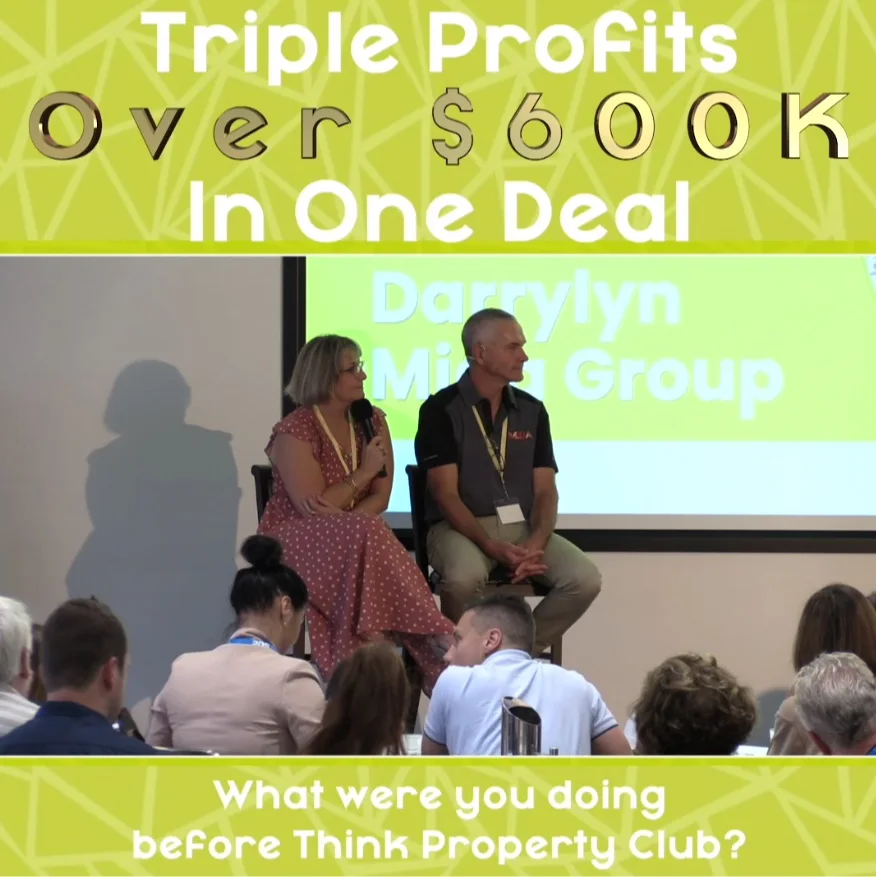
Michael & DarrylynReported project outcome
$1M+Reported profit across three projects in two years.
Student project storyBeyond wages and bills
Become the deal-maker: find the opportunity, test the numbers and bring the team and funding together.
Compare the two paths →Jason & Amy · One project, three stages
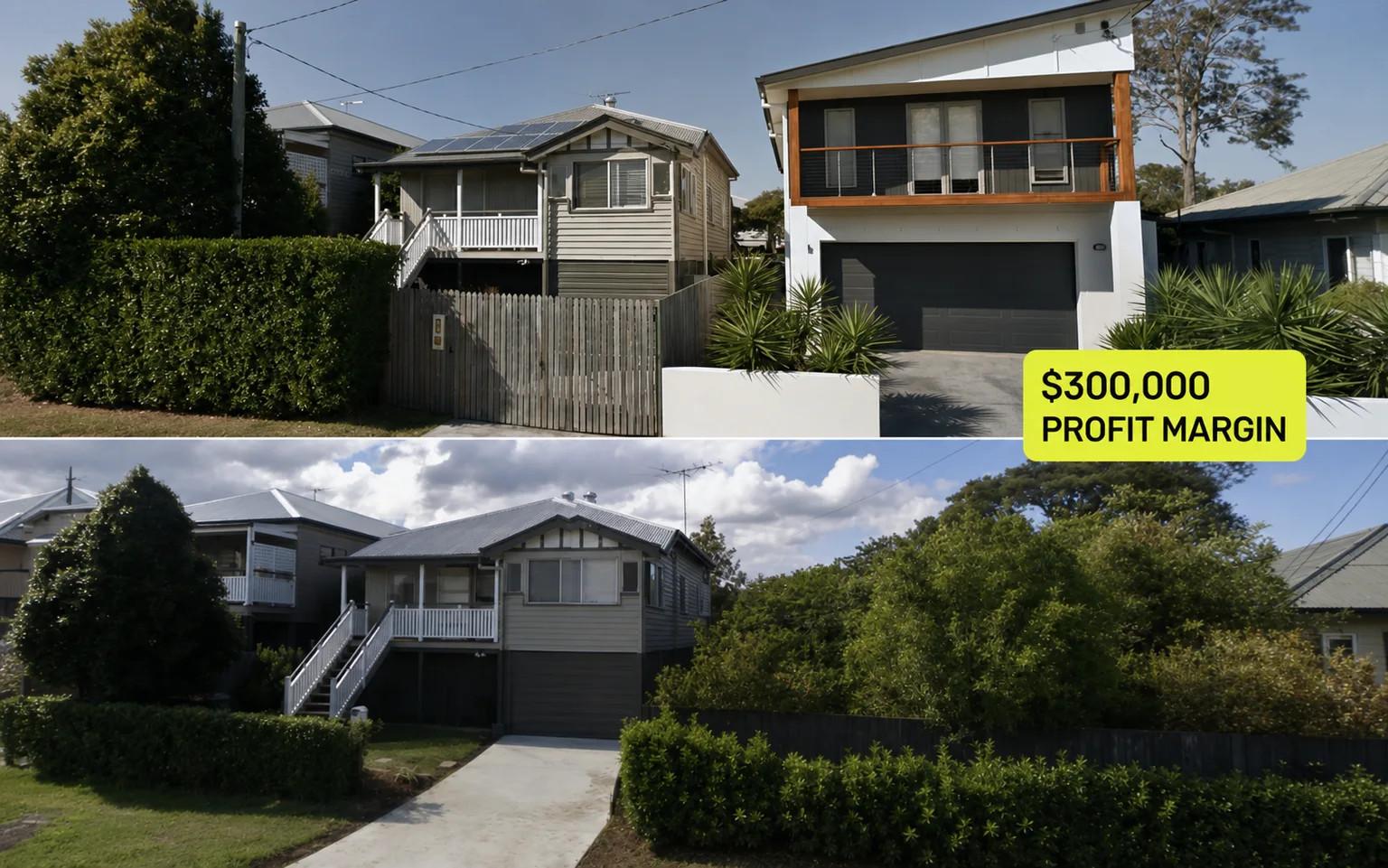
Follow our Limerick Street project in Acacia Ridge, Queensland—from the original property to the cleared site and completed homes.
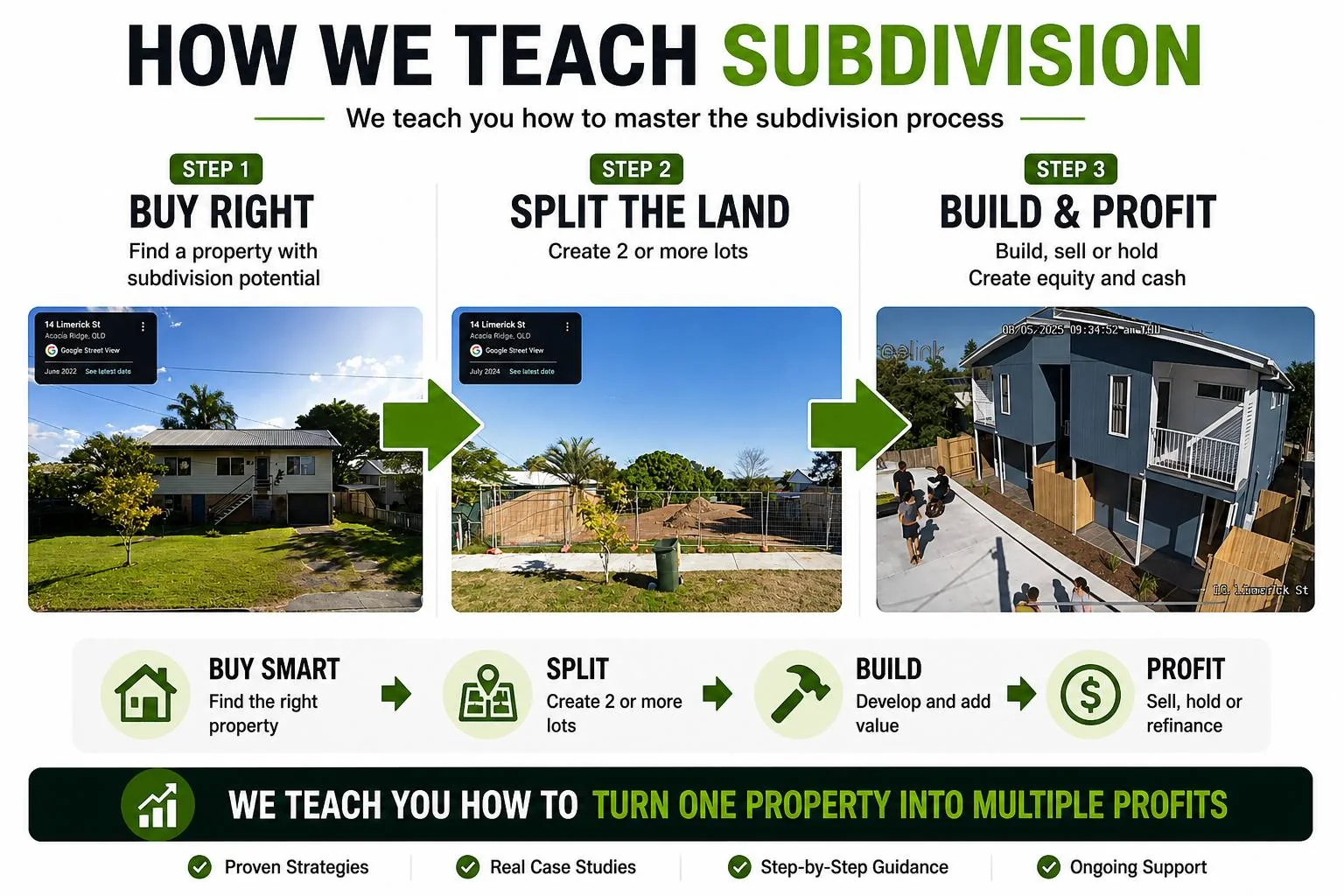
Find a property with subdivision potential.
Create two or more lots.
Build, sell or hold. Create equity and cash.

Experience you can examine
We began on a combined household income below $100,000.
We bought the property, subdivided it and made our first $70,000 profit. That was our starting point.
The next deal was around the corner. We turned one lot into two and made $300,000 profit.
In Sydney, we bought land and built a small house. A different project, using the same approach to finding the deal and testing the numbers.
We used the same subdivision approach as our first deal, this time in Sydney, with a $900,000 profit margin.
People who had tried other property courses came to us. They wanted to learn the system we actually used—and asked us to mentor them.
That’s how our mentoring began. Today, we teach that method through 12 clear stages, with the projects and proof behind it.
We’ve never lost money on a deal.
Around 90% of our deals use no cash of our own. Our funding partners supply the capital; we bring the deal and the work, and share the profits.
We figured out the method. Now you can learn it.
See the projects, understand the partner model and follow our 12-stage system.
Independent Google reviews
Read verified public reviews from people who have learned with Jason, Amy and the team.
“one of the best decisions I've made.”
Norah highlights accessible teaching, inspiring student stories and meeting like-minded people at the 10x Summit.
Selected review excerpt“Very helpful for anyone who wishes to learn more”
Shanshan valued the practical lessons, support and development system drawn from Jason and Amy’s own experience.
Selected review excerpt“the best place to learn and grow”
Tom describes learning new skills, improving his business and support from the mentors and club community.
Selected review excerptA different way to enter property
Buy a finished property—or learn to create the value yourself.
Conventional approach
 ×
×Think Property Club focus
 ✓
✓Find the opportunity, test the numbers and bring the right specialists and funding partners together. Learn the process with our step-by-step system, checklists and templates.
See the system in the free masterclassThe complete training framework
The free masterclass introduces the 4S framework. Think Property Club’s full training shows members how to apply all four across a project.
 01
01A 12-stage roadmap covering site assessment, feasibility, planning, funding, delivery and exit.
 02
02Compare subdivision, planning and construction options against demand, numbers, timeframe and risk.
 03
03Understand the role of planners, designers, builders, finance professionals, solicitors and accountants.
 04
04Use coaching, project feedback and a peer community to pressure-test decisions and keep moving.
Not four unrelated bonuses. One integrated decision framework included in the full training.
Inside the free masterclass
Three practical outcomes. Real Australian examples. No vague theory.
Learn how developers identify sites where planning, subdivision or construction may create value.

See how a viable deal, capital and clearly defined responsibilities may come together through a joint venture.
Follow the journey from feasibility and approvals through finance, construction and the decision to sell or hold.
See the evidence before you act
In the free masterclass, Jason and Amy show you how they assess small-scale projects, test feasibility, structure joint ventures and use the 4S framework to plan each stage.
Free online training · Short access form · Australian examples
Jason & Amy · Our project profits
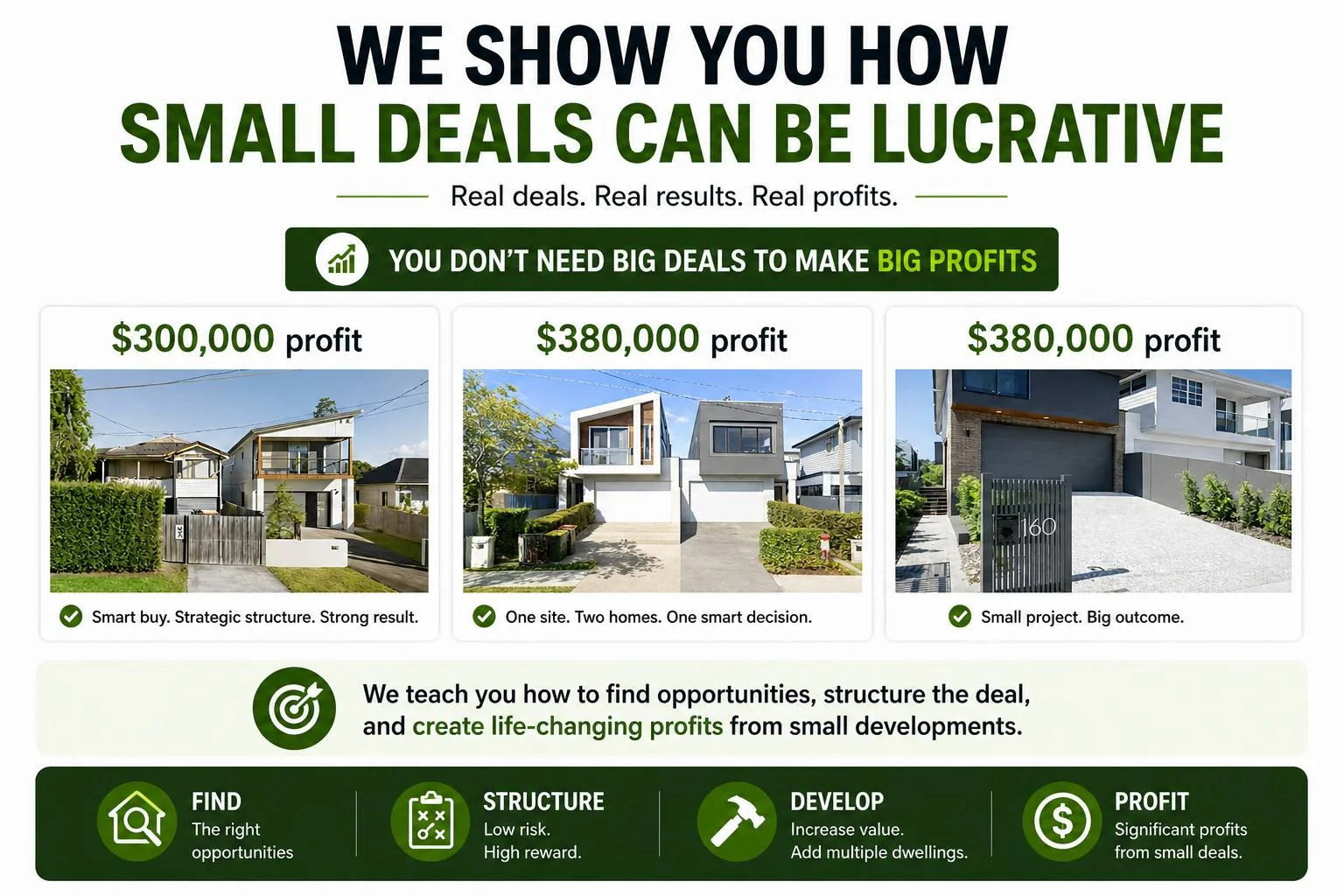
Smart buy. Strategic structure. Strong result.
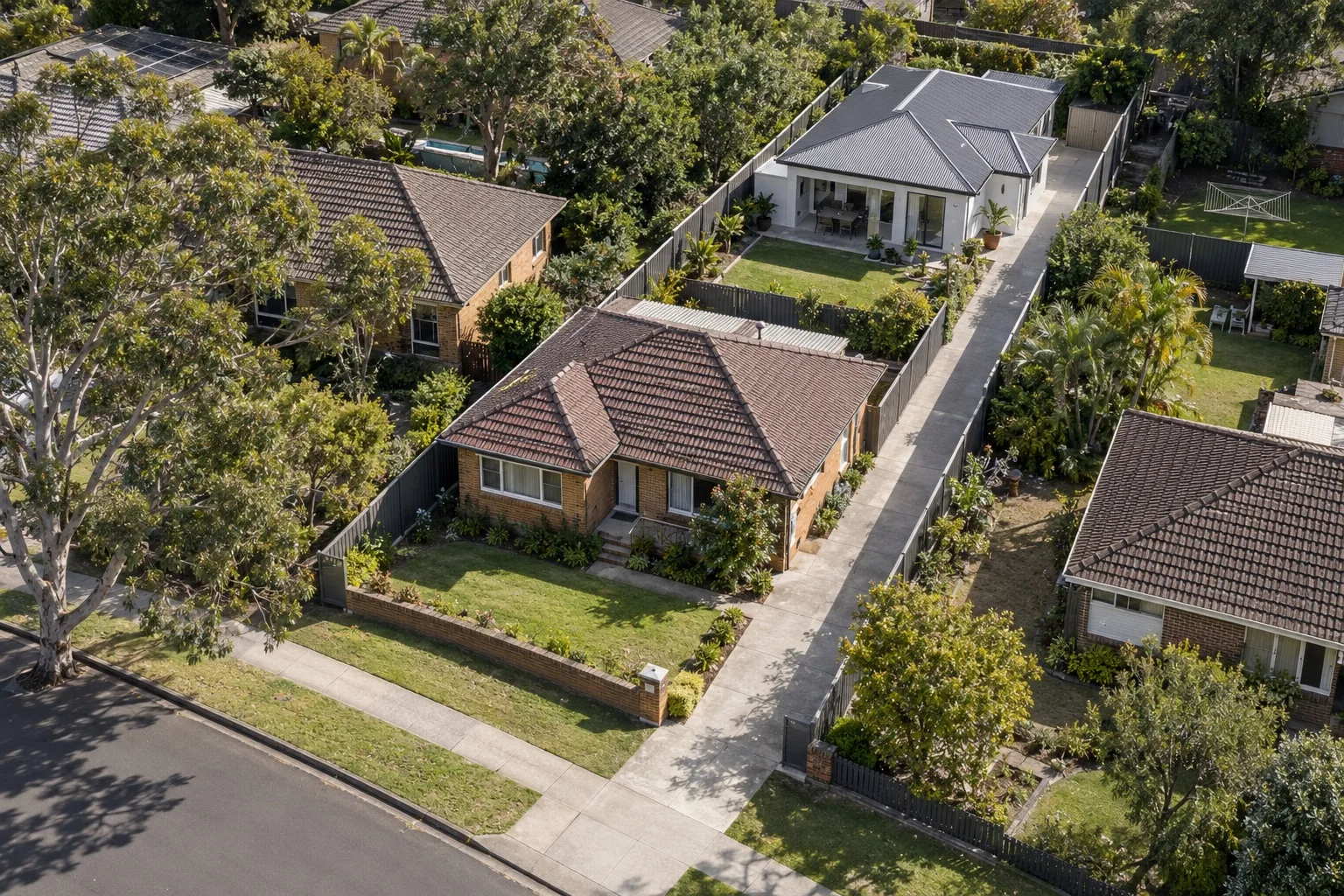
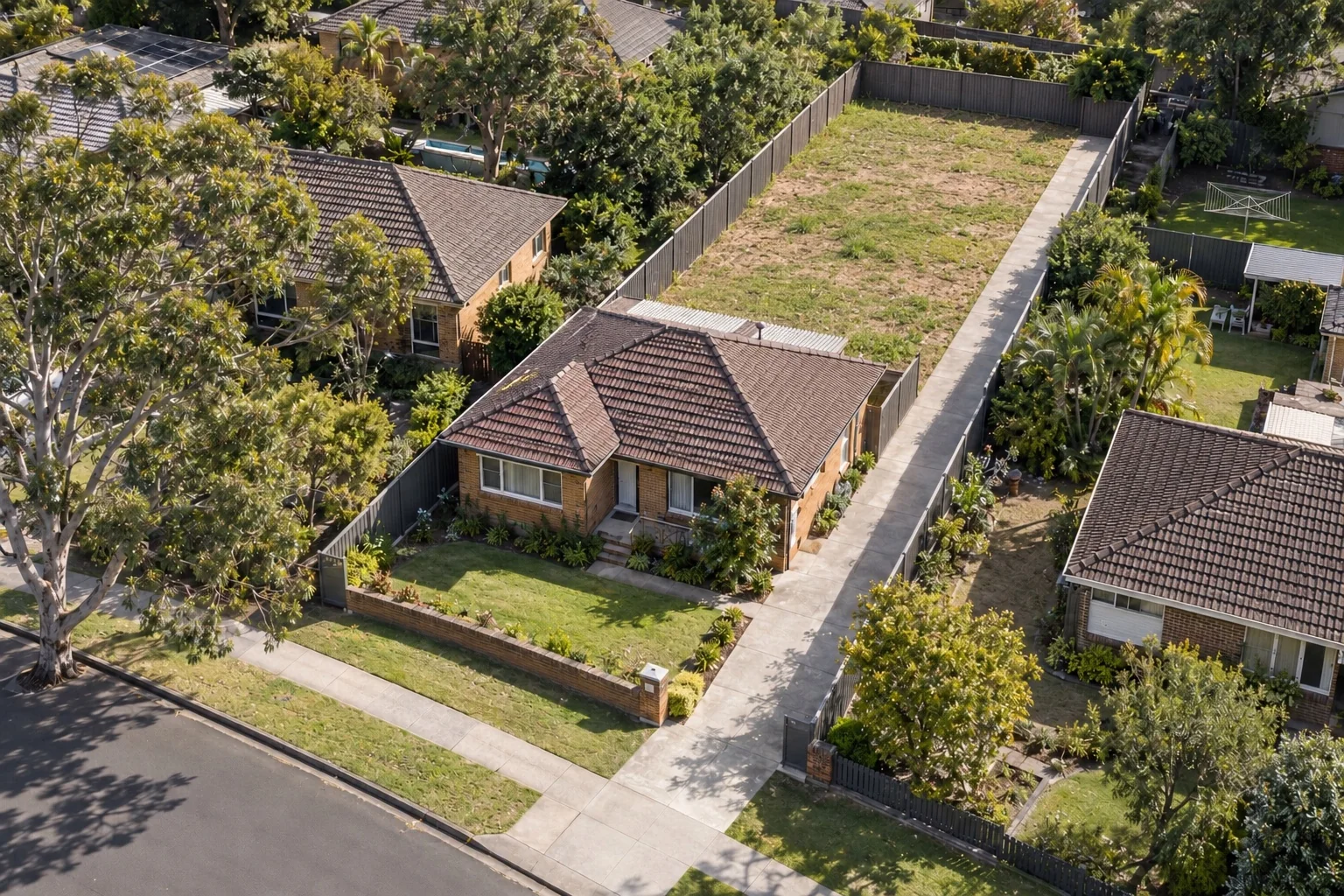
One site. Two homes. One smart decision.
Small project. Big outcome.
Start seeing property differently
Learn Australian property development one decision at a time. Pick the question that interests you—we’ll take you to the practical guide.
01Subdivision & site selection
Learn to spot the potential—and the access, zoning and servicing constraints that can change the deal.
02Feasibility & due diligence
Test the full costs, realistic sale values and a downside scenario before you fall in love with a property.
03Joint ventures & finance
Understand how partners can contribute capital, a site or skills—with clear roles and a viable project.
 04
04Renovation & adding value
Compare ways to improve a property. Match the strategy to the site, the local market and the numbers.
05Construction & delivery
Know which specialists to involve, what needs checking and where site costs can hide.
 06
06Exit strategy & property tax
Compare the next move before you start. Holding, equity access and tax outcomes depend on your circumstances.
Straight answers
Start with clear answers about subdivision, feasibility, funding and training.
Start by learning how to find a suitable site, check local planning rules and build a feasibility study. Allow for acquisition, approvals, construction, finance and exit costs before committing. The free Think Property Club masterclass introduces this process.
Possibly. Zoning, minimum lot size, overlays, driveway access, services and council requirements determine what is feasible. A town planner and a detailed feasibility assessment should test the site before purchase or development.
It compares realistic project revenue with the full costs of buying, approving, funding, building and selling or holding the development. It also tests timeframes, contingencies and downside scenarios.
Partners agree how to contribute capital, skills or a site, manage responsibilities and share outcomes. A suitable deal, due diligence and professionally prepared legal agreements are essential. The masterclass shows how these arrangements fit together.
You can start by finding and assessing a deal. The masterclass explains how capital partners and joint ventures can bring the project team and funding together.
No. The masterclass starts with the fundamental decisions and shows how the complete process fits together.
Build a detailed feasibility: compare realistic end values with purchase, approvals, construction, finance and exit costs. The training shows you how to test the margin before proceeding.
Yes. The examples, terminology, specialists and project context are Australian.
Your next step
Don’t settle for an empty bank balance. Keep your job, learn to become the deal-maker and put our property development process to work. Start with the free masterclass.
Watch the free masterclass Learn with us. Follow the method.
We’ve done the work. Now you follow the system.
You don’t have to work it all out yourself. Follow a clear system shaped by 18+ years of hands-on property development.
Tomorrow gets interrupted. Start now. Make today the day you begin building your property knowledge and a different financial future.
Start now · Watch the free masterclass