
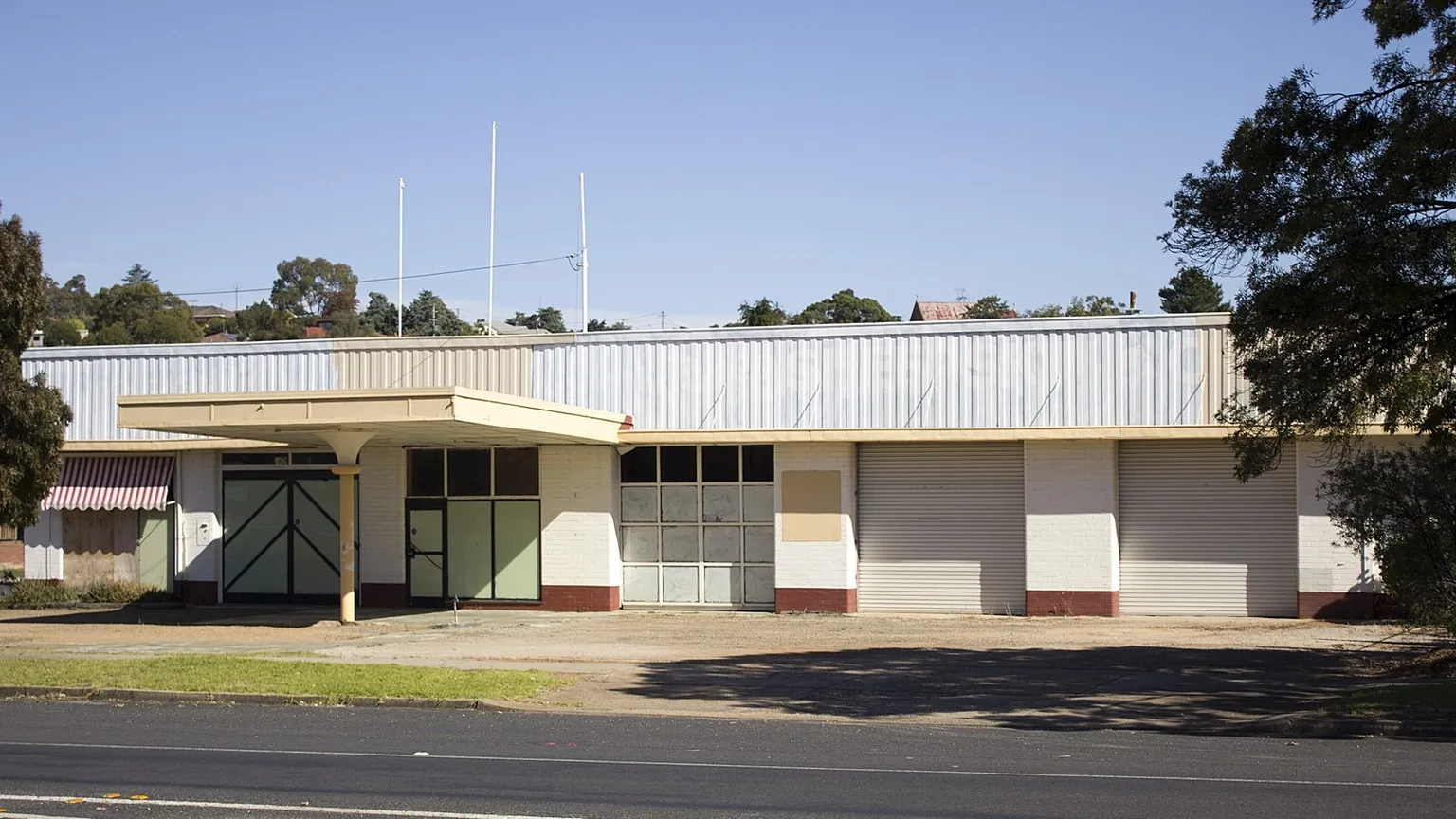
Most first-time developers treat contamination as a technical detail to be sorted out by the environmental consultant during the application. In New South Wales that sequencing is the expensive mistake. The consent authority cannot approve the development unless it has considered whether the land is contaminated and is satisfied about its suitability — and the evidence that satisfies it is evidence you have to commission.
Two regulatory tiers, one site
Contamination in NSW is handled in two places. The NSW Environment Protection Authority explains that the EPA uses its powers under the Contaminated Land Management Act 1997 to deal with contamination significant enough to warrant regulation given the site’s current or approved use, while planning authorities deal with other contamination through the planning and development process, including the State Environmental Planning Policy (Resilience and Hazards) 2021 and the Managing Land Contamination Planning Guidelines (NSW EPA — Contaminated land). The EPA’s guidance also records that this planning process determines what remediation is needed to make the land suitable for a different use.
That sentence is the reason contamination belongs in due diligence and not in construction. You are not only asking whether the soil is dirty. You are asking what would have to be done to make this land suitable for the use you intend — and whether that cost and time fits in the deal.
What council must be satisfied about, and how it gets there
City of Sydney’s Contaminated Land Policy shows how the framework lands in practice. Its planning assessment section records that the City carries out an initial evaluation in accordance with Chapter 4 of the SEPP (Resilience and Hazards) 2021 — Remediation of land — and the Land Contamination Planning Guidelines, and that where circumstances indicate contamination may be present which may require remediation to make the land suitable for a particular use, the following may be required: a preliminary site investigation, a detailed site investigation, a remedial action plan, a site validation report, a site audit statement and an environmental management plan (City of Sydney — Contaminated Land Policy).
Read that as a ladder, not a menu. Each rung takes time: desk study and site inspection, then intrusive sampling and laboratory analysis, then a plan, then works, then validation. If you discover the ladder at the information-request stage of your development application, you have added all of that time to the end of your program.
The land use history is the first screening test
The framework does not apply only to obviously industrial sites. The NSW planning guidelines identify potentially contaminating activities including those industries and associated chemicals listed in Appendix A of the Managing Land Contamination Planning Guidelines, and the EPA’s duty-to-report guidelines describe on-site and off-site soil contamination triggers together with indicators of contamination.
Practically, that means a site with any commercial or industrial history — a service station, a workshop, a dry cleaner, a depot, agricultural chemical use, a fuel or chemical storage yard — should be screened, and a site with an incomplete history on land proposed for a sensitive use should be screened too. The absence of a record is not the same as the absence of a risk.
What a planning certificate does and does not tell you
City of Sydney’s policy sets out the contaminated land information that can appear on planning certificates under section 10.7(2) and 10.7(5) of the Environmental Planning and Assessment Act 1979: information on matters prescribed under the Contaminated Land Management Act, an investigation area notification, EPA notices and orders, site audit statements, environmental management plans, and significantly contaminated land notifications among others. It also notes that the additional section 10.7(5) material is provided at the City’s discretion.
So the certificate is a screening tool and a risk flag, not a clearance certificate. Order the council-held register search, read what is recorded, and then commission the site-specific work that answers the question the certificate cannot answer: is this land suitable for my intended use?
The duty to report is a duty on the landowner
The EPA’s guidelines state that the duty to report contamination to the EPA arises when the land is contaminated by a substance present at levels above those specified by the guidelines and where certain other factors are met (NSW EPA — Duty to report contamination guidelines). City of Sydney's policy defines the duty to report as a statutory requirement for landowners and parties responsible for land contamination.
This is worth understanding before you buy, not after. Contamination investigations can be the moment a previously unknown issue becomes something the owner must notify. Ask your consultant, in writing, whether the duty to report has been triggered on the site — and record that answer in your due diligence file.
The common trap: treating a clean certificate as a green light
The most common version of this mistake is straightforward. The section 10.7 certificate comes back without a contamination notation, the buyer reads that as ‘clean’, the development application is lodged, and council’s initial evaluation asks for a preliminary site investigation because of the site’s historical use. The investigation finds nothing fatal, but the program has slipped by the weeks it took to organise, and the finance facility is now drawing against a project that has not started.
The other version is worse. The investigation finds something, the remediation cost is material, and the deal no longer stacks up — but the contract is unconditional.
A contamination due diligence checklist
- Assemble the land use history from every available source: title records, aerial photography over time, council records, EPA registers and your own site inspection.
- Order the council planning certificate and the council’s contaminated land register search, and read the notations rather than the summary.
- Screen the history against the potentially contaminating activities in the planning guidelines and record your conclusion.
- Engage a contaminated land consultant before the development application is prepared, not after an information request.
- Ask for a written conclusion on suitability for the proposed use, and on whether further investigation is required.
- Ask whether the duty to report contamination to the EPA has been triggered.
- Price any remediation into the feasibility, with a contingency and a program allowance for validation.
- Make the contract conditional on the investigation outcome until the report is in your hands.
The feasibility test
Add three numbers to your model before you make an offer: the cost of the investigation itself, the cost of remediation if the investigation concludes it is needed, and the extra holding time for the whole sequence. Then ask whether the deal survives if all three land at the pessimistic end. If remediation is what makes the site affordable in the first place, you are buying a remediation project with a housing project attached — and it should be priced and programmed that way, not treated as a footnote to the acquisition.
What a student should do next
You are not expected to assess contamination yourself. The contaminated land consultant owns the technical answer: scope the investigation against the current NSW EPA guidelines and the planning guidelines, and give you a plain conclusion on whether the land is suitable for the proposed use or what remediation would be required. Where a consent authority needs independent verification, a NSW EPA accredited site auditor reviews that work and reaches their own conclusion. Your town planner confirms when a report is triggered and what council will require, and your property lawyer confirms any EPA notice, order or site audit statement affecting the title. Commission the consultant early, ask for the conclusion in writing, and make your offer conditional until you have it.
Sources and boundaries
Sources checked 6 October 2026. Jurisdiction and limits: This guide is limited to New South Wales and to the framework in the Contaminated Land Management Act 1997, the State Environmental Planning Policy (Resilience and Hazards) 2021 and the Managing Land Contamination Planning Guidelines. A clean planning certificate is not a warranty that no contamination exists: councils record prescribed matters, and additional information is provided at council discretion. Investigation scope, remediation approach and suitability conclusions are site-specific and must be reached by a suitably qualified consultant following the current NSW EPA guidelines.
- NSW Environment Protection Authority — Guidelines on the Duty to Report Contamination under the Contaminated Land Management Act 1997 (PDF). Used for: Sets out the duty of landowners and those responsible for contamination to report it to the EPA, stating that the duty to report contamination to the EPA arises when the land is contaminated by a substance present at levels above those specified in the guidelines and where certain other factors are met, and describing the notification triggers, the indicators of contamination and the situations in which the duty does not arise. (Checked 6 October 2026)
- NSW Environment Protection Authority — Contaminated land. Used for: Describes the two-tier NSW framework: the EPA uses its powers under the Contaminated Land Management Act 1997 to deal with contamination significant enough to warrant regulation given the site's current or approved use, while planning authorities deal with other contamination through the planning and development process, including the State Environmental Planning Policy (Resilience and Hazards) 2021 and the Managing Land Contamination Planning Guidelines, and that process determines what remediation is needed to make the land suitable for a different use. (Checked 6 October 2026)
- City of Sydney — Contaminated Land Policy (PDF, December 2025). Used for: Defines the Duty to Report as a statutory requirement for landowners and parties responsible for land contamination to report contamination to the NSW EPA, defines a Preliminary Site Investigation, a Detailed Site Investigation, a Remedial Action Plan, a Site Validation Report and a Site Audit Statement, records that the City carries out an initial evaluation in accordance with Chapter 4 of the SEPP (Resilience and Hazards) 2021 and the Land Contamination Planning Guidelines, and lists the categories of contaminated land information that can appear on planning certificates under section 10.7(2) and 10.7(5) of the Environmental Planning and Assessment Act 1979, including investigation areas, EPA notices and orders, and site audit statements. (Checked 6 October 2026)
- NSW Environment Protection Authority — Managing contaminated land in NSW. Used for: The EPA's guidance hub for managing contaminated land, including the role of planning authorities, engaging a consultant, the duty to report contamination, and notified and regulated contaminated land. (Checked 6 October 2026)
This article is general education, not personalised planning, legal, financial, tax or building advice. Requirements and outcomes vary by jurisdiction, site, contract, structure and circumstances. Check current information with the relevant authority and appropriately qualified advisers.
 Learn with Jason & AmyBuild practical small-scale property development skills with experienced mentors.Enquire now
Rate this article
Guest rating: select 1 star for poor or 5 stars for great. No account is required.
Leave a comment
Join the discussion. Your email address will not be published.
Frequently asked questions
Why does contamination matter before I lodge a development application rather than after?
Because the consent authority's obligation has to be satisfied in order to determine the application. In NSW the planning framework requires a consent authority to consider whether land is contaminated and to be satisfied the land is suitable, or will be suitable after remediation, for the proposed use. That means the investigation has to exist before the determination — and investigations take time, because intrusive work needs access, mobilisation, laboratory turnaround and reporting. Leaving it until council asks can turn an information request into a months-long delay.
Will a section 10.7 planning certificate tell me whether a site is contaminated?
Not completely. City of Sydney's Contaminated Land Policy records the categories that can appear on planning certificates under section 10.7(2) and 10.7(5) of the Environmental Planning and Assessment Act 1979 — including investigation areas, EPA notices and orders, site audit statements and significantly contaminated land notifications — and notes that the additional section 10.7(5) information is provided at the council's discretion. The practical lesson is that a certificate shows what has been recorded, not necessarily everything that has been suspected, and a clean certificate is not a warranty.
When does a landowner or developer have to report contamination to the EPA?
The NSW EPA's duty-to-report guidelines state that the duty to report contamination to the EPA arises when the land is contaminated by a substance present at levels above those specified in the guidelines and where certain other factors are met, and the guidelines set out the notification triggers. City of Sydney's policy defines the duty to report as a statutory requirement for landowners and parties responsible for land contamination. Consultants are expected to draw a client's attention to a potential duty to report, so ask your consultant directly whether it arises on your site.
What is the difference between a preliminary and a detailed site investigation?
A preliminary site investigation is aimed at identifying past or present potentially contaminating activities and determining whether further investigation is needed; City of Sydney's policy defines it that way, and its planning assessment section lists the documents that may be required in sequence — preliminary site investigation, detailed site investigation, remedial action plan, site validation report, site audit statement and environmental management plan. A detailed investigation characterises the contamination enough to assess whether the land is suitable for the proposed use. The sequence matters: you cannot skip straight to a conclusion, and each stage costs time.
Where does a site auditor fit in?
City of Sydney's policy defines site audits as an independent review by a site auditor accredited by the NSW EPA under the Contaminated Land Management Act 1997, and defines a site auditor as a person accredited to conduct site audits who independently reviews contaminated land consultant reports to ensure consistency with NSW EPA guidance. Auditors are engaged when the consent authority needs independent verification it can rely on, and if remediation is needed to make a site safe for a sensitive use, that suitability generally has to be established before the development application is determined — which means the auditor's involvement is usually planned, not improvised.
Photo: 'Former service station and Junee Sheepskin and Craft store building in Junee' by Bidgee, Wikimedia Commons, CC BY-SA 3.0 AU.
Loading comments…