
The auction is on Saturday. You have the contract, a feasibility you are broadly happy with, and a limit in your head. Then someone in the crowd asks whether the sewer runs through the back corner, and you realise you do not know.
At auction that question is not academic. It is the difference between a deal and an expensive mistake, and the moment to answer it has already passed.
The deal question: what am I committing to, and when?
An auction purchase is not a conditional purchase. NSW Government guidance on buying property at an auction states that if you are the successful bidder you must sign the sale contract and pay a deposit on the spot, usually 10 per cent of the purchase price, and that there is no cooling-off period when you buy at auction. The contract on display is the contract you sign, and its terms govern.
For a home, that means you have inspected the building. For a development site, it means something much broader: you have already answered the planning, title, servicing, levels and feasibility questions that a private treaty contract would let you answer under conditions.
The mechanics worth knowing before you walk in
Two sets of rules matter on the day. The first is registration. In NSW you must give the selling agent your name and address and show proof of your identity to bid on residential and rural property, and your details are recorded in the bidders record. Registering does not oblige you to bid.
The second is the vendor bid. NSW Fair Trading's guidance for agents explains that only one bid may be made on behalf of the vendor by the auctioneer, that the auctioneer must state that it is a vendor's bid, and that the right to bid must be notified in the conditions of sale, which must be clearly displayed and available for inspection before the auction commences. It is an offence for an auctioneer to invent bids, and the guidance notes a fine of up to $11,000 for accepting a bid from an unregistered person.
None of that tells you anything about the land. It only tells you how the sale will be conducted. The land questions are yours to answer in advance, and the agents' obligations page makes clear that the bidders record and the conduct requirements are about the process, not about the property's attributes.
The checks a capable student would run, in order
- Read the contract with a property lawyer before the auction. Not the front page - the special conditions, the inclusions, the settlement period, the deposit terms and anything that survives settlement. There is no cooling-off to fall back on.
- Get the title and any restrictions checked. Easements, covenants, restrictions on use and rights of way are the classic development killers, and they are invisible from the street.
- Confirm the planning position in writing. Zoning, overlays, minimum lot size, heritage, flood and bushfire controls. A planner's written advice is evidence; a verbal view at an inspection is not.
- Commission the survey, levels and servicing enquiries. Where the boundaries are, how the site falls, where stormwater can discharge, and whether water, sewer and power capacity exist for the density you are planning.
- Make finance unconditionally available. An auction contract is not subject to finance. Confirm with your broker or lender what you can borrow and have the approval in place before auction day.
- Fix your walk-away number from evidence. Set the limit from comparable sales, your feasibility and your contingency, and write it down before you go. The reserve price is usually not disclosed in advance, so the guide is not a ceiling indicator.
The trap: buying the address and pricing the project later
The trap is buying a site because it looks right and doing the deeper work afterwards, on the assumption that a problem can be negotiated or financed around. At auction there is nothing to negotiate: the contract is unconditional and the deposit is paid on the spot.
The second version is subtler. A development site can look simple and still carry a constraint that only appears in a document - a drainage easement through the middle of the block, a covenant limiting the number of dwellings, a heritage item, or a servicing constraint that caps the yield. None of those are visible from the footpath, and all of them are answerable in advance if you ask the right specialists.
What it costs to prepare properly
Pre-auction due diligence costs real money, and there is a genuine commercial decision about how much to spend on a property you might not win. The sensible approach is to spend in stages: cheap searches and a planner's controls review first, then the survey and servicing enquiries once the site is a serious candidate, and the full feasibility only when you intend to bid. What you should not do is skip the stages and substitute optimism for evidence.
The Think Property Club lesson
Auction is the purest test of whether you have done the work. There is no condition to hide behind, so the quality of your process is the quality of your protection. That is the whole argument for treating development as a business with a system rather than a series of opportunities.
You are not expected to answer the technical questions yourself. You are expected to recognise them, and to have briefed the property lawyer, the town planner, the surveyor, the civil engineer and your lender before the hammer falls, so that the answers are on the table while you can still walk away.
Your next actions before auction day
- Book the contract review with a property lawyer as soon as the contract is available, and get the title restrictions checked.
- Ask a town planner for a short written controls review, including the minimum lot size, overlays and the likely approval pathway.
- Commission the survey and the servicing enquiries for serious candidates, and get a civil engineer's initial view on drainage and access.
- Have finance unconditionally available and the deposit in cleared funds before you attend.
- Write your maximum bid down, with the evidence behind it, and do not change it in the crowd.
Sources and boundaries
Sources checked 29 September 2026. Jurisdiction and limits: New South Wales information. The auction mechanics described here, including bidder registration, the bidders record, the single vendor bid and the absence of a cooling-off period, are drawn from NSW Government and NSW Fair Trading published guidance and apply in NSW. Auction practice and disclosure obligations differ in other states and territories and must be checked with the relevant agency. Nothing here is legal advice on a particular contract, and nothing here changes the terms of a contract of sale: the contract on display at the auction is the contract the buyer signs, and its terms govern. Requirements, penalties and disclosure obligations change, so confirm the current position at the time of use.
- NSW Government — Buying property at an auction. Used for: Bidder registration and identity, the bidders record, reserve price and the absence of cooling-off (Checked 29 September 2026)
- NSW Government — Auctions: responsibilities for property agents. Used for: The bidders record contents, the single vendor bid and its announcement, and penalties for invented bids (Checked 29 September 2026)
This article is general education, not personalised planning, legal, financial, tax, privacy, safety or building advice. Requirements and outcomes vary by jurisdiction, site, contract, structure and circumstances. Check current information with the relevant authority and appropriately qualified advisers.
 Learn with Jason & AmyBuild practical small-scale property development skills with experienced mentors.Enquire now
Rate this article
Guest rating: select 1 star for poor or 5 stars for great. No account is required.
Leave a comment
Join the discussion. Your email address will not be published.
Frequently asked questions
Is there a cooling-off period if I buy at auction?
No. NSW Government guidance states plainly that there is no cooling-off period when you buy at auction. If you are the successful bidder you must sign the sale contract and pay a deposit on the spot, usually 10 per cent of the purchase price. That is why the due diligence has to be finished before the auction, not after it.
Can I make my bid subject to finance or a building inspection?
No, not at auction. The contract is the contract on display, and it is not conditional on your finance approval or your inspections unless the seller has already agreed to such a term in the contract. Arrange finance to be unconditionally available and complete the inspections before the auction date.
Do I have to register to bid?
Yes, for residential and rural property in NSW. You must give the selling agent your name and address and show proof of your identity, and your details are recorded in the bidders record. Registering does not oblige you to bid; it only gives you the right to bid.
Can the auctioneer bid on behalf of the seller?
Yes, once. NSW Fair Trading's guidance states that only one bid may be made on behalf of the vendor by the auctioneer, that the auctioneer must state that it is a vendor's bid, and that the right to bid must be notified in the conditions of sale, which must be displayed before the auction. It is an offence for an auctioneer to invent bids.
What development due diligence should be done before an auction?
At a minimum: the planning controls and overlays for the site, the title and any easements or covenants, the survey and levels, servicing capacity for water, sewer, power and drainage, the approval pathway and its likely timing, and a full feasibility on conservative numbers. Each of those is a specialist task, and each has to be completed before the hammer, because afterwards there is no contractual escape.
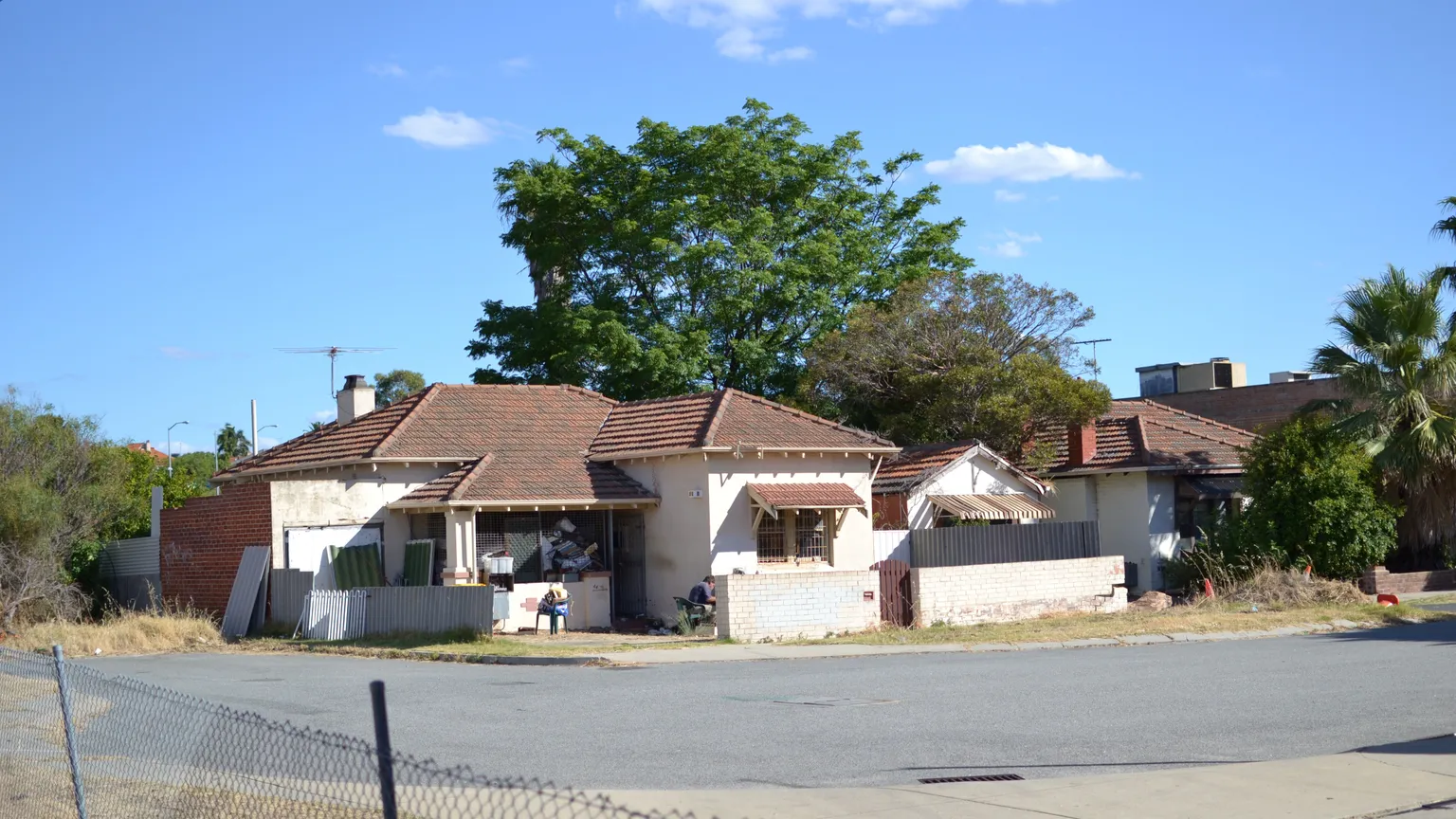
Photo: Sam Wilson, CC BY-SA 2.0, via Wikimedia Commons.
Loading comments…