
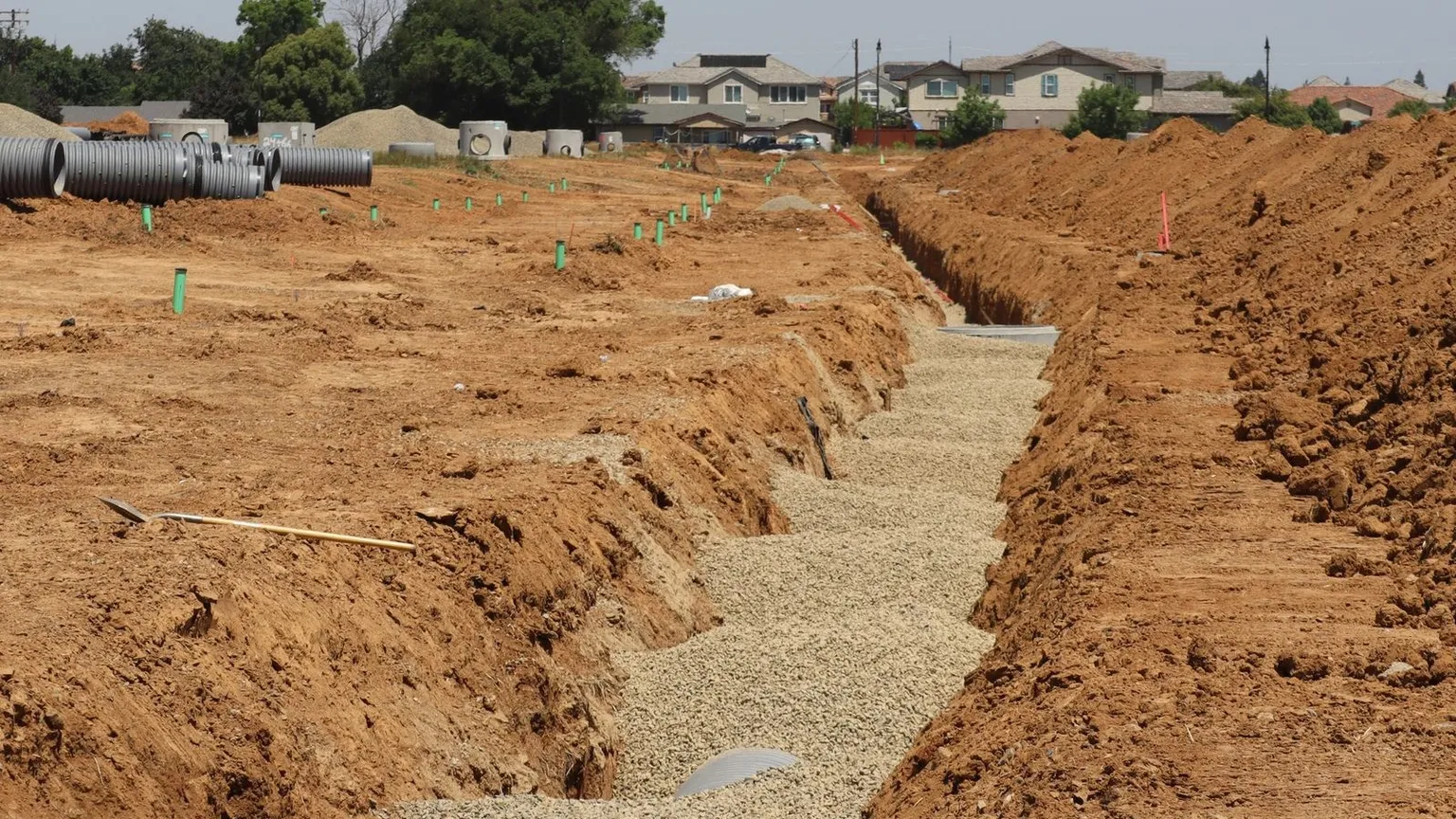
Five years sounds like a long time to start a project. It is not, when the site needs finance, a builder, a construction certificate and a tenant to move out first. Every year a NSW development consent sits unused, the risk that it lapses quietly grows, and a lapsed consent is not a delay. It is the loss of the approval, and with it the value you paid for the site.
The trap is specific and it catches people who think they have preserved the consent when they have not. In New South Wales, survey pegs and soil testing do not stop the clock.
The deal question: has the consent actually been activated?
NSW Department of Planning's guide to the post-consent process puts the rule plainly: your development consent usually lasts five years after it is given, a consent authority may reduce that when granting the consent, and if that happens you may seek to extend the approval period by another year from the consent authority. The consent will not lapse if building, engineering or construction work is physically commenced on the land before the lapsing date, and the commencement of the work must be lawful and related to the development consent.
Two words in that paragraph do the work. "Lawful" means the work has to be work you were entitled to do, which in practice means a construction certificate is in place and the required appointment and notices have been made. "Related" means the work has to relate to what the consent approves.
What does not count
Here is the part most students have never read. Clause 96 of the Environmental Planning and Assessment Regulation 2021 sets out a list of acts that are not taken to be physical commencement, and the Housing Industry Association's summary of lapsing of development consents in NSW reproduces it: creating a bore hole for soil testing, removing water or soil for testing, carrying out survey work including the placing of pegs or other survey equipment, acoustic testing, removing vegetation as an ancillary activity, and marking the ground to indicate how land is to be developed.
Those are exactly the works a developer does first. A geotechnical investigation, a feature and level survey, a bit of clearing, some pegs and paint marks. Do all of that and, on the regulation as written, the consent has not been physically commenced. This stricter test applies to development consents granted on or after 15 May 2020; it does not apply to consents granted before that date.
What council guidance treats as real commencement
Clarence Valley Council's guidance gives a practical version for a building: physical commencement is achieved by appointing a principal certifier, obtaining a construction certificate and pouring the footings or slab after the first inspection is passed. It also notes other ways commencement may be achieved, such as constructing a required flood mound, or constructing a driveway under a driveway approval where the consent requires a vehicular crossing, and it states plainly that there is no extension beyond five years. The Department's guidance adds the condition that the commencement of the work must be lawful and related to the consent, so work done before a construction certificate exists does not secure the consent.
The Department's post-consent guide adds the procedural layer: once you have the construction certificate and have appointed a principal certifier, you submit an Intention to Commence Work through the NSW Planning Portal, and you must give two days' notice before you intend to start.
Can you get an extension?
Read the Department's wording carefully, because the answer is narrower than people hope. Where a consent authority reduced the approval period when granting consent, you may seek to extend it by another year from the consent authority. There is no general right to extend the standard five years. Council guidance in the same vein states that the legislation does not allow for any extension beyond five years.
There was a temporary exception. NSW Department of Planning's published COVID-19 response changes explain that consents granted from 25 March 2020 to 25 March 2022 had a five-year lapsing period that the consent authority could not reduce, that consents granted before 25 March 2020 that had not already lapsed had their lapsing date extended by two years, and that consents which lapsed between 25 March 2020 and 14 May 2020 were revived and extended by two years from the date they lapsed. That is history with a defined window, not a current general rule.
The trap: buying a site with a stale consent
The first version of the trap is buying a site on the strength of an existing consent without checking when it started to operate, whether the conditions reduced the period, and what has actually happened on the ground. A consent close to its lapsing date can be worth much less than it appears, and the price you pay should reflect that.
The second version is the one that costs the most. A developer buys a site with a consent expiring soon, arranges a survey, a geotech report and some cleaning up, and believes the consent is now preserved. On the regulation as it has applied since 15 May 2020, those acts do not amount to physical commencement. By the time the error is discovered, the consent has lapsed and the whole approval must be sought again against current controls.
The third version is subtle: work is done that is not related to the consent, or is done before the construction certificate exists, so it cannot be lawful commencement of the approved development.
The checks a capable student would run
- Find the operative date. Read the consent and the conditions to establish when it started to operate and whether the period was reduced.
- Set a calendar alarm at 12 months before the lapsing date, not on the day.
- Check what evidence exists on site and whether it is construction work or one of the excluded preparatory acts.
- Confirm the lawful sequence for your project: construction certificate, principal certifier, intention to commence work, then real works.
- Brief the certifier on what you intend to do first, and confirm they agree it constitutes commencement before you rely on it.
- Keep dated evidence of the works and the inspections, because the onus of establishing that a consent has not lapsed sits with the person relying on it.
- Price the alternative. If the consent is close to lapsing and you cannot lawfully commence, what does a fresh development application cost in time and fees?
The Think Property Club lesson
A consent is an asset with an expiry date, and like any assumption in a feasibility it needs an owner, a review trigger and evidence. Developers who hold several sites for years are the ones who need this discipline most, because a stale consent can look like upside in a valuation and behave like a liability in a due diligence report. You are not expected to decide whether your consent has lapsed. You are expected to know that the question exists, to ask your planner and certifier the right question, and to have the evidence in a file when someone asks you to prove it.
Your next actions
- Confirm the operative date and lapsing date of every consent you hold or are buying, in writing.
- Ask your principal certifier what the first lawful, consent-related works would be and how they will be evidenced.
- Book the construction certificate and certifier appointment early enough to leave real time for construction before the lapsing date.
- Set a review trigger at 12 months before the lapsing date on your project documents.
- If commencement is not realistic, get a fresh development application costed before the consent lapses rather than after.
Sources and boundaries
Sources checked 30 September 2026. Jurisdiction and limits: New South Wales information. The five-year lapsing default, the provision that a consent for the erection of a building, the subdivision of land or the carrying out of a work does not lapse if building, engineering or construction work relating to it is physically commenced on the land before the lapsing date, and the list of works that is not physical commencement all come from the Environmental Planning and Assessment Act 1979 (NSW) and clause 96 of the Environmental Planning and Assessment Regulation 2021 (NSW) as reproduced in current NSW Department of Planning and council guidance. Clarence Valley Council is cited as an example of a council explaining those provisions; its page is not a statewide statement of the test and is not binding on any other consent authority. The COVID-19 lapsing extensions applied to consents granted in specific windows and are described here only to explain that history. Whether a particular consent has lapsed is a legal question on the facts of that consent.
- NSW Department of Planning — Your guide to the Post Consent process. Used for: Five-year consent life, extension of a reduced approval period, that commencement must be lawful and related to the consent, construction certificate, principal certifier, two days' notice of intention to commence work and subdivision requirements (Checked 30 September 2026)
- Housing Industry Association — Lapsing of development consents in NSW. Used for: That a consent generally lapses five years after it starts to operate, and the clause 96 list of works that are not physical commencement (Checked 30 September 2026)
- NSW Department of Planning — changes to support businesses and landowners (COVID-19 response). Used for: The dated temporary lapsing extensions and the five-year guaranteed period for consents granted between 25 March 2020 and 25 March 2022 (Checked 30 September 2026)
- Clarence Valley Council — Lapsing of development consents. Used for: A council-level summary: a consent lapses five years after it starts to operate, does not lapse if related building, engineering or construction work is physically commenced, and there is no extension beyond the five years (Checked 30 September 2026)
This article is general education, not personalised planning, legal, financial, tax or building advice. Requirements and outcomes vary by jurisdiction, site, contract, structure and circumstances. Check current information with the relevant authority and appropriately qualified advisers.
 Learn with Jason & AmyBuild practical small-scale property development skills with experienced mentors.Enquire now
Rate this article
Guest rating: select 1 star for poor or 5 stars for great. No account is required.
Leave a comment
Join the discussion. Your email address will not be published.
Frequently asked questions
How long does a NSW development consent last?
A development consent generally lapses five years after the date from which it operates. A consent authority can reduce that period when granting the consent, and where it does, the Department of Planning's post-consent guide says you may seek to extend the approval period by another year from the consent authority.
Does doing a survey or soil testing stop the consent lapsing?
No. Clause 96 of the Environmental Planning and Assessment Regulation 2021 sets out acts that are not taken to be physical commencement, and that list includes creating a bore hole for soil testing, removing water or soil for testing, carrying out survey work including placing pegs or other survey equipment, acoustic testing, removing vegetation as an ancillary activity, and marking the ground to indicate how land will be developed.
What actually counts as physical commencement?
Building, engineering or construction work relating to the consent, physically commenced on the land before the lapsing date, and commenced lawfully. Council guidance describes the sequence for a building as appointing a principal certifier, obtaining a construction certificate and pouring footings or slab after the first inspection is passed, and notes that unlawful works do not demonstrate commencement.
Can I apply to extend the five-year period?
There is no general extension of the standard five-year period. The Department's guidance describes a one-year extension where the consent authority had reduced the approval period, and council guidance states the legislation does not allow an extension beyond five years. Temporary COVID-19 extensions applied to consents granted in defined windows between 2020 and 2022.
Who has to prove the consent has not lapsed?
The person relying on the consent. Clause 96 sets out what is not physical commencement but does not define what is, so the developer assembles the evidence: dated site records, inspection results, certificates, appointments and the notices lodged through the NSW Planning Portal. If council questions the consent, that file is what answers it.
Photo: Pexels, free to use under the Pexels licence.
Loading comments…