
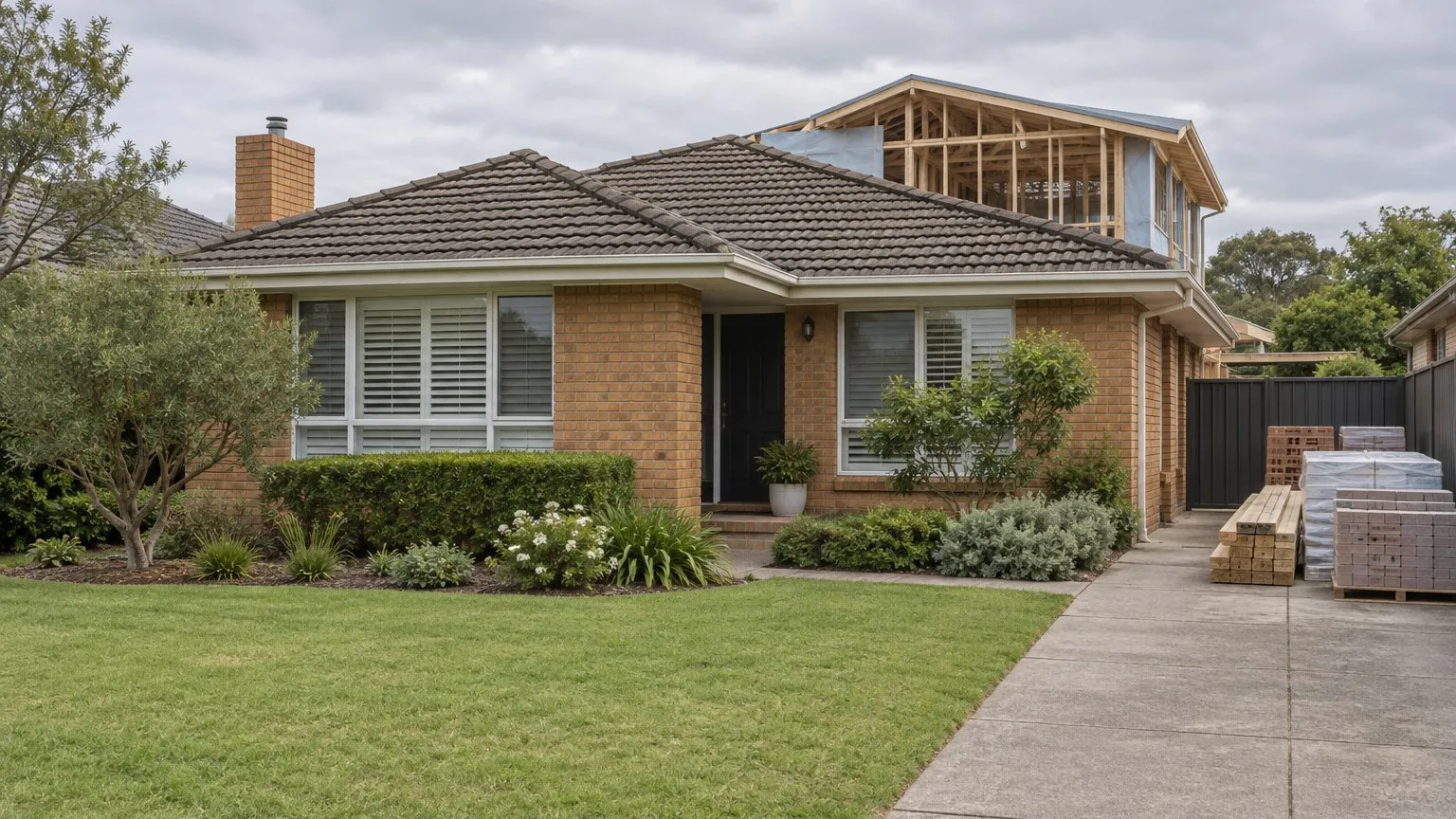
You have found a tired brick house on a decent block, the duplex numbers work, and your designer says the plans are simple. Before you spend a dollar on drawings, there is a New South Wales question that decides both your budget and your program: what does BASIX require of this exact site, and what happens when the design moves after approval?
Most first-time developers treat BASIX as a certificate you buy at the end, like a survey or an energy rating you order once. In New South Wales it is the opposite. It is a pre-lodgement requirement, it constrains the design you can build, and it follows the project all the way to the construction certificate. Sequence it wrongly and you pay for it twice.
The deal question: is this certificate a cost, or a constraint?
Here is the difference that matters on a small project. A fee is a number you carry in the feasibility. A constraint changes what you can build on the land. BASIX is mostly the second one.
Under the Environmental Planning and Assessment Regulation 2021, a development application for BASIX development must be accompanied by a relevant BASIX certificate “issued no earlier than 3 months before the day on which the development application is submitted on the NSW planning portal”. An application for a complying development certificate is subject to the same timing rule. If the certificate is older than three months when you lodge, it is not a certificate you can use.
The definition of BASIX development is wider than a first-timer expects. It captures erecting a BASIX building, a change of building use that turns a building into a BASIX building, and — the one that catches renovators and small developers — alteration of a BASIX building where the estimated development cost is $50,000 or more. A swimming pool or spa that services one dwelling and holds 40,000 litres or more is also captured.
The checks a student would run, and the order they go in
The sequence matters more than the individual checks, because each one can change the others.
- Confirm BASIX applies at all, and to what. Read the definition against your actual project: new dwelling, change of use, or alteration above the cost threshold. This decides whether you have a BASIX problem or not.
- Confirm which standards are in force now. The higher standards came into effect on 1 October 2023 under the State Environmental Planning Policy (Sustainable Buildings) 2022, which repealed the older BASIX policy. The NSW Planning Portal records the change plainly: thermal performance moved “from a range between 5.5 and 6 star NatHERS on average to 7 stars”, to line up with the National Construction Code 2022.
- Model the design against the standards before you fix the layout. The higher thermal standard is not a paperwork outcome; it changes glazing, insulation, orientation and roof colour. The portal's standards page also notes that dark roofs — solar absorptance greater than 0.7 — cannot be selected under the do-it-yourself method in the coastal area north of Wollongong, including Greater Sydney. On a west-facing duplex that single line can move your roof specification.
- Establish the water and energy targets your climate zone attracts. The water standard is expressed as a percentage reduction from a benchmark — ranging from 0% to 40% depending on climate zone, with the 40% reduction applying to 90% of new residential development. The energy standard uses a benchmark of 3,292 kilograms of carbon dioxide per person per year, and the standards are set out in Schedule 1 of the Sustainable Buildings SEPP. Both are design inputs, not end-of-job calculations.
- Decide who prepares it, and check whether the do-it-yourself route is open to you. The multi-dwelling guidance is explicit: for multiple dwellings the DIY method for thermal comfort assessment cannot be used, and an accredited assessor must complete that section using NatHERS-accredited software. On a duplex or a small townhouse row, that is a consultant you have to engage early.
- Build the certificate date into your lodgement plan. Three months is not long when you are waiting on a survey, a hydraulic design or a council pre-lodgement meeting.
The trap: the certificate has to describe the building you actually construct
This is where small projects lose real money, and it is the part almost nobody plans for.
BASIX is not a one-off pass at DA stage. The certificate's commitments have to be reflected on the plans: the portal's guidance states that “the commitments that you make for your project (as shown on the BASIX certificate), must be noted on the plans”. At construction certificate stage the gate tightens further. Under the Environmental Planning and Assessment (Development Certification and Fire Safety) Regulation 2021, a certifier must not issue a construction certificate for building work unless the relevant building work plans and specifications include the matters required by a relevant BASIX certificate. The application itself must be accompanied by the certificate that applied when consent was granted, or a replacement issued no earlier than three months before the application.
Now add the design change that every real project has: the builder suggests a different window, the joiner proposes a different glazing system, the client wants a bigger opening, the roof colour changes. Under the Environmental Planning and Assessment Regulation 2021, if an amendment would leave the development differing materially from the description in the BASIX certificate that accompanied the original application, a new certificate must accompany the amendment.
So the trap is not the certificate. It is a late change that quietly invalidates the rated design, discovered when someone tries to pull the construction certificate. The design reopens, the rating is re-run, the certificate is regenerated, and the program moves.
Two more provisions matter here. The NSW Planning Portal's guidance on certificate validity and project changes confirms that commitments must be noted on the plans, that a certificate is valid for three months before lodgement and then for the maximum life of the development application, and that there is no additional charge to revise an issued certificate if it relates to the same property and project. And if your design genuinely cannot be assessed by the tool — heritage controls, or new technology the tool does not reflect — the alternative assessment route exists, but with a turn-around time of at least 20 working days and additional cost.
Cost, timing and feasibility implications
The direct costs are modest and knowable. The NSW Planning Portal BASIX cost page publishes the certificate fees, which for a single detached dwelling are in the tens of dollars and for a multi-dwelling development are a modest amount for the first two dwellings plus a smaller amount for each additional dwelling, with a per-dwelling figure for alterations and additions. There is no charge to revise an issued certificate. An alternative assessment route exists, but the portal states there is a turn-around time of at least 20 working days, with additional cost.
The real money is elsewhere:
- Consultant cost and lead time. Multiple dwellings require an accredited assessor for the thermal comfort section. That is a scope and a wait you must carry in the program, not the fee schedule.
- Design cost. Achieving a 7-star thermal result on a hard orientation can force glazing upgrades, external shading, insulation changes or a different roof. Those decisions are cheapest at concept stage and expensive after the slab.
- Holding cost. A certificate that expires before lodgement, or a rating that fails after a change, adds weeks of interest on your acquisition and loan facility.
- Construction certificate risk. This is the one that stops a build. A certifier cannot issue the certificate unless the plans and specifications match the BASIX commitments, so any gap becomes a site-level argument with trades already mobilised.
Put simply: BASIX rarely kills a deal on cost. It kills programs when it is discovered late, and it changes yield when it forces the design.
What a student would take from this
The Think Property Club habit that separates a calm project from a chaotic one is not knowing more rules. It is asking the right question in the right order, and treating a compliance item as a design input rather than an administrative finish line.
A capable student, looking at this block, would not ask “how much is a BASIX certificate?” They would ask “what does this site have to be, to pass?” — and then check whether that building is the one they were planning to build, and whether it is the one the numbers were based on. If the answer is no, the deal changes before the money is committed, which is exactly when a deal should change.
That is a repeatable due-diligence habit, not a one-off insight, and it is the difference between an evidence-based decision and an optimistic one.
Your next actions before you spend on drawings
- Confirm in writing whether your project is BASIX development, and which trigger applies — new build, change of use, or alteration at $50,000 or more.
- Check the current standards for your climate zone on the NSW Planning Portal, and record the date you checked.
- Engage an accredited assessor early if the project is multi-dwelling or has a difficult orientation.
- Have the designer confirm the nominated thermal solution, roof colour and glazing before you lock the layout.
- Diagram your lodgement path backwards from the intended DA date so the certificate lands inside its three-month window.
- Write a rule into your project file: any post-approval design change is checked against the BASIX commitments before it is accepted.
- Ask your certifier, before construction starts, what they will require at construction certificate stage.
Reader question: if your approved plans and your BASIX commitments disagreed, would you find out before or after the trades arrived? For most small developers the honest answer is after — which is the whole reason to test it now.
Sources and boundaries
Sources checked 23 September 2026. Jurisdiction and limits: New South Wales only. The BASIX certificate requirements described are those under the Environmental Planning and Assessment Regulation 2021, the Environmental Planning and Assessment (Development Certification and Fire Safety) Regulation 2021 and the State Environmental Planning Policy (Sustainable Buildings) 2022 as in force at the checked date. The higher standards commenced on 1 October 2023, and the transition period for eligible applicants with a building contract signed before 1 October 2023 ended on 30 September 2024. Standards vary by climate zone and building type, and the do-it-yourself dark roof restriction applies to coastal areas north of Wollongong including Greater Sydney and inland areas west of the Great Dividing Range. Requirements change, so confirm the current position for the specific project and site.
- Environmental Planning and Assessment Regulation 2021 (NSW) — s 27, s 37, s 100 and the BASIX development definition. Used for: the requirement that a BASIX certificate accompany a development application or complying development certificate, the three-month validity rule, the separate certificate rule for alterations to multi-dwelling BASIX buildings, and the definition of BASIX development (Checked 23 September 2026)
- Environmental Planning and Assessment (Development Certification and Fire Safety) Regulation 2021 (NSW) — s 19 and s 10. Used for: that a certifier must not issue a construction certificate unless the building work plans and specifications include the matters required by a relevant BASIX certificate (Checked 23 September 2026)
- State Environmental Planning Policy (Sustainable Buildings) 2022 (NSW) — cl 1.2 and cl 1.3. Used for: that the Policy commences on 1 October 2023 and carries the higher BASIX standards (Checked 23 September 2026)
- NSW Planning Portal — Increase to BASIX Standards. Used for: that the higher standards took effect on 1 October 2023, the move from an average 5.5 to 6 NatHERS stars to 7 stars, and the dark roof restriction under the DIY method (Checked 23 September 2026)
- NSW Planning Portal — Validity of the certificate and changes to the project. Used for: that the certificate is valid for three months before lodgement, that commitments must be noted on the plans, and that revising an issued certificate carries no additional charge (Checked 23 September 2026)
- NSW Planning Portal — Multi-dwelling. Used for: that the DIY thermal comfort method cannot be used for multiple dwellings and a NatHERS-accredited assessor is required (Checked 23 September 2026)
- NSW Planning Portal — Energy. Used for: the BASIX energy benchmark of 3,292 kilograms of carbon dioxide per person per year and that the standards are specified in Schedule 1 of the Sustainable Buildings SEPP (Checked 23 September 2026)
- NSW Planning Portal — Water. Used for: the water reduction percentages, the climate zone dependency and the benchmark of 90,340 litres per person per year (Checked 23 September 2026)
- NSW Planning Portal — Cost. Used for: the BASIX certificate fee schedule by development type and the multi-dwelling fee structure (Checked 23 September 2026)
- NSW Planning Portal — Alternative assessments. Used for: that an alternative assessment has a turn-around time of at least 20 working days and attracts additional cost (Checked 23 September 2026)
This article is general education, not personalised planning, legal, financial, tax, privacy, safety or building advice. Requirements and outcomes vary by jurisdiction, site, contract, structure and circumstances. Check current information with the relevant authority and appropriately qualified advisers.
 Learn with Jason & AmyBuild practical small-scale property development skills with experienced mentors.Enquire now
Rate this article
Guest rating: select 1 star for poor or 5 stars for great. No account is required.
Leave a comment
Join the discussion. Your email address will not be published.
Frequently asked questions
Is a BASIX certificate something I can leave until the end of the design process?
No. It has to accompany the development application, and the certificate must have been issued no earlier than three months before the day the application is submitted on the NSW planning portal. It also has to stay accurate: the certificate commitments must be noted on the plans, and a certifier cannot issue a construction certificate unless the building work plans and specifications include the matters required by a relevant BASIX certificate. Treat it as a design input, not paperwork.
My project is a renovation, not a new build. Does BASIX still apply?
It can. BASIX development includes alteration of a BASIX building where the estimated development cost is $50,000 or more, and a change of building use that turns a building into a BASIX building. Swimming pools and spas servicing one dwelling with a capacity of 40,000 litres or more are also captured. Read the definition against your actual project scope before assuming you are outside it.
Who prepares the certificate, and can I do the thermal assessment myself?
For multiple dwellings you cannot use the do-it-yourself method for thermal comfort assessment. The NSW Planning Portal is explicit that an accredited assessor must complete that section using software accredited by the National House Energy Rating Scheme. On a duplex, a townhouse row or a small unit project, budget for that consultant and engage them early enough to influence the design.
I changed a window and the roof colour after approval. Does that matter?
It can. If an amendment would leave the development differing materially from the description in the BASIX certificate that accompanied the original application, the amendment must be accompanied by a new certificate that takes account of the change. Even where the change is not material, the commitments shown on the certificate still have to be reflected on the plans and satisfied by what gets built.
What does BASIX actually cost me?
The certificate itself is modest. The NSW Planning Portal publishes maximum fees including $50 for a single dwelling and $80 for the first two dwellings of a multi-dwelling development plus $35 for each additional dwelling, with $25 per dwelling for alterations and additions. Revising an issued certificate carries no additional charge. The real cost is the consultant work, the design changes needed to meet the standards, and holding costs if the certificate expires or the rating has to be redone.
Loading comments…