
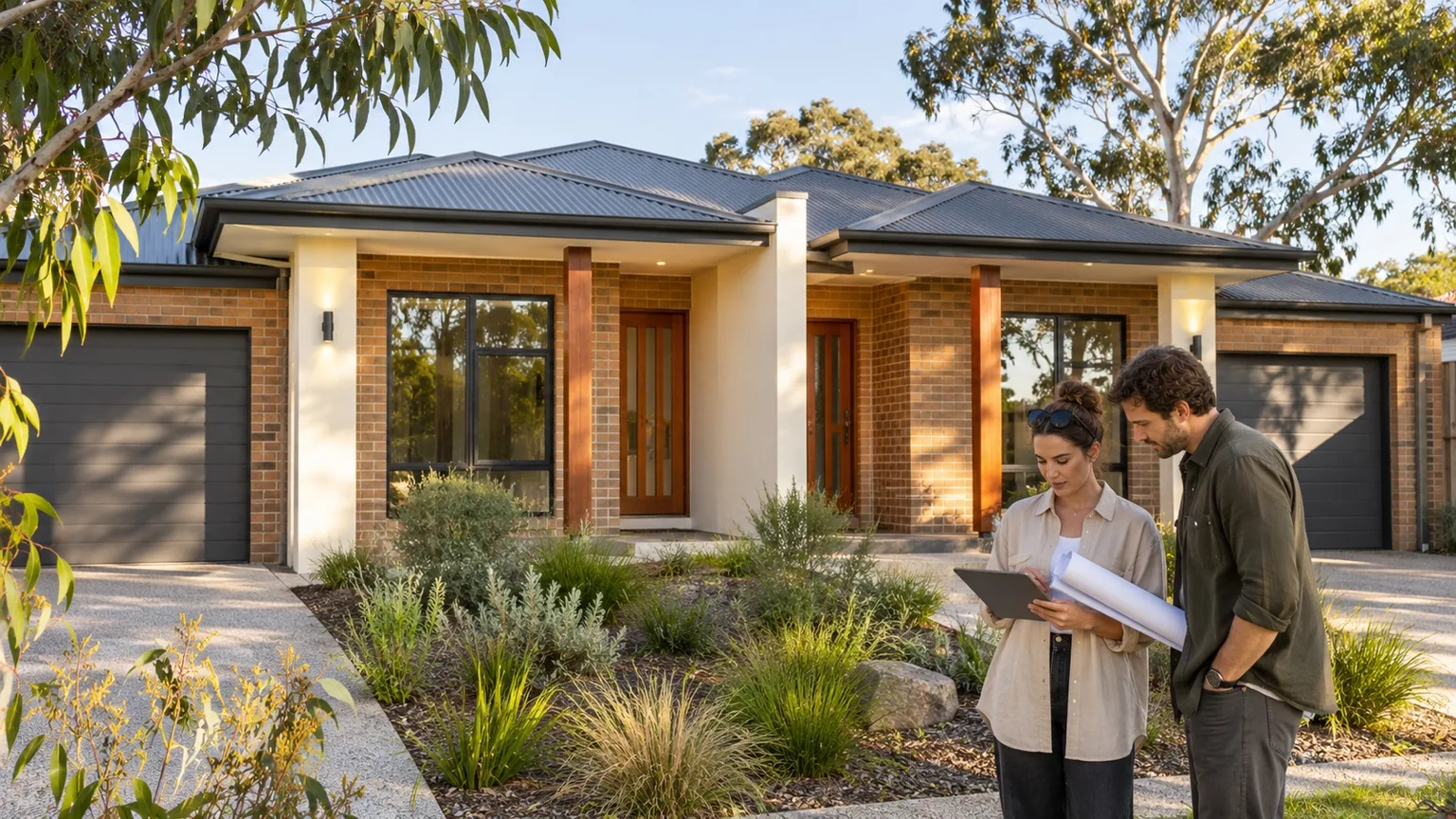
You find a block that could suit two new homes. You have checked the idea with a planner, gathered early building prices and studied nearby duplex sales. Then someone asks: who is your partner?
It is tempting to answer with a name. A more useful answer starts with what the project is missing. Someone with cash, someone with spare time and someone who has delivered a duplex can solve different problems.
Find the gap before finding the person
At the Finance stage of Think Property Club’s development process, turn the opportunity into a clear request. How much money must come from the participants? Who can lead the work? Which decisions need experience you do not yet have?
Our joint venture guide explains the broad roles. Here, the next decision is narrower: compare two people against the same duplex budget and see what remains unfunded.
Start with four separate contributions:
- Cash: money available to put into this project.
- Borrowing support: financial strength or security that a lender may accept when assessing the proposed loan.
- Time: availability to coordinate the planner, designer, builder and sales process.
- Experience: judgement from delivering similar projects, such as spotting an incomplete building quote.
A person may bring several. Do not assume one contribution automatically supplies the others.
Cash and borrowing support are different
Someone can own valuable property without having money ready for your duplex. Ask what funds they can actually contribute, separately from what security they might offer.
The Australian Government’s business loan guidance separates repayment capacity, assets offered as security and possible guarantors. It also recommends using a cash forecast to work out funding needs. For your duplex, ask a development finance broker to assess the proposed people and project together.
If support involves a guarantee, understand its meaning. A guarantor promises to repay if the borrower cannot; ASIC’s Moneysmart guidance warns that the guarantor may face the whole debt and interest, depending on the guarantee. Get independent advice before accepting that risk. A guarantee itself puts no cash into the building budget.
One duplex, two possible partners
Hypothetical example only: you plan to buy a site, remove the old house, build a duplex and sell both homes. Assume site checks support further investigation. These are teaching figures, not a quote, loan offer or profit forecast.
The total project budget is $2 million. It includes purchase and acquisition costs, design, approvals, construction, finance, holding and selling costs, relevant tax allowances, contingency and paid development management. Assume the project loan contributes $1.4 million and you contribute $200,000. The loan is an example assumption, not a lending ratio to expect; its amount and availability need lender assessment.
The missing contribution is $2 million − $1.4 million − $200,000 = $400,000.
Partner A can contribute $400,000 but has little development experience. Partner B has delivered similar duplexes and can contribute $150,000. Both have limited time available.
A fills the assumed cash gap. The broker still needs to check when loan funds can be drawn, so the right total also arrives when needed. You would still need to confirm that the development manager already allowed for in the budget can provide the help and availability you need.
B brings useful judgement, but leaves $250,000 unfunded: $400,000 − $150,000. Their experience does not pay the remaining costs. Nor should you remove the whole management allowance when B has limited time.
On these assumptions, pursue A with paid delivery help first. If that help is unavailable or unsuitable, reconsider the project or seek someone who combines funding and delivery capability. B becomes a workable option only when the remaining funding and workload have credible solutions.
Decide what you need to share
Finding a good site is valuable work. Strengthen that contribution with evidence: a planner’s assessment, realistic prices and comparable completed sales.
Then compare a partnership with buying the missing service. Someone reviewing your design occasionally offers something different from someone leading delivery every week. Ask what each option adds, what it costs and whether the duplex still makes commercial sense after everyone is rewarded. Compare relevant completed duplex work and actual availability, rather than choosing the person who sounds most confident.
WHAT WOULD A TPC STUDENT DO?
- Build one complete duplex budget from site evidence and specialist estimates.
- Have a development finance broker test the likely loan and calculate the participants’ funding gap.
- Compare each partner’s available cash, time and relevant experience against that gap.
- Price suitable delivery help, update the budget and choose the combination that funds and runs the project.
Sources and notes
Sources checked 23 November 2026.
- Australian Government — Apply for a business loan — General business lending education on cash forecasts, repayment capacity, security and guarantors; does not establish a duplex loan amount or approval.
- ASIC Moneysmart — Going guarantor on a loan — Explains the guarantor’s repayment promise and potential exposure; exact liability depends on the actual guarantee.
- Think Property Club — Joint venture property deals Australia — Background explanation of JV roles; this article adds a numerical comparison of partner options rather than repeating the broad guide.
The Australian Government and ASIC sources provide general finance education, not duplex lending criteria. Costs, loan amounts and partner contributions are hypothetical; no site approval, funding approval, profit or real project outcome is established.
The archived JV, no-money-down and non-cash contribution guides were compared. This guide adds a numerical choice between two partners and paid delivery help, rather than agreement terms. Site planning and the commercial feasibility still need separate assessment.
General education only. Have suitable advisers check the site, funding and partnership before committing.
 Learn with Jason & AmyBuild practical small-scale property development skills with experienced mentors.Enquire now
Rate this article
Guest rating: select 1 star for poor or 5 stars for great. No account is required.
Leave a comment
Join the discussion. Your email address will not be published.
Frequently asked questions
Does a partner with property have cash for my duplex?
Not necessarily. Separate money they can contribute from assets they might offer as loan security, and have the broker assess both.
Can an experienced partner replace a development manager?
Possibly, if their skills and availability cover the actual work. Occasional advice does not replace someone leading delivery throughout the project.
Why does Partner B leave a $250,000 gap?
The example needs $400,000 beyond the assumed loan and the student’s cash. Partner B contributes $150,000, leaving $250,000 still to fund.
Should the cash partner receive half the profit?
The example does not set a profit split. Compare each person’s money, work and risk, then obtain advice on a commercially workable arrangement.
What if neither partner solves the problem?
Reassess the site price, scope or funding approach. If the duplex cannot be funded and competently delivered, do not proceed on the strength of a partner’s enthusiasm.
Loading comments…