
There is a version of a development application that never gets assessed, and it fails for a reason that has nothing to do with planning. If the person making the application is not the only registered owner of the land, and the other owners have not consented in writing, the consent authority has no power to determine the application at all.
The deal question: who must sign before you can lodge?
Owner's consent is not a housekeeping item at the end of the lodgement checklist. Lindsay Taylor Lawyers' summary of the 2022 amendment records that the Environmental Planning and Assessment Amendment (Miscellaneous) Regulation (No 2) 2022 amended section 23 of the Environmental Planning and Assessment Regulation 2021 so that an owner's consent to the making of a development application must be in writing, and that this applies to applications lodged from 1 January 2023. The same analysis notes that owner's consent is an essential prerequisite to a consent authority's power to determine a development application, citing Al Maha Pty Ltd v Huajun Investments Pty Ltd [2018] NSWCA 245, and that consent authorities now have to check the written consent is there.
Read that as a risk statement rather than a rule. A defective consent does not produce a slow application; it produces an invalid one.
Who counts as an owner
The starting point is the certificate of title, not the person you have been negotiating with. City of Sydney states that where the person making the application is not the only registered owner, written consent from all other registered owners is required, that it is the applicant's responsibility to demonstrate all owners have consented, and that the council will not accept an application without the correct owner's consent.
Two practical consequences follow. First, on a site held by several owners, or by a family or trust structure, you need consent from all of them — not just the one who is keen. Second, if title has recently changed hands, you need evidence of the new registered owner, because a consent signed by the vendor who has already settled is worthless.
Companies, strata and signing on someone's behalf
The signing mechanics are where deals quietly lose a fortnight. City of Sydney's published requirements say that where the owner is a company, the consent must be signed by one company director and one company secretary, or two company directors, and where the company has a single director or secretary only one signature is required — with the applicant providing the names and positions of the signatories and a current company extract from ASIC dated the day of lodgement or the day before.
Strata adds a layer. Where the property is a unit under strata title and the works or proposed use affect common property, consent from the owners corporation is also required, signed in line with section 273 of the Strata Schemes Management Act 2015. That is a resolution process, not a signature you can collect in an afternoon.
And where someone signs on the owner's behalf — a power of attorney, a trust deed, probate, letters of administration or a delegated company authority — the full evidence of that authority has to be attached.
It is not only development applications
Central Coast Council's Part B form accompanies all applications submitted through the NSW Planning Portal, including development applications, complying development certificates, construction certificates and subdivision certificate applications, and must be completed and signed by all owners of the land. So the consent requirement follows you past the DA into certification and subdivision — meaning a consent that was adequate at DA stage may need to be refreshed later, and council material suggests consents are expected to be current rather than ancient.
The checks a capable student would run
- Order a current title search before you lodge, not after. Work from the registered ownership, not from the contract or from what the vendor told you.
- List every owner and every interest. Co-owners, companies, trusts and strata all have different signing requirements, and each takes different time to obtain.
- Do not rely on a verbal yes. The consent must be in writing and it must be in the form the council requires.
- Check the date on the consent. Council material expects a consent dated within a recent window of lodgement, so a consent collected months ago in early negotiations may need to be re-signed.
- Put the consent in the contract, not after it. If you are applying over land you do not yet own, make the consent, and the cooperation needed to obtain it, an express obligation with a deadline before you commit money.
The trap: doing the planning work before securing the signature
The expensive mistake on a pre-purchase or option deal is spending on surveys, architects and reports before the landowner has committed, in writing, to the application being lodged. If the owner changes their mind, or a co-owner refuses, the work is stranded and the site is not yours to progress. Because consent is a precondition to council's power to determine, not a defect council can wave through, there is no administrative workaround: you either have the consent or the application does not proceed.
What you do not have to work out alone
You are not expected to determine who must sign or to draft around a difficult title. A property lawyer identifies every registered owner and every interest that must consent, prepares the consent in the required form, and advises on company, strata and delegated-signing issues; your town planner coordinates the rest of the application so nothing else is missing at lodgement; and council's planning staff confirm their own lodgement requirements. Your job is to sequence the consent into the deal as a condition, so the planning spend only happens on terms you can enforce.
Sources and boundaries
Sources checked 5 October 2026. Jurisdiction and limits: This guide is focused on New South Wales. The requirement for a written owner's consent comes from section 23 of the Environmental Planning and Assessment Regulation 2021 as amended from 1 January 2023. The signing requirements quoted are the published requirements of City of Sydney and Central Coast Council, and councils differ in their forms and lodgement practices. Other states and territories have their own consent requirements. Confirm the position with the relevant council and your solicitor.
- Lindsay Taylor Lawyers — New planning regulations require a landowner's consent to development to be in writing. Used for: Records that the Environmental Planning and Assessment Amendment (Miscellaneous) Regulation (No 2) 2022 amended section 23 of the Environmental Planning and Assessment Regulation 2021 so that an owner's consent to the making of a development application must be in writing, that this requirement applies to applications lodged from 1 January 2023, that owner's consent is an essential prerequisite to a consent authority's power to determine a development application (citing Al Maha Pty Ltd v Huajun Investments Pty Ltd [2018] NSWCA 245 at [95]), and that consent authorities must check the written consent has been provided. (Checked 5 October 2026)
- City of Sydney — Provide owner's consent when making a development application. Used for: Records that written consent from all other registered owners is required where the applicant is not the only registered owner, that the owner's consent must be dated within 12 months of lodging, the company signing requirements (one director and one company secretary, or two directors, with a current ASIC company extract dated the day of lodgement or the day before), the strata requirements including owners corporation consent under section 273 of the Strata Schemes Management Act 2015 where works or use affect common property, and the evidence required when signing under a power of attorney, trust deed, probate or delegated authority. (Checked 5 October 2026)
- Central Coast Council — Part B: application detail and owner's consent. Used for: Records that the owner's consent form accompanies all applications submitted via the NSW Planning Portal including development applications, complying development certificates, construction certificates and subdivision certificate applications, that it must be completed and signed by all owners of the land, and that written consent of the owner is required under the Environmental Planning and Assessment Regulation 2021 where the development application is made by a person other than the owner. (Checked 5 October 2026)
- NSW Government — Environmental Planning and Assessment Regulation 2021 (as amended). Used for: The consolidated Environmental Planning and Assessment Regulation 2021, which contains section 23 on the consent of the owner of land to the making of a development application. (Checked 5 October 2026)
This article is general education, not personalised planning, legal, financial, tax or building advice. Requirements and outcomes vary by jurisdiction, site, contract, structure and circumstances. Check current information with the relevant authority and appropriately qualified advisers.
 Learn with Jason & AmyBuild practical small-scale property development skills with experienced mentors.Enquire now
Rate this article
Guest rating: select 1 star for poor or 5 stars for great. No account is required.
Leave a comment
Join the discussion. Your email address will not be published.
Frequently asked questions
Does owner's consent have to be in writing in NSW?
Yes, for development applications lodged from 1 January 2023. The 2022 amendment to the Environmental Planning and Assessment Regulation 2021 requires the owner's consent to the making of a development application to be in writing, and consent authorities must check that it has been provided.
What happens if I lodge without owner's consent?
Owner's consent is an essential prerequisite to a consent authority's power to determine the application. Without a valid written consent the application cannot be determined, so the problem is validity rather than delay.
Who has to sign where a company owns the land?
Council guidance records that a company owner's consent must be signed by one company director and one company secretary, or by two company directors, and where the company has a single director or secretary, one signature is required, supported by a current ASIC company extract dated the day of lodgement or the day before.
What if the property is a strata unit?
In addition to the unit owner's consent, owners corporation consent is required where the works or proposed use will affect common property, and it must be signed in line with section 273 of the Strata Schemes Management Act 2015.
How recent does the consent need to be?
Council material expects the owner's consent to be current — City of Sydney, for example, requires it to be dated within 12 months of lodging the application. Treat anything older as needing to be refreshed before lodgement.
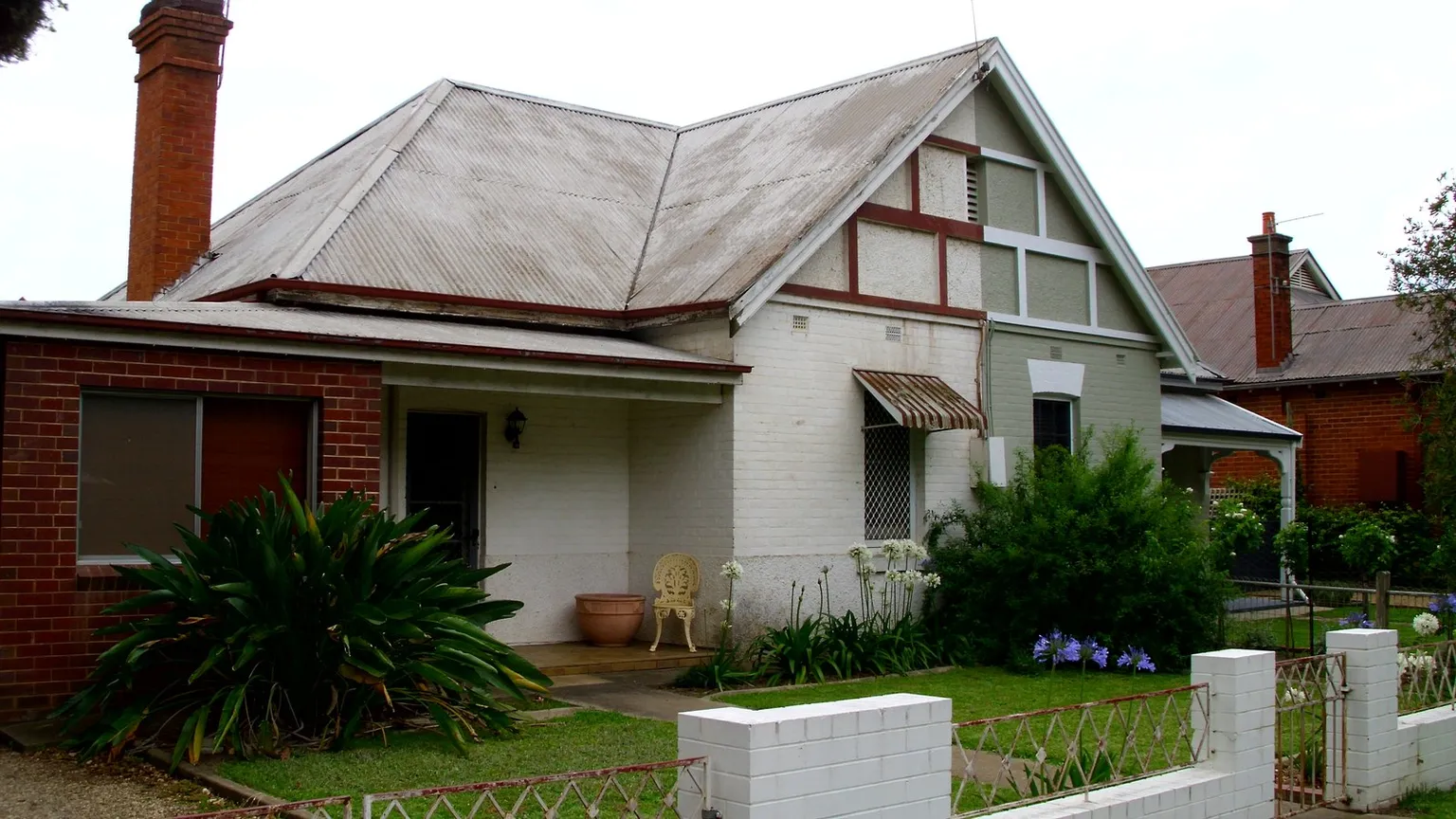
Photo: 'Semi-detached house in Tompson Street' by Bidgee, Wikimedia Commons, CC BY-SA 3.0 AU.
Loading comments…