
There is a sentence that appears in a lot of feasibility models and almost never survives contact with the contract: the build is fixed price. In most domestic building contracts the price is fixed in part, and the rest is a set of allowances that move with your selections and with what the ground turns out to be. That is not automatically a problem. It becomes a problem when nobody has measured how much of the price is exposed.
Two different things, with two different causes
Prime cost items and provisional sums look similar on a contract schedule and behave differently. The Queensland regulator defines them separately.
A prime cost item covers something you choose after the contract is signed. The QBCC guidance states that prime cost items (PC items) are for fixtures and fittings that the consumer is to select after the contract is signed e.g. kitchen and bathroom fixtures, carpet or tiles, and that the PC allowance is the amount of money built into the contract for the particular items (QBCC guidance). The risk sits with your taste and your selections: the tiles you choose may cost more per square metre than the allowance assumed.
A provisional sum covers work whose cost genuinely cannot be known yet. The same guidance states the estimate is required if, after making all reasonable enquiries, the contractor cannot give a definite amount for the contracted services at the time the contract is entered into. Rock removal, asbestos removal and earthworks are the classic examples, because nobody can see under the ground when the contract is signed.
Both are defined in the Queensland Building and Construction Commission Act 1991: a prime cost item is an item that has not been selected, or the price of which is not known, when the contract is entered into, and a provisional sum is an amount that is an estimate of the cost of providing particular contracted services for services the contractor cannot price after making all reasonable enquiries.
How the money actually moves
The direction of movement matters, and it is asymmetric. The QBCC guidance is explicit: If the total cost for that work is greater than the estimated amount, then the increase in cost is an additional cost to the consumer. Conversely, if the cost is less than the provisional sum amount, the consumer is to receive a credit variation for the difference.
There is a warranty sitting behind the numbers. The regulator's owner and contractor guide to domestic building contracts records that Section 26 of Schedule 1B requires contractors to calculate PC and PS allowances with reasonable care and skill, having regard to all information reasonably available when the contract is entered into, including information about the nature and location of the building site. An allowance is meant to be a genuine estimate, not a low number used to win the job.
The same guide gives a threshold that is worth remembering: contracts which have a high proportion of the total contract price covered by allowances (e.g. 30% or more) carry added risk for owners, especially for owners on a tight budget, because of the level of uncertainty about the final amount payable. The guide's recommendation is to obtain a fixed price for as much of the work as possible.
What this does to your feasibility
If a fifth of your construction contract sits behind allowances, your construction cost is not a number, it is a range, and your whole feasibility inherits that range. Three habits keep it honest:
- Model the allowances as line items, not inside a lump sum, and stress the ones with the widest possible outcome — earthworks and rock first.
- Price your own selections before signing, using current supplier pricing, so the prime cost allowances are tested rather than assumed.
- Keep a contingency that is separate from the allowances. An allowance moving is not a contingency event; it is the contract working as drafted.
A practical pre-signature test
- Ask for the schedule of allowances as a separate document, with each item, its allowance, its unit and the quantity assumed.
- Total the allowances and compare them with the contract price. If the proportion is high, say so on the record before you sign.
- Get the quantity surveyor to benchmark each allowance against current market pricing for your specification.
- Confirm who selects each prime cost item, by when, and what happens if you select late.
- Confirm how a credit variation is passed back to you if an allowance is not fully used.
- Check what the contract says about proving actual costs for an allowance, because not every contract requires the builder to produce invoices.
The common trap
The trap is comparing builders on a single total. One tender looks cheaper because it carries a lower prime cost allowance for the kitchen and a lower provisional sum for earthworks — and the difference is recovered later through variations. The Queensland regulator publishes the contract packs and schedules, including a separate prime cost items schedule and provisional sums schedule. When the contract price is not fixed, the QBCC's contract requirements call for the method of calculating the price, including allowances, to be stated in the schedule; read that statement before comparing totals, because the number you are comparing may not be the number you will pay.
The second trap is discovering the exposure at the moment the invoice arrives. The time to test an allowance is before signature, when it is still a commercial conversation.
What a capable student does next
You are not expected to price a build yourself. Brief a quantity surveyor to test each allowance against the specification and to model the outcome if the allowances move; brief a construction lawyer or contract adviser to explain how the allowances, variations and price-change clauses operate in your contract; and ask your accountant how a credit variation or an extra cost will be treated in your project's numbers. The specialists do the technical assessment and confirm the current position. Your job is to make the exposure visible before the ink is dry.
Sources and boundaries
Sources checked 7 October 2026. Jurisdiction and limits: Queensland only. The definitions and regulator guidance quoted are Queensland material read on 7 October 2026, and the threshold and warranty referred to are drawn from the Queensland Building and Construction Commission Act 1991 and the QBCC's own published guidance. Other states and territories regulate domestic building contracts differently.
- Queensland Building and Construction Commission — Guidance statement: prime cost and provisional sum items (PDF). Used for: States that prime cost items are for fixtures and fittings that the consumer is to select after the contract is signed, such as kitchen and bathroom fixtures, carpet or tiles, and that the prime cost allowance is the amount of money built into the contract for those items; states that a provisional sum is described in the Queensland Building and Construction Commission Act 1991 as an amount that is an estimate of the cost of providing particular contracted services, including the cost of supplying materials, and that an estimate is required if after making all reasonable enquiries the contractor cannot give a definite amount at the time the contract is entered into; and states that if the total cost for that work is greater than the estimated amount the increase is an additional cost to the consumer, while if the cost is less the consumer is to receive a credit variation for the difference. (Checked 7 October 2026)
- Queensland Building and Construction Commission — Domestic building contracts. Used for: Lists the contract packs and forms, including the contract schedule, the prime cost items schedule and the provisional sums schedule, and describes the requirements for a Level 2 contract for work priced at $20,000 and over, including giving the homeowner a QBCC-approved consumer building guide before the contract is signed, the price change warning where the contract price is not fixed, stating the method for calculating the price including allowances, and the commencement notice within 10 business days of work starting on site. (Checked 7 October 2026)
- Queensland Building and Construction Commission — Domestic building contracts guide for owners and contractors (PDF). Used for: Explains the implied warranties in Schedule 1B of the QBCC Act, including that where a contract price includes allowances for prime cost items or provisional sums the allowances will be calculated with reasonable care and skill; records that section 26 of Schedule 1B requires contractors to calculate prime cost and provisional sum allowances with reasonable care and skill having regard to all information reasonably available when the contract is entered into, including information about the nature and location of the building site; warns that contracts with a high proportion of the total contract price covered by allowances (for example 30% or more) carry added risk for owners, especially those on a tight budget, because of the level of uncertainty about the final amount payable; and recommends obtaining a fixed price for as much of the work as possible. (Checked 7 October 2026)
- Queensland Building and Construction Commission Act 1991 — Schedule 1B (current in-force text). Used for: Contains the statutory definitions in Schedule 1B: a prime cost item is an item, including for example a fixture or fitting, that has not been selected, or the price of which is not known, when the contract is entered into, and for the cost of supply and delivery of which a reasonable allowance is or is to be made in the contract by the building contractor; and section 10 defines a provisional sum as an amount that is an estimate of the cost of providing particular contracted services, applying only to contracted services for which the building contractor, after making all reasonable enquiries, cannot state a definite amount when the contract is entered into. Section 26 provides that the building contractor warrants the provisional sum or prime cost item has been calculated with reasonable care and skill, having regard to all the information reasonably available when the contract is entered into, including information about the nature and location of the building site. (Checked 7 October 2026)
This article is general education, not personalised planning, legal, financial, tax or building advice. Requirements and outcomes vary by jurisdiction, site, contract, structure and circumstances. Check current information with the relevant authority and appropriately qualified advisers.
 Learn with Jason & AmyBuild practical small-scale property development skills with experienced mentors.Enquire now
Rate this article
Guest rating: select 1 star for poor or 5 stars for great. No account is required.
Leave a comment
Join the discussion. Your email address will not be published.
Frequently asked questions
Does a fixed price contract mean the price cannot change?
Not necessarily. If the contract price includes allowances for prime cost items or provisional sums, the QBCC states the method for calculating the price including those allowances must be stated in the contract schedule where the price is not fixed. A price with allowances is fixed in part only; have the contract adviser explain exactly which parts are firm.
What is the difference between a prime cost item and a provisional sum?
A prime cost item is an item not yet selected, or whose price is not known, when the contract is entered into, such as kitchen fittings or tiles. A provisional sum is an estimate of the cost of providing particular contracted services that the contractor cannot price after making all reasonable enquiries, such as rock removal or earthworks.
If the work costs less than the allowance, who keeps the difference?
The QBCC guidance states that where the cost is less than the provisional sum amount, the consumer is to receive a credit variation for the difference. Confirm how your particular contract passes that credit back to you and on what evidence.
How much of my contract should be covered by allowances?
There is no rule, but the QBCC's own guide warns that contracts with a high proportion of the total contract price covered by allowances, for example 30% or more, carry added risk for owners because of the uncertainty about the final amount payable, and recommends obtaining a fixed price for as much of the work as possible.
Is the contractor obliged to have estimated the allowance properly?
The QBCC's owner and contractor guide records that section 26 of Schedule 1B requires contractors to calculate prime cost and provisional sum allowances with reasonable care and skill, having regard to all information reasonably available when the contract is entered into, including information about the nature and location of the building site.
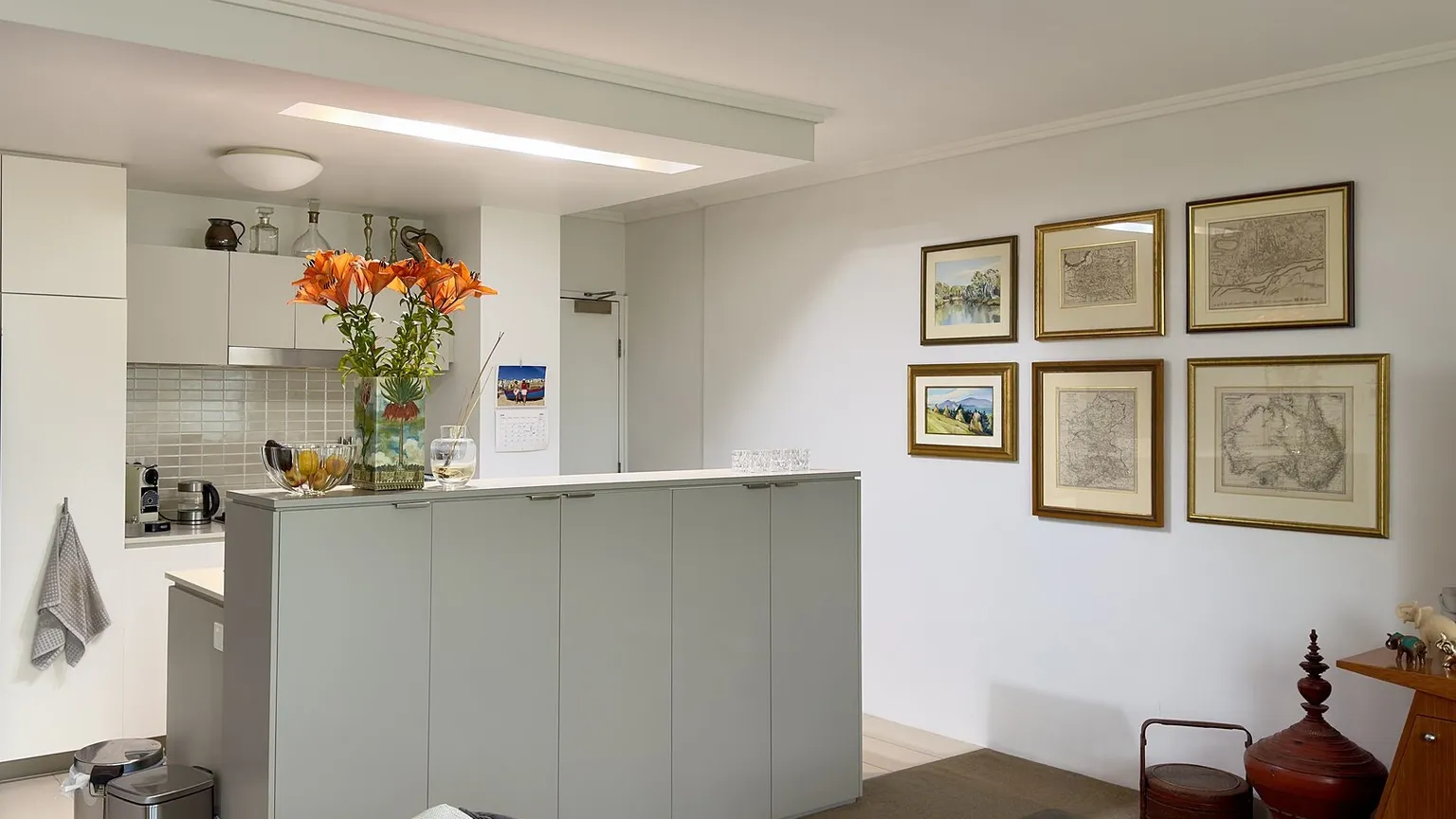
Photo: 'Kitchen, Interior of apartment in Brisbane, 2025, 03' by Kgbo, Wikimedia Commons, CC BY-SA 4.0
Loading comments…