
BASIX looks like a single certificate you buy once. On a multi-dwelling project it is a question about structure: does one certificate cover the whole development, or do you want separate certificates for different parts? That answer affects how you stage construction, how you sell down, and how painful the next design revision will be. And unlike most approval questions, you cannot decide it unilaterally — the consent authority has a say.
The deal question: one certificate, or several?
The NSW Planning Portal is clear about the default. In its guidance on when more than one BASIX certificate should be submitted, it states that for new dwellings the applicant must submit with the development application one BASIX certificate covering all dwellings. It then explains the exception: the consent authority may allow the project to be split so that separate certificates cover different parts, but only if the applicant requests that approval, and if the consent authority refuses, the applicant may ask it to discuss the matter with the Department.
So the default on a multi-dwelling project is one certificate covering everything, and anything else is an application you have to make. That is a very different starting point from the way most developers assume it works.
Why you might want separate certificates anyway
The Portal's own list of situations is a good summary of why this matters commercially. It identifies four scenarios where an applicant may wish to seek approval for separate certificates. The first is subdivision into single Torrens title lots, where the development includes land subdivision into separate lots, involves construction of detached single Class 1 dwellings on those lots, and does not involve common property or shared services. The second is strata title development — residential flat buildings, villa units, multi-dwelling houses, dual occupancy or mixed use on land with common property or shared services — so long as those shared areas and services can be apportioned between the parts each certificate covers. The third is staged development built in several separate stages over time. The fourth is large multi-building residential flats with several separate towers and more than 600 units overall, again where shared areas and services can be apportioned.
The Portal also states the benefit in commercial language: separate certificates may give greater long-term flexibility, allowing an applicant to obtain part consent for a staged development; making revisions easier because only the certificates for the affected dwellings need to change; and avoiding complications if some land parcels are on-sold or different sub-contracting builders are used for different parts.
For a developer planning a two-stage duplex or a four-lot subdivision, that is the difference between one revision cycle and four.
The timing rule that catches people at three stages
Then there is the clock. The Portal's legislation page describes the regulation and records that a development application, complying development certificate application or construction certificate application for BASIX affected development must be accompanied by a BASIX certificate or certificates issued no earlier than three months before the date on which the application is made. A certificate you generated early in feasibility can be stale by the time you lodge. It also records that where an alteration, enlargement or extension involves a BASIX affected building containing more than one dwelling, a separate certificate is required for each dwelling concerned.
At construction certificate stage the rule is a little more generous: the accompanying certificate must be either the certificate applicable to the development when the relevant development consent was granted, or another certificate or certificates issued no earlier than three months before the application is made. The Portal also lists the clauses dealing with amending BASIX commitments on modified development applications, with a new certificate replacing the current one when a modification application is made, with the certifier's duty not to issue a construction certificate unless the plans and specifications include what each relevant certificate requires, and with the BASIX completion receipt. Those clauses are the machinery that ties the certificate to the building you actually construct.
What BASIX actually assesses on a multi-dwelling project
The multi-dwelling page sets the scope. It states that BASIX applies to all new multiple home developments in NSW, including units, townhouse rows and subdivisions, and that the tool examines water, energy and thermal comfort. It describes the multi-dwelling section as designed for larger residential developments, especially unit blocks with common areas such as car parks, lifts and shared gardens that can require significant amounts of water and energy, and lists typical project types: a residential flat building generally of three or more strata units; two or more terrace, row or semi-detached houses with or without common property or shared services; two or more detached or attached houses including villa units and dual occupancy on one parcel with common property or shared services; and several single dwellings on land subject to subdivision to create new separate lots.
One line in that page is a direct program constraint: the DIY method for thermal comfort assessment cannot be used for multiple dwellings, and an accredited assessor must complete the thermal comfort section using software accredited by NatHERS. If your programme assumes a quick self-assessment, add the assessor's lead time and fee for every revision.
The Portal's main BASIX page also records that the standards apply to new residential development, to alterations of $50,000 or more and to swimming pools or spas of 40,000 litres or more, that increases to the standards came into effect on 1 October 2023, and that changes to the BASIX tool were introduced on 1 May 2026. On a renovation-and-extend project, or one with a pool, that reach is worth testing before you assume BASIX is irrelevant.
The trap: discovering the certificate structure after the design is fixed
Three versions of the same mistake recur. The first is assuming you can simply choose separate certificates, when the Portal requires consent authority approval and a refusal can slow the application. The second is a certificate generated in feasibility and left to age past the three-month rule. The third is common property or shared services that cannot be apportioned between the parts you want each certificate to cover — the Portal's conditions for the strata and multi-building scenarios are explicit that apportionment must be possible, and that is a design question, not a paperwork question.
Checks a capable student would run
- Confirm the development is BASIX affected and identify every dwelling it contains, including any common property or shared services.
- Decide the commercial structure first: one stage or several, sell down together or separately, one builder or more than one.
- If you want separate certificates, decide whether common property and shared services can be apportioned, and put that view to the consent authority before lodgement.
- Map the three-month issue rule against your actual lodgement dates for the development application and the construction certificate, and diarise when to regenerate.
- Book the accredited assessor early, because the DIY thermal comfort method is not available for multiple dwellings and every revision needs the assessor again.
- Check the current BASIX tool version and any transitional arrangements for your lodgement date, and record the date you checked.
- Keep the certificate, the consent and the approved plans aligned, because the certifier must not issue a construction certificate unless the plans and specifications include what the relevant certificate requires.
Key takeaway
In NSW, a development application for new dwellings must carry one BASIX certificate covering all of them, and splitting the project into separate certificates requires the consent authority's approval — usually in the situations the Portal lists: Torrens title subdivision, strata or shared-property developments where shared areas can be apportioned, staged development, and very large multi-building projects. The three-month issue rule applies at development application and construction certificate stage, so plan the certificate structure and the lodgement dates together, not one after the other.
A question to ask yourself
If you intend to sell the rear lot before you build the front dwelling, have you asked the consent authority whether your application may carry separate BASIX certificates?
Sources and boundaries
Sources checked 3 October 2026. Jurisdiction and limits: NSW Planning Portal guidance on BASIX, including the multi-dwelling dwelling-type page, the guidance on when more than one BASIX certificate should be submitted and the legislation page describing the Environmental Planning and Assessment Regulation and its BASIX clauses, all as published on the NSW Planning Portal and read on 3 October 2026. The Environmental Planning and Assessment Regulation 2021, the BASIX State Environmental Planning Policy, individual council requirements and the current BASIX tool are not reproduced here and change over time. Whether a specific development is BASIX affected, and how many certificates it needs, is a matter for the consent authority and the accredited assessor.
- NSW Planning Portal — BASIX multi-dwelling. Used for: That BASIX applies to all new multiple home developments in NSW including units, townhouse rows and subdivisions; that the assessment tool examines water, energy and thermal comfort; that the multi-dwelling tool can generate a certificate where a project involves more than one dwelling or includes common property or shared services; and that the DIY thermal comfort method cannot be used for multiple dwellings, so an accredited assessor must complete that section using NatHERS-accredited software (Checked 3 October 2026)
- NSW Planning Portal — When should more than one BASIX certificate be submitted?. Used for: That for new dwellings the applicant must submit one BASIX certificate covering all dwellings with the development application; that a consent authority may allow a project to be split so that separate certificates cover different parts, but only after the applicant requests and obtains that approval; the listed examples (subdivision into single Torrens title lots with detached Class 1 dwellings and no common property or shared services; strata title developments such as residential flat buildings, villa units, multi-dwelling houses, dual occupancy or mixed use with common property that can be apportioned; staged development; and large multi-building residential flats); and the stated benefits including part consent, easier revision and simpler on-selling (Checked 3 October 2026)
- NSW Planning Portal — BASIX legislation. Used for: That under the Environmental Planning and Assessment Regulation a development application, complying development certificate application or construction certificate application for BASIX affected development must be accompanied by a BASIX certificate or certificates issued no earlier than three months before the date the application is made; that where an alteration, enlargement or extension involves a BASIX affected building containing more than one dwelling a separate certificate is required for each dwelling; the construction certificate rule allowing either the certificate applicable when consent was granted or a newer one issued within three months; and the clause list covering commitments, modification applications, complying development and the BASIX completion receipt (Checked 3 October 2026)
- NSW Planning Portal — BASIX. Used for: That BASIX applies to new residential development as well as alterations of $50,000 or more and swimming pools or spas of 40,000 litres or more; that increases to the BASIX standards came into effect on 1 October 2023; and that the Portal records changes to the BASIX tool introduced on 1 May 2026 — check the current tool and transitional arrangements before lodging (Checked 3 October 2026)
This article is general education, not personalised planning, legal, financial, tax or building advice. Requirements and outcomes vary by jurisdiction, site, contract, structure and circumstances. Check current information with the relevant authority and appropriately qualified advisers.
 Learn with Jason & AmyBuild practical small-scale property development skills with experienced mentors.Enquire now
Rate this article
Guest rating: select 1 star for poor or 5 stars for great. No account is required.
Leave a comment
Join the discussion. Your email address will not be published.
Frequently asked questions
Do I need one BASIX certificate or several for a multi-dwelling project?
The NSW Planning Portal states that for new dwellings the applicant must submit one BASIX certificate covering all dwellings with the development application. A consent authority may allow the project to be split with separate certificates covering different parts, but the applicant must request and obtain that approval. Confirm the position for your project with the consent authority and your accredited assessor.
When would the consent authority allow separate certificates?
The Portal lists subdivision into single Torrens title lots with detached Class 1 dwellings and no common property or shared services; strata title developments such as residential flat buildings, villa units, multi-dwelling houses, dual occupancy or mixed use, where common areas and shared services can be apportioned; staged development; and large multi-building residential flats with more than 600 units, again where apportionment is possible.
How long is a BASIX certificate valid for lodgement?
The Portal's legislation page records that a development application, complying development certificate application or construction certificate application for BASIX affected development must be accompanied by a certificate or certificates issued no earlier than three months before the date the application is made. Check the current regulation and your own lodgement dates before you generate a certificate.
Can I do the thermal comfort assessment myself?
Not for multiple dwellings. The Portal's multi-dwelling page states that the DIY method for thermal comfort assessment cannot be used for multiple dwellings and that an accredited assessor is required to complete the thermal comfort section using software accredited by NatHERS. Budget the assessor's time for every revision.
Does BASIX reach renovations and pools too?
The Portal records that BASIX applies to new residential development as well as alterations of $50,000 or more and swimming pools or spas of 40,000 litres or more. If your project includes those elements, test whether they bring BASIX into the application rather than assuming it only applies to the new dwellings.
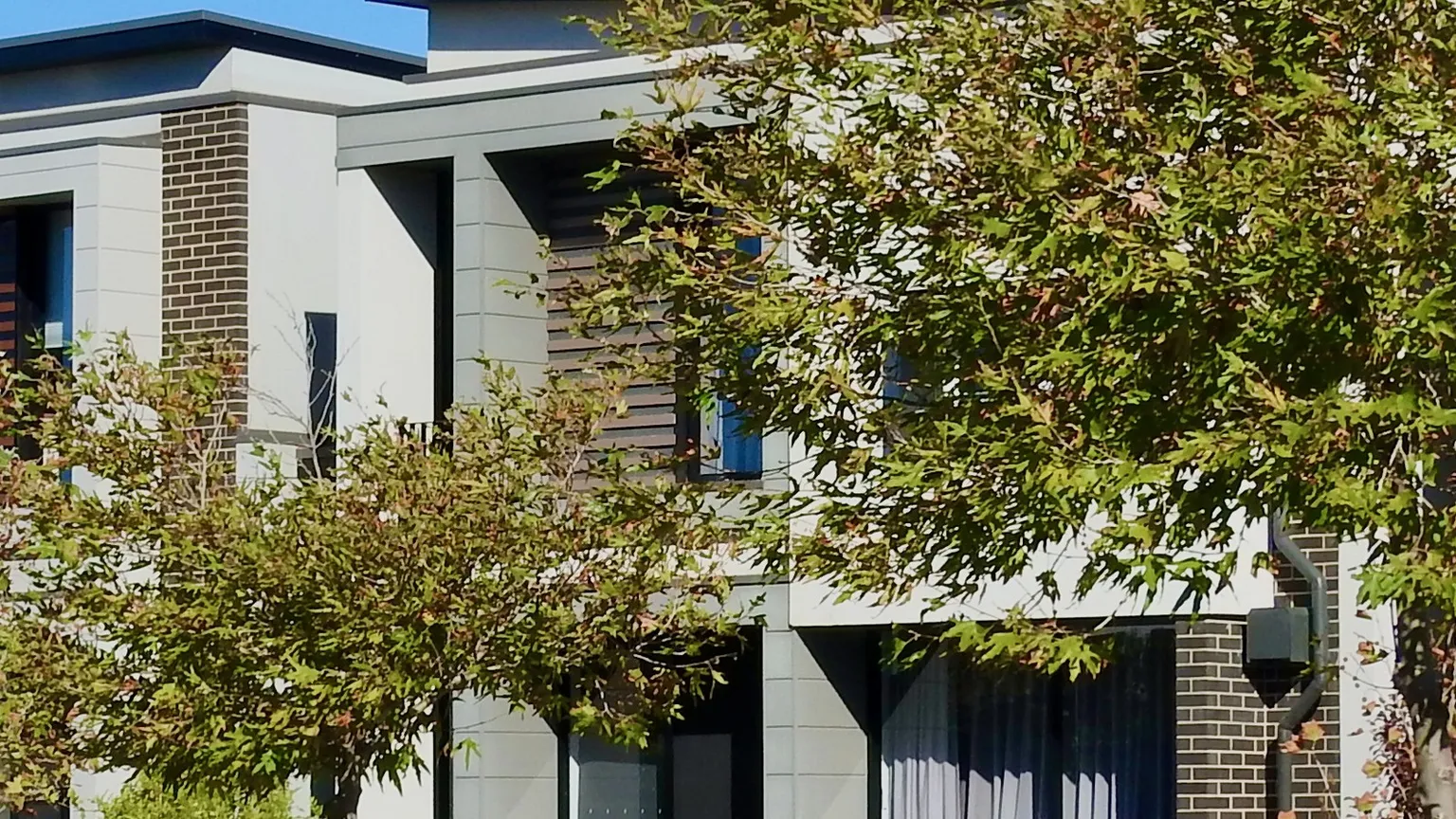
Photo: 'Townhouses on Troubridge Drive, West Lakes' by Golf99, CC0, via Wikimedia Commons.
Loading comments…