
Most of the cost of a refused or slow development application is not the application fee. It is the architect's time on drawings that get redesigned, the holding costs on a site that sits idle, and the finance that keeps ticking while council asks for information it could have asked for before you lodged. A pre-lodgement meeting is the tool for moving those questions to the front of the process.
The deal question: what will council object to, and can you answer it now?
A pre-lodgement meeting is a formal conversation with council planners about a concept, before it becomes a lodged application. City of Newcastle's Pre-DA service page describes the purpose plainly: tailored, site-specific planning advice to help you understand requirements and risks before lodging a development application. It recommends the service where a proposal includes heritage considerations, view impacts or compliance and planning constraints — the situations where an ordinary reading of the controls will not tell you what council will actually think.
The service is not an approval and it does not bind council. What it does is convert an unknown into a written position you can design around, price, or walk away from.
What you actually get for the fee
Wollondilly Shire Council's pre-lodgement page is unusually clear about the output. The meeting is attended by the relevant planner and, where required, other specialist staff, and written advice follows. That advice gives you council's indication of its position on the proposal, an understanding of permissibility, the relevant development standards, controls and policies and any non-compliances, and an understanding of what plans, drawings and technical reports a future application will need.
That third item is the one students underestimate. Finding out at the pre-lodgement stage that you need a flood study, a geotechnical report or a stormwater concept is a scheduling problem. Finding out at lodgement is a cash-flow problem, because the assessment clock stops while you commission reports you had not budgeted.
The cost is council-specific, not a statewide rate
Fees are set by each council and vary with the scale and complexity of the proposal. Wollondilly, for example, publishes tiers that range from a planner-only Minor meeting at $600 through Medium at $1,350 to Major at $2,450 including three or more internal referral departments and an on-site meeting if requested. City of Newcastle prices by quote, and notes that additional fees may apply after a full review. Treat any figure you see as that council's number for that proposal, not a general price for pre-lodgement advice across New South Wales.
Set against a redesign, a three-month delay or a refusal, a few hundred to a few thousand dollars is usually the cheapest item in the project. On a site with a genuine constraint it is close to compulsory in practice, even where it is not compulsory by rule.
When you are ready to book one
The trigger is a preliminary concept for a specific site — not a finished application. City of Newcastle asks for concept plans drawn to scale, elevations and, ideally, site and streetscape photographs; for larger or more complex proposals it also asks for a brief overview of the development options you considered and a comparison table showing how your proposal aligns with council's planning controls.
Below that threshold, most councils run a free or low-cost duty planner service for general questions. Use it to triage: if the answer is "that control looks straightforward", you may not need a formal meeting. If it is "that depends on the site", you do.
The checks a capable student would run before the meeting
- Get the title and planning certificate in order. Confirm the registered owner and any covenants, easements or restrictions before you draw anything, so the concept is not built on the wrong assumption.
- Commission a current survey. Boundaries, levels, existing structures and vegetation should come from a registered surveyor, not from a plan in a contract.
- List every non-compliance, with a reason. Write down each control your concept misses and what you propose to do about it. Council respects a considered variation far more than an unnoticed one.
- Decide the questions you want answered. Take three or four specific questions, not a general request for feedback.
- Submit the documentation by the council's deadline. Many councils will not accept late material, and a meeting without drawings cannot give you the advice you paid for.
The trap: treating the meeting as approval
The written advice is not a consent. It is council's position on a concept at a point in time, and the assessment officer who later determines the application will work from the lodged documents, not from the meeting minutes. Proposals that change materially after the meeting — different unit count, different access, a taller building — effectively restart the conversation. The trap is leaving the meeting with a favourable tone and then redesigning the scheme around a new yield assumption, which is a different proposal that has not been tested.
Camden Council's description of the development assessment process is a useful reminder that pre-lodgement is one stage in a longer sequence, not an alternative to it.
What you do not have to work out alone
You are not expected to interpret the planning controls, resolve the non-compliances or predict council's view yourself. Your town planner prepares the concept, drafts the response to each control and presents it, a registered surveyor produces the plan the concept is drawn on, and the council's assessing officers give the formal advice. Your job is to decide whether the advice changes the deal — and to price that change into your feasibility before you commit.
Sources and boundaries
Sources checked 5 October 2026. Jurisdiction and limits: This guide is focused on New South Wales and uses the published pre-lodgement material of City of Newcastle, Wollondilly Shire Council and Camden Council as examples. Pre-lodgement services, fees, required documents and timeframes are set by each council and are not a statewide rate. The fees quoted are those councils' own published figures at the date checked. Confirm current requirements with your own council.
- City of Newcastle — Pre-Development (Pre-DA) service. Used for: Records the purpose of the Pre-DA service, that a Duty Officer option exists for straightforward proposals, that meetings run 30-60 minutes, that minimum requirements are concept plans to scale, elevations and site and streetscape photos, that complex applications also need an options overview and a comparison table against council's planning controls, that a meeting is scheduled within 14 days of the application, and that written advice follows within 21 days. (Checked 5 October 2026)
- Wollondilly Shire Council — Pre-Lodgement Meeting. Used for: Records that a pre-lodgement meeting is attended by the relevant planner and other specialist staff, that written advice follows the meeting, what that advice covers (council's position, permissibility, development standards, controls, non-compliances and the reports likely to be needed), that you are ready once you have a preliminary concept on a specific site, and the Minor $600 / Medium $1,350 / Major $2,450 fees. (Checked 5 October 2026)
- Camden Council — Development application process. Used for: Records that council's development assessment process is set out in a defined sequence of stages from pre-lodgement checking through to determination and certification. (Checked 5 October 2026)
- NSW Department of Planning, Housing and Infrastructure — Your guide to the post consent process. Used for: Explains that conditions of consent are grouped by stage (general, before issue of a construction certificate, before building work commences, during building work, before an occupation certificate, occupation and ongoing use) and that applicants should note which conditions must be met at each stage. (Checked 5 October 2026)
This article is general education, not personalised planning, legal, financial, tax or building advice. Requirements and outcomes vary by jurisdiction, site, contract, structure and circumstances. Check current information with the relevant authority and appropriately qualified advisers.
 Learn with Jason & AmyBuild practical small-scale property development skills with experienced mentors.Enquire now
Rate this article
Guest rating: select 1 star for poor or 5 stars for great. No account is required.
Leave a comment
Join the discussion. Your email address will not be published.
Frequently asked questions
Is a pre-lodgement meeting compulsory before lodging a development application?
Not generally. It is optional in most New South Wales councils, although some councils require a pre-lodgement meeting for particular development types such as multi-unit housing. Check the requirement for your specific council and proposal before you plan your lodgement date.
How long does the whole pre-lodgement process take?
It is council-specific. City of Newcastle, for example, publishes that a meeting will be scheduled within 14 days of the application and that written advice follows within 21 days after lodgement. Allow for the time to prepare drawings and to act on the advice before you lodge.
What should I bring to a pre-lodgement meeting?
At minimum, concept plans drawn to scale and elevations; site and streetscape photographs help. For larger or more complex proposals, add an overview of the options you considered and a table comparing your proposal against the relevant planning controls. Submitting early matters, because some councils will not accept late material.
Does the written advice guarantee my application will be approved?
No. The meeting does not pre-empt the determination and the advice does not bind council. Assessment happens when you lodge, against the documents you lodge, so treat the advice as direction rather than as an outcome.
What is the difference between a duty planner and a pre-lodgement meeting?
A duty planner gives general guidance on the planning framework, usually free or at low cost, and is useful for triaging simple questions. A pre-lodgement meeting is a paid, documented review of a specific concept on a specific site, attended by the relevant specialist officers, and produces written advice you can design and price against.
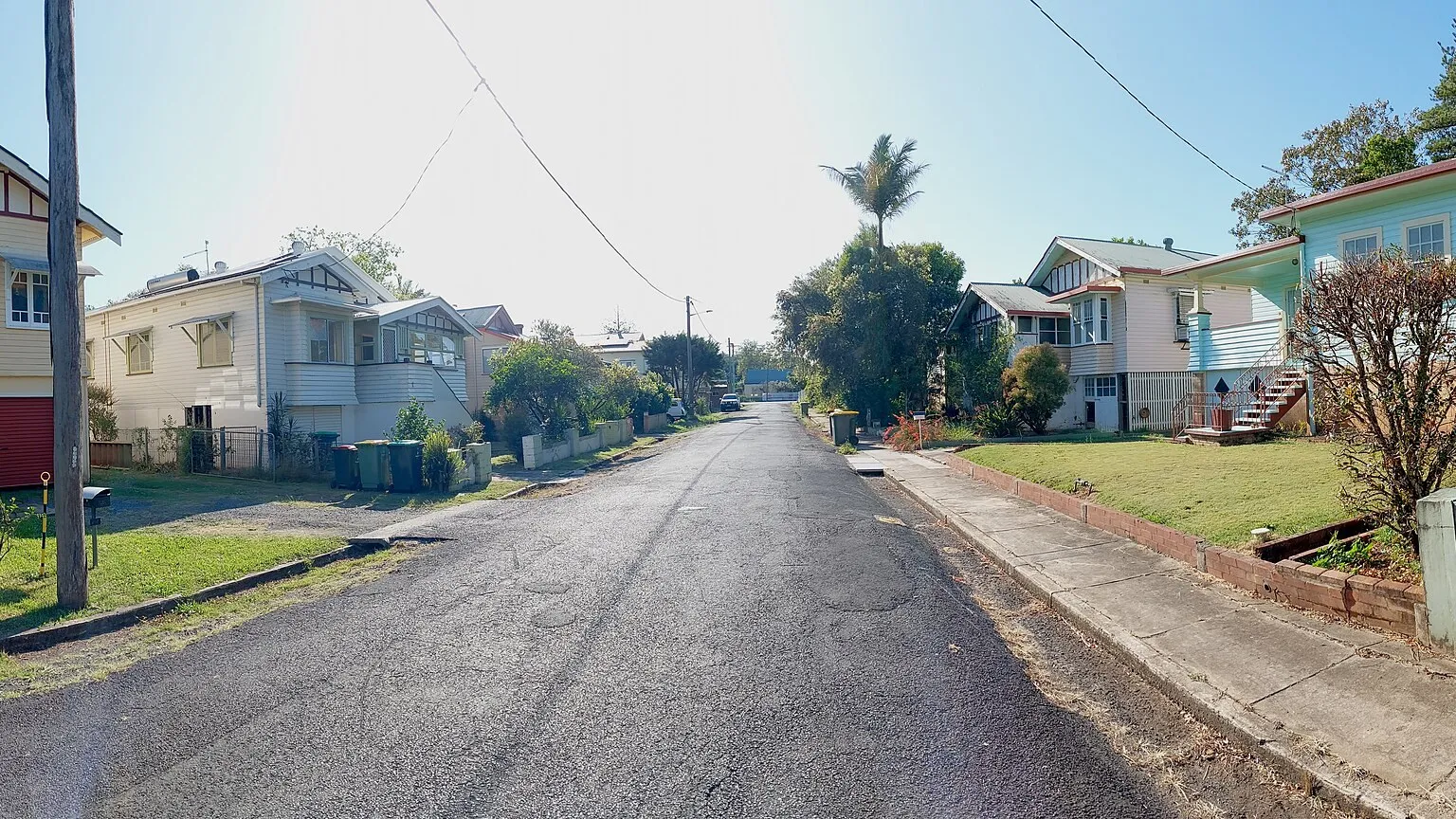
Photo: 'Residences-north-lismore' by Tony 1212, Wikimedia Commons, CC BY-SA 4.0.
Loading comments…