
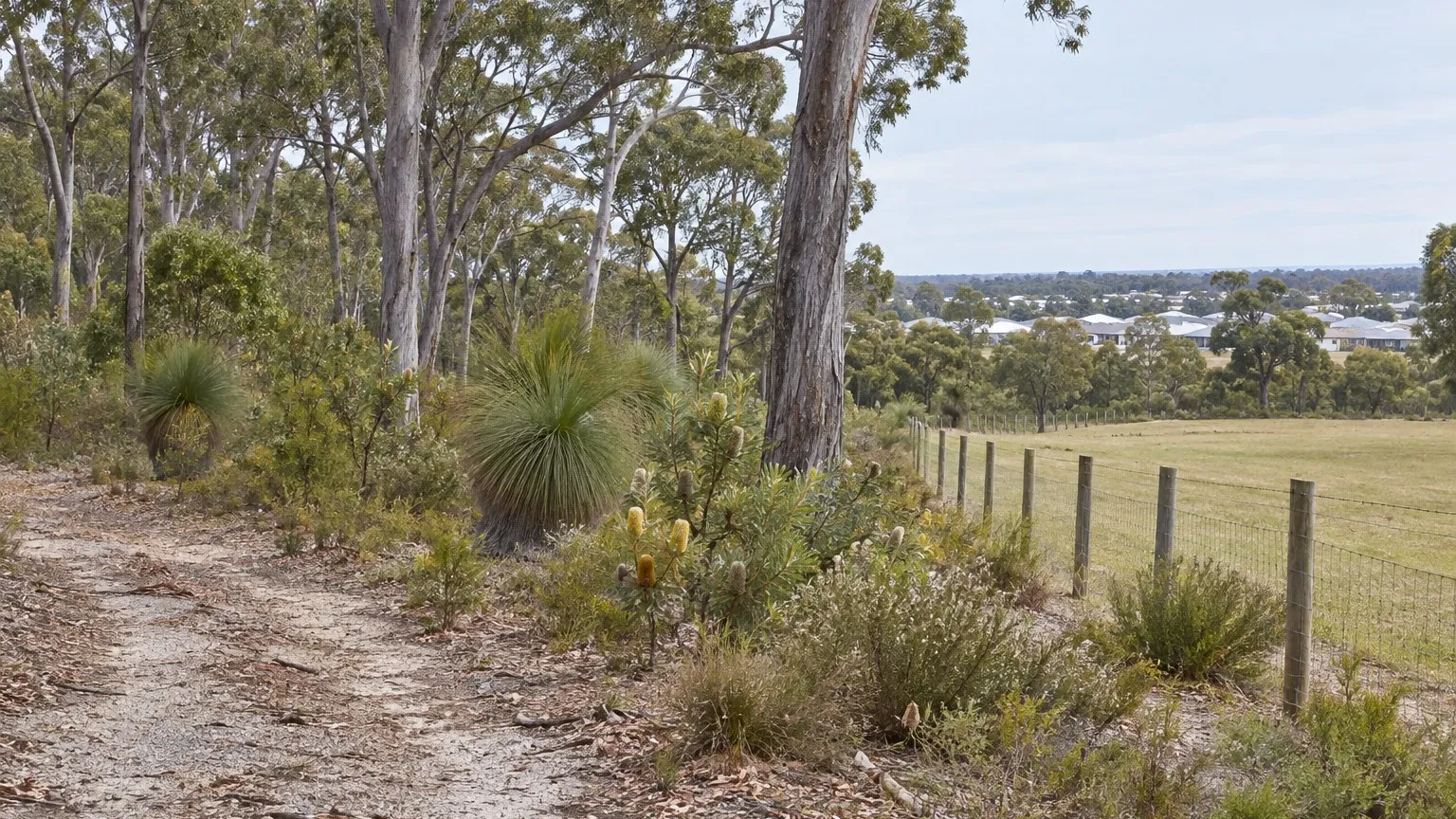
You find a block on the edge of town with a development story that works. There is a clearing, services nearby, and enough area for the lots the numbers need. Part of the site is timber, and in the first layout the timber simply disappears.
In Western Australia that assumption can stop the project. Clearing native vegetation is prohibited unless a permit has been granted or an exemption applies, and the exemption is a full checklist rather than a general permission.
The deal question: how much native vegetation will your layout remove?
The starting position is set out in the current government material. The page on native vegetation clearing permit lodgement states that clearing of native vegetation is prohibited in Western Australia except where a clearing permit has been granted, or an exemption applies, and that a person who causes or allows unauthorised clearing commits an offence.
The companion page on native vegetation clearing permits then sets the permission pathway: you need a permit to clear native vegetation unless you either have an exemption or the department determined you did not need one during the clearing referral process.
So the feasibility question is measurable. How many hectares of native vegetation does your proposed design remove, what condition is it in, and does any exemption clearly cover it?
The trap: assuming uncleared land is the cheapest land
The commercial instinct is that timber on a block is free to remove. In Western Australia it is a regulated activity with a permit, a fee scale, a possible offset condition and an assessment that can be declined as incomplete.
Worse, the removal is a design decision made early and paid for late. The clearing area is set by the lot layout, the access, the building platforms, the services trench and the stormwater strategy. By the time the permit question is asked, the layout that created the clearing area is already drawn, and redrawing it costs design time and yield.
Exemptions exist, and the sensitive area rule catches people out
There is a genuine exemption pathway. The clearing permits page confirms you do not need a permit if you have an exemption or the department determined you did not need one during the clearing referral process.
It then adds the qualifier that most people miss. The page states that some exemptions do not apply within declared environmentally sensitive areas, and directs you to the Clearing Permit System map to determine whether an area you wish to clear is in an environmentally sensitive area. It also notes that you can order a property interest report from Landgate, for a fee, to obtain that information.
That is a two-part test, not one. An exemption that would cover the clearing on one side of a boundary may not apply on the other, and the difference is a map layer you can check before you buy.
What the assessment looks at, and why it decides your programme
The lodgement material lists the factors that influence the significance, complexity and time taken to assess an application: the size of the area proposed to be cleared; the location of that area; the sensitivity of the environment and the environmental values that occur within or adjacent to it; the techniques used to clear; and the purpose of the application, such as exploration, mining, development or infrastructure.
Every one of those factors is under your influence at design stage. A smaller clearing area, a location that avoids the most sensitive vegetation, a gentler clearing technique and a clearly stated development purpose all shorten the assessment. The same page recommends that detailed information is submitted with every application, new or amendment, specifically to reduce assessment timeframes.
The cost stack: application fee, offset, and the evidence pack
The clearing permit fees page sets out the published structure. The application fee is based on the application area in hectares and on whether the clearing is in an intensive or extensive land use zone, with the published amounts starting at $400 for not more than 1 hectare in either zone and rising with area. Purpose permits carry an additional purpose permit component fee, published at $2,000, and the page explains that this reflects the greater complexity of assessing and administering a permit that allows clearing of different areas from time to time.
The page then separates the offset from the fee. It states that if your clearing activity will result in significant residual environmental impacts, the department will put a condition on your permit for an offset to counterbalance those impacts, and that it follows the WA Environmental Offsets Policy and WA Environmental Offsets Guidelines when setting any offsets you must pay for. It also answers plainly that paying for an offset does not replace the assessment fee, because the two payments are for different purposes.
On a site with good condition vegetation, the offset line is often larger than everything else in the approval stack, and it appears nowhere in the land price.
An application also has a documentary cost. The lodgement material lists what a complete application contains: the correct and current application form signed by an authorised person; the prescribed fee, paid through the submissions portal and payable for purpose permits, area permits, amendment clearing permits and surrender applications; an ESRI shapefile of the proposed clearing area boundary; and a scaled map of the area proposed to clear. It adds that the shapefile for a purpose permit should show the outer extent of the proposed clearing areas, while the shapefile for an area permit should contain only the extent of the areas to be cleared.
That difference is not clerical. Choosing the wrong permit type changes what the application can authorise and what you must map, and the department may decline to deal with an application that is incomplete.
The site test a student would run, in order
- Have the vegetation identified and mapped by an environmental consultant or botanist: extent, condition, any significant species or ecological community.
- Check the Clearing Permit System map for environmentally sensitive area status, and order the property interest report if the map leaves the question open.
- Establish the land use zone, because the fee scale and the assessment scrutiny both turn on it.
- Test the exemptions against the actual clearing, including whether the sensitive area rule removes the exemption you were relying on.
- Decide area permit or purpose permit on what the project genuinely needs to authorise, then prepare the shapefile and map for that permit type.
- Price the assessment, the offset and the evidence pack into the feasibility, and test the design with a reduced clearing area against the design with the higher yield.
- Decide the timing question before exchange: is the clearing referral or the permit application a condition precedent, or are you buying the risk?
What this does to the offer
Run the feasibility twice: the layout that clears the bushland, and a layout that retains it and designs around it. If the retaining layout holds most of the yield, the commercial answer is usually to keep the trees, because that removes the permit, the fee, the offset, the assessment delay and the offence risk in one decision.
If the clearing is essential, then the offset is the deal. Ask your environmental adviser for a desktop estimate of the residual impact and the offset range before you exchange, and put the number into the model rather than into the contingency line.
Practical next steps
You are not expected to solve this yourself. An environmental consultant or botanist identifies the vegetation, maps its extent and condition, and tests the exemptions. A town planner confirms how the clearing question sits with the local planning approval and any local scheme provisions. The department's clearing permitting team, or a suitably qualified adviser, confirms whether a permit or a referral is required and what offsets or conditions are likely. Confirm the current land use zone, the environmentally sensitive area status and the current fee schedule before you commit to a layout, a programme or a price.
Sources and boundaries
Sources checked 28 September 2026. Jurisdiction and limits: Western Australia specific information. This guide relies on the clearing permit framework under Part V of the Environmental Protection Act 1986 (WA) and on current Western Australian Government material about clearing permits, clearing referrals, clearing permit fees, land use zones and environmentally sensitive areas. The fee schedule used here is the published schedule as at 28 September 2026 and fees are set by regulation, so the current fee position must be confirmed for the application actually lodged. Whether clearing requires a permit depends on the site: the extent and condition of the native vegetation, the purpose and method of clearing, the tenure, whether the land is in an intensive or extensive land use zone, and whether any exemption applies and every condition of that exemption is met. Some exemptions do not apply within declared environmentally sensitive areas. Significant residual environmental impacts can attract an offset condition on the permit. Commonwealth approval under the Environment Protection and Biodiversity Conservation Act 1999 is a separate requirement. Other states and territories must not be assessed against this material. This is general information only.
- Western Australian Government — Native vegetation clearing permits. Used for: that you need a permit to clear native vegetation unless you either have an exemption or the department determined you did not need one during the clearing referral process; that some exemptions do not apply within declared environmentally sensitive areas; that the Clearing Permit System map is the way to check environmentally sensitive area status; and that other state or federal legislative requirements may still apply even where clearing is exempt under the Environmental Protection Act 1986 (Checked 28 September 2026)
- Western Australian Government — Native vegetation clearing permit fees, frequently asked questions. Used for: that fees are prescribed under regulation and scale with the application area in hectares and the land use zone; the published area permit and purpose permit fee amounts and the separate purpose permit component fee; that an offset, where a clearing activity will result in significant residual environmental impacts, is a separate payment from the application fee and is set under the WA Environmental Offsets Policy and WA Environmental Offsets Guidelines; that purpose permits allow the clearing of different areas from time to time for a purpose specified in the application; and the amend and surrender fee schedule (Checked 28 September 2026)
- Western Australian Government — Native vegetation clearing permit lodgement (mineral resources). Used for: that clearing of native vegetation is prohibited in Western Australia except where a clearing permit has been granted, or an exemption applies, and that a person who causes or allows unauthorised clearing commits an offence; the required application contents including the current application form and the prescribed fee, paid through the submissions portal, with an ESRI shapefile of the proposed clearing area boundary and a scaled map; the distinction between the shapefile required for an area permit and for a purpose permit; and the factors that influence the significance, complexity and time taken to assess an application, including size, location, environmental sensitivity, clearing technique and purpose (Checked 28 September 2026)
- Department of Water and Environmental Regulation — Clearing permits. Used for: that the department's clearing permit information has been updated and moved to wa.gov.au, and the current route for reporting potential unlawful native vegetation clearing (Checked 28 September 2026)
This article is general education, not personalised planning, legal, financial, tax, privacy, safety or building advice. Requirements and outcomes vary by jurisdiction, site, contract, structure and circumstances. Check current information with the relevant authority and appropriately qualified advisers.
 Learn with Jason & AmyBuild practical small-scale property development skills with experienced mentors.Enquire now
Rate this article
Guest rating: select 1 star for poor or 5 stars for great. No account is required.
Leave a comment
Join the discussion. Your email address will not be published.
Frequently asked questions
Is clearing native vegetation really prohibited, or is that just guidance?
The prohibition is the starting point in Western Australia. The current government material on native vegetation clearing permit lodgement states that clearing of native vegetation is prohibited in Western Australia except where a clearing permit has been granted, or an exemption applies, and that a person who causes or allows unauthorised clearing commits an offence. The companion page states that you need a permit to clear native vegetation unless you either have an exemption or the department determined you did not need one during the clearing referral process. That is a prohibition with a permission pathway, not a policy preference.
How can I find out whether I even need a permit before I buy?
There is a published referral step for exactly this. The clearing permits page describes a clearing referral process, and the permit fees page states that you do not have to pay a fee to refer a proposed clearing activity to the department for a decision on whether a clearing permit applies, but that if the department decides a permit is required and you then apply for one, you must pay the appropriate fee for a new permit application. That makes a referral a relatively low-cost way to convert an assumption into a finding while the contract is still conditional.
What does a clearing permit application actually cost?
It scales with area and zone, and there is a second component for purpose permits. The permit fees page sets out the published schedule: the application fee is based on the application area in hectares and the location of the clearing in an intensive or extensive land use zone, and where the application area is not more than 1 hectare the published amount is $400 in either zone, rising through $600 for more than 1 hectare but not more than 5 hectares, $1,500 in an intensive zone or $750 in an extensive zone for more than 5 but not more than 10 hectares, and $2,000 or $1,000 respectively for more than 10 but not more than 50 hectares. Purpose permits carry an additional component, published at $2,000. Fees are prescribed by regulation and were last changed in July 2019, so confirm the current schedule.
Is the offset the permit condition, or is it a separate cost?
It is separate from the application fee, and it is the larger number on a sensitive site. The permit fees page states that if your clearing activity will result in significant residual environmental impacts, the department will put a condition on your permit for an offset to counterbalance those impacts, and that it follows the WA Environmental Offsets Policy and WA Environmental Offsets Guidelines when setting any offsets you must pay for. It also confirms that paying for an offset does not replace the assessment fee, because the two payments are for different purposes. The offset is therefore a project cost that belongs in the feasibility before the layout is fixed.
What decides how long the assessment takes?
The published factors are about the site and the proposal, not about the department's workload. The clearing permit lodgement material lists the factors that influence the significance, complexity and time taken to assess an application as the size of the area proposed to be cleared, the location of that area, the sensitivity of the environment and the environmental values within or adjacent to it, the techniques used to clear, and the purpose of the application such as exploration, mining, development or infrastructure. It also states that to reduce assessment timeframes it is recommended that detailed information is submitted with every application, whether new or an amendment. An incomplete application can be declined outright, so the evidence pack is part of the schedule.
Loading comments…