
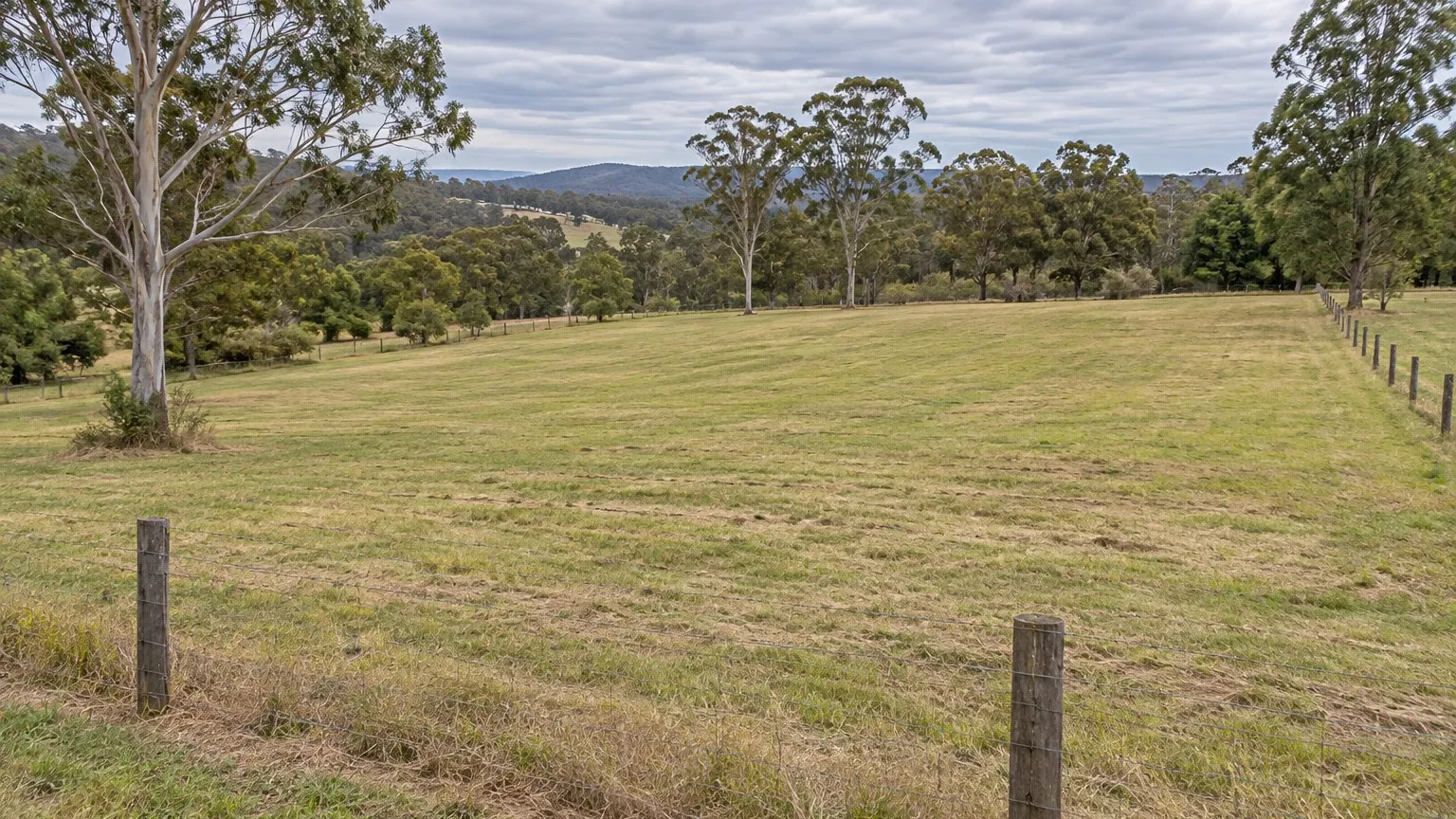
It looks like the perfect subdivision block. Big lot, gentle slope, a tired house at the front and plenty of room at the back. Then you discover there is no sewer. Everything you thought you knew about yield now depends on a soil profile and a set of buffer distances you have not measured.
Unsewered land is where inexperienced buyers lose money quietly, because the constraint is invisible from the street.
The deal question: can every new lot dispose of its own wastewater?
On sewered land, wastewater is somebody else's infrastructure problem. On unsewered land it becomes part of your site design. Every new lot you create must be capable of treating and disposing of its own wastewater within its own boundaries, and that capability is bounded by soil, slope, buffers and area.
The question that decides the deal is therefore not whether the block is big enough. It is whether each proposed lot can physically accommodate a compliant effluent disposal area, with the required buffer distances, without eating the building envelope.
The checks a student would run, in order
Order matters here more than almost anywhere, because a failed soil assessment ends the exercise before a survey is worth ordering.
- Confirm the servicing status in writing. Not sewered, or sewered but short of capacity? Those are different projects. Get it from the council and the water authority, not the agent.
- Read the wastewater control for your council. Wollondilly Shire Council's DCP 2016 Volume 3 requires all lots created to have access to a reticulated scheme, a licensed private scheme, or sufficient land with the correct physical and chemical characteristics to allow wastewater to be treated and disposed of within the lot boundaries. It also states that a pump out system is not a satisfactory method of wastewater disposal, and that unsewered subdivision must meet council's on-site sewage management and greywater policy.
- Map the buffer distances before you map the lots. Shoalhaven City Council's DCP 2014 Chapter G8 publishes minimum buffer distances for on-site systems including 100 metres to permanent surface waters and to groundwater bores, and 40 metres to other waters such as farm dams, intermittent waterways and street drainage including gutters, swales and table drains. Draw those circles on your plan first. What is left is your developable area.
- Get the soil assessed properly. Shoalhaven's controls require examination of the textural classification of the soil profile to determine the long term acceptance rate and to assist in the design of the system, and require further investigation where soils exhibit high permeability above 3.5 metres per day. Tumbarumba Shire Council's DCP 2011 requires a report by an appropriately qualified soil scientist or similar for unsewered areas addressing the site's ability to cater for on-site sewage disposal. That is a specialist's assessment, not a desktop opinion.
- Test whether the reserve area fits. Shoalhaven requires a reserve (secondary) area of 100 per cent of the design area, protected from development that would prevent its future use. In practice, room for the disposal area twice.
The trap: assuming the disposal area is a small corner of the block
The expensive mistake is treating wastewater as a detail to be resolved at building approval stage. By then you own the block. If the soil cannot accept the effluent, or the disposal area collides with a buffer to a table drain, or the reserve area will not fit alongside the building envelope, your second lot is not worth what you paid for it.
The second version of the trap is assuming a pump out system is a fallback. On many councils' controls it is expressly not, or is restricted to narrow circumstances such as land registered before a historic policy date. A buyer who has mentally pencilled in a pump out as the answer may have no answer at all.
What the result means for feasibility and the offer
This is a genuine go / no-go test, not a cost adjustment. If the specialist's assessment establishes a compliant disposal area and reserve area within each proposed lot, the project continues and you carry the assessment cost as a due diligence line. If it does not, you have three choices: reduce the yield, enlarge the lots beyond what you modelled, or walk.
What you must not do is price the risk as a contingency. Contingencies are for costs that vary. This is either possible or it is not, and the evidence is available before you exchange if you ask for it.
If the assessment is favourable, it is also worth something at offer stage. A vendor with an unsewered block has a smaller pool of buyers who can do anything with it. You have just done the work that demonstrates you can.
The Think Property Club lesson
Students learn that due diligence is not a checklist of documents. It is a sequence of tests, each of which either advances the deal or ends it. Unsewered land is a good example because the decisive evidence comes from a specialist, and the student's job is to know which specialist, what question to ask, and when in the sequence to ask it.
Ask better questions earlier: is it sewered, what does the wastewater control require, where are the buffers, what does the soil profile show, and does the reserve area fit? Those five questions cost a few thousand dollars and can save a six-figure mistake.
Practical next steps checklist
- Confirm the servicing status with the council and water authority in writing.
- Read the council's on-site sewage management chapter and its wastewater controls for subdivision.
- Plot the published buffer distances on a plan before sketching any lot layout.
- Engage a suitably qualified wastewater consultant to assess soil and design the disposal area.
- Check whether a reserve or secondary disposal area must fit, and whether it physically can.
- Confirm no proposed disposal area falls inside a required buffer or a drainage line.
- Verify whether any pump out system may be considered on your site, in writing.
- Treat an unfavourable assessment as a no-go on that yield, not as a contingency.
Sources and boundaries
Sources checked 25 September 2026. Jurisdiction and limits: Australian general information with worked New South Wales examples. The specific controls described are those published by Wollondilly Shire Council (Development Control Plan 2016, Volume 3 Subdivision of Land), Shoalhaven City Council (Development Control Plan 2014, Chapter G8 Onsite Sewage Management) and Tumbarumba Shire Council (Development Control Plan 2011) as retrieved at the checked date. Whether a lot is sewered, the on-site wastewater requirements, buffer distances, soil assessment methods, reserve area requirements and pump out restrictions all differ between councils, states and water authorities, and they are amended from time to time. The AS/NZS standards referenced are technical standards that must be applied by a suitably qualified person. Every figure in this article is an example of one council's published control. Confirm the current requirements with the relevant council, water authority and a suitably qualified wastewater consultant for the specific site.
- Wollondilly Shire Council — Development Control Plan 2016, Volume 3 Subdivision of Land. Used for: the requirement that all lots created have access to a reticulated sewage scheme, a licensed private scheme or sufficient land with the correct physical and chemical characteristics to treat and dispose of wastewater within the lot boundaries; the statement that a pump out system is not a satisfactory method; the requirement for unsewered subdivision to meet council's on-site sewage management policy; and the requirement that the building envelope accommodate the wastewater irrigation area on certain minimum lot size land (Checked 25 September 2026)
- Shoalhaven City Council — Development Control Plan 2014, Chapter G8 Onsite Sewage Management (as amended). Used for: the required minimum buffer distances for on-site systems including 100 metres to permanent surface waters and groundwater bores and 40 metres to other waters; the requirement that effluent application areas be designed and constructed in accordance with AS/NZS 1547; the requirement that a reserve area of 100 per cent of the design area be identified and protected; the soil textural classification requirement; and the circumstances in which new pumpout systems may be considered (Checked 25 September 2026)
- Tumbarumba Shire Council — Development Control Plan 2011 (on-site sewage management and subdivision servicing). Used for: the requirement in unsewered areas for a report by an appropriately qualified soil scientist addressing the ability of the site to adequately cater for on-site sewage disposal, and the requirement for a scaled site plan showing the effluent application area, water bores within 250 metres and sensitive areas within 100 metres (Checked 25 September 2026)
This article is general education, not personalised planning, legal, financial, tax, privacy, safety or building advice. Requirements and outcomes vary by jurisdiction, site, contract, structure and circumstances. Check current information with the relevant authority and appropriately qualified advisers.
 Learn with Jason & AmyBuild practical small-scale property development skills with experienced mentors.Enquire now
Rate this article
Guest rating: select 1 star for poor or 5 stars for great. No account is required.
Leave a comment
Join the discussion. Your email address will not be published.
Frequently asked questions
How do I know if a block is unsewered before I buy it?
Ask the council and the water authority directly, and read the section 10.7 planning certificate and the title documents rather than relying on the agent. A block may be sewered but the sewer may be at capacity or require an extension to serve an additional lot, which is a different and often larger problem. The practical test is whether every proposed new lot can connect to a reticulated scheme. If it cannot, you are in on-site wastewater territory and the site assessment workload changes completely.
Can I just put in a pump out system for the new lots?
Not as a matter of course. Wollondilly's DCP states plainly that a pump out system is not a satisfactory method of wastewater disposal for the purposes of the requirement that each lot have adequate wastewater arrangements. Shoalhaven's controls similarly restrict new pumpout services to defined circumstances, including lots in unsewered residential or business zoned land registered before council adopted its former Effluent Pumpout Policy in August 2007 and multi dwelling housing in villages designated for future reticulation. Assume a pump out is not your solution unless the council confirms in writing that your site meets the exception.
Why do buffer distances matter so much on a subdivision?
Because they are measured from the effluent application area to the feature, and on a small lot there is not much room to move. Shoalhaven's published minimum buffer distances include 100 metres to permanent surface waters such as rivers, streams and lakes, 100 metres to any groundwater bores, and 40 metres to other waters including farm dams, intermittent waterways and street drainage such as gutters, swales and table drains. Land within Sydney's Drinking Water Catchment is referred to the WaterNSW neutral or beneficial effect guideline instead. On a narrow lot, a 40 metre setback to a table drain can eliminate the only practical position for the area.
What does the soil actually have to prove?
That it can accept the effluent long term. Shoalhaven's controls require the textural classification of the soil profile to be examined to determine the long term acceptance rate and to assist in designing the system, and where soils exhibit high permeability above 3.5 metres per day the application must demonstrate through further investigation that groundwater pollution will not occur. That is why a desktop opinion is not enough. The design depends on the soil profile on that lot, and the assessment is done by a suitably qualified person, not by the buyer.
Is there a reserve area requirement I should plan for?
Yes, and it catches people out. Shoalhaven's controls require a reserve (secondary) area of 100 per cent of the design area to be identified on the site for expansion and contingencies, protected from any development that would prevent its future use. Effectively that means finding room for the disposal area twice. On a tight lot where the primary area only just fits, the reserve area is often the constraint that cannot be met, and the note in the controls acknowledges that on small allotments it may not be possible to provide one. If you cannot provide it, that is your answer on yield.
Loading comments…