
Energy compliance on a new dwelling used to be one number: the star rating. NCC 2022 kept that number, raised it, and then added a second test that behaves very differently. The whole-of-home energy budget looks at the fixed appliances you specify, not just the thermal shell around them, and it is calculated before the house is built. If your feasibility priced a star rating and stopped there, this is the line item that moves.
The deal question: what did your specification actually assume?
A star rating is a property of the building envelope as modelled. The whole-of-home test asks a separate question: across a year, does the energy used by the heating and cooling, hot water, cooking, lighting and pool or spa pumps stay within an allowance for a dwelling of that size? Part 13.6 of the ABCB Housing Provisions sets that out. Clause 13.6.1 states the Part applies to a Class 1 building and a Class 10a building with a conditioned space, and clause 13.6.2 requires the building's net equivalent energy usage to not exceed an allowance built from a floor area factor, efficiency factors, pool and spa pump energy, and any renewable energy the design includes.
That last term is why the appliance schedule and the roof plan now talk to each other. You can meet the budget by choosing more efficient appliances, by adding renewables, or by a combination, and the cheapest answer for one site is not the cheapest answer for the next.
Why the star rating and the budget are not the same test
It is easy to read "seven stars" and assume the work is done. It is not. Section 13 of the Housing Provisions places the whole-of-home provisions beside, not inside, the fabric, glazing, sealing and services parts, and Volume Two Section H carries the energy-efficiency requirements for Class 1 and 10 buildings with Specification 42 for the house energy rating software path. A design can clear the thermal load limits and still need a better hot water unit or a different cooker to clear the annual budget.
Practically, that means the two results need to be read together at the same time. Ordering a rating early and then swapping the appliances to save money later is how a design ends up non-compliant on paper that has already been through a certifier.
What the whole-of-home budget is designed to capture
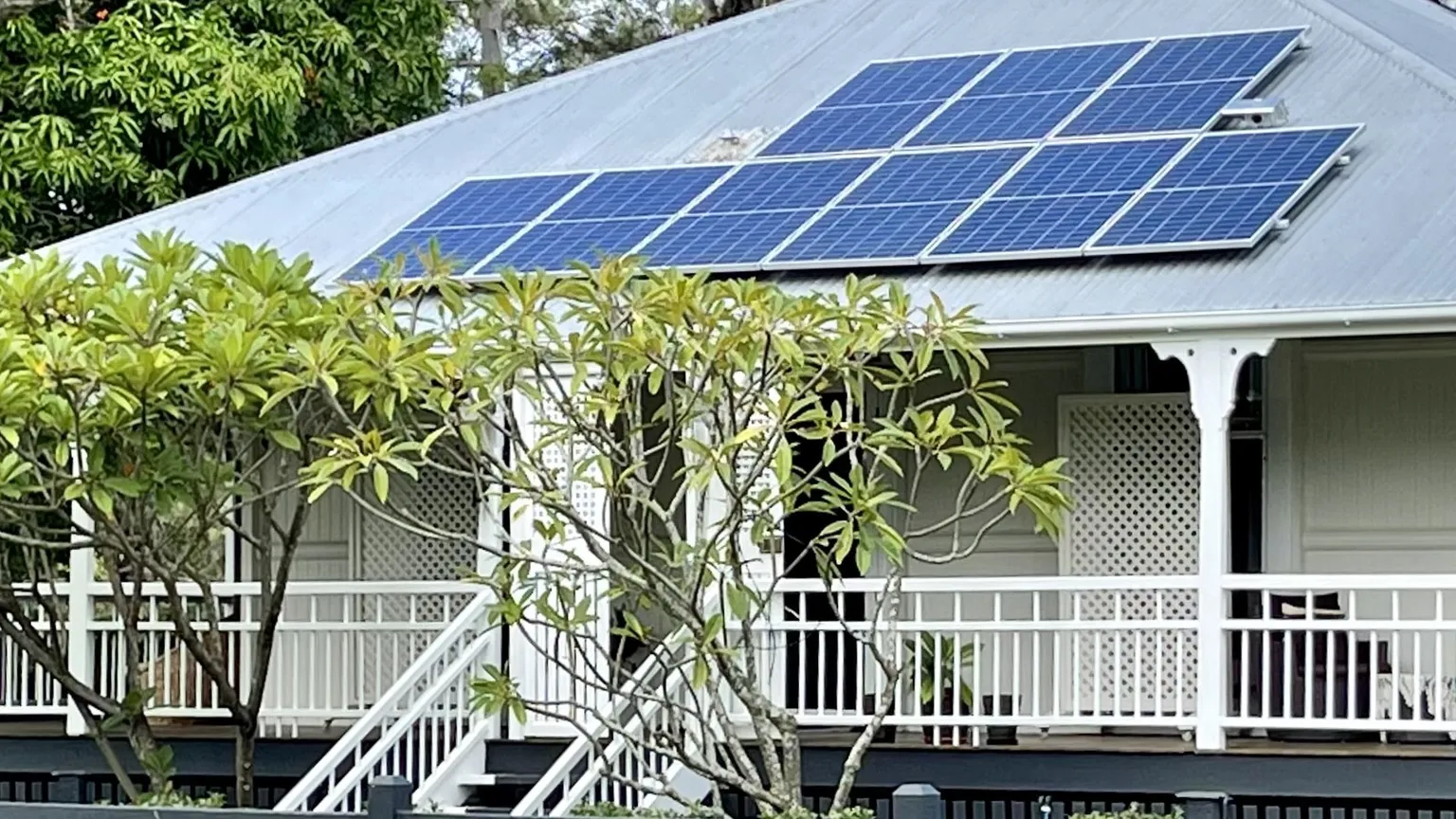
The ABCB's own summary of the change explains the intent: the minimum thermal performance level rose to the equivalent of seven stars, and a new whole-of-home annual energy use budget was introduced to be met by new homes. The budget addresses the energy use of heating and cooling equipment, hot water systems, cooking appliances, lighting, and swimming pool and spa pumps. Renewable energy systems such as rooftop solar panels and batteries are not mandatory but can be factored into the calculation.
Read that as a specification checklist. Every one of those items is something a buyer or a tenant notices, and every one of them has a price gap between the cheapest compliant option and the option a designer might prefer.
The site test a capable student would run
- Confirm the applicable edition and date with the certifier before you brief the designer, using the ABCB adoption table as the starting map rather than as the answer for your site.
- Model early and model both tests. Ask for the star rating and the whole-of-home result from the same assessment so the appliance list is priced with the shell, not after it.
- Write the appliance schedule into the tender. Hot water, space conditioning, cooking and pool or spa pumps are the inputs the calculation reads, so a builder substitution after contract can invalidate the certificate.
- Price the gap. Compare the cheapest compliant appliance set against the set in the design, and put the difference in the feasibility as a cost, not a hope.
- Check the renewable assumption. If the design counts solar towards the budget, confirm the array is actually specified on the roof plan and not left as an optional extra for the buyer.
The trap: treating an energy budget as a paperwork exercise
The common failure is a certificate produced from a modelled house that does not match the house that gets built. When the hot water unit is swapped to a cheaper model, or the solar drops off the plan, the design that was certified is no longer the design on site. On a small project that is not a technicality: it can surface at occupation certificate stage, when the schedule and the certificate no longer agree.
What you do not have to work out alone
You do not need to run the modelling or interpret the clause yourself. An accredited NatHERS assessor produces the rating and the whole-of-home result, and it is NatHERS that underwrites the certificate a certifier accepts. Your job is the deal-level one: make sure the specification you approved is the specification that gets priced, tendered and built, and that the certificate is produced from that design rather than from an earlier draft.
Do that and the energy budget stops being a late surprise. Skip it and the second test arrives after the contract is signed, when changing an appliance or a glazing system costs more than it would have at design stage.
Sources and boundaries
Sources checked 4 October 2026. Jurisdiction and limits: This guide states the NCC 2022 residential energy-efficiency provisions as published nationally by the ABCB and the adoption dates recorded in the ABCB's own table. The date that applies to a specific approval depends on the state or territory and any transition arrangement, so confirm the edition and variation with the building certifier before relying on this guidance.
- NCC 2022 ABCB Housing Provisions — Part 13.6 Whole-of-home energy usage. Used for: Part 13.6 applies to a Class 1 building and a Class 10a building with a conditioned space, and clause 13.6.2 requires the building's net equivalent energy usage to not exceed the allowance calculated from the floor area factor, efficiency factors, pool and spa pump energy and renewable energy. (Checked 4 October 2026)
- NCC 2022 ABCB Housing Provisions — Section 13 Energy efficiency. Used for: Part 13.1 sets the scope of Section 13 and confirms the whole-of-home provisions sit beside the building fabric, glazing, sealing and services parts. (Checked 4 October 2026)
- NCC 2022 Volume Two — Section H Class 1 and 10 buildings. Used for: Part H6 governs energy efficiency for Class 1 and 10 buildings and Specification 42 covers the house energy rating software compliance path. (Checked 4 October 2026)
- ABCB — NCC 2022 state and territory adoption dates. Used for: The ABCB adoption table records the state and territory commencement dates for the NCC 2022 housing energy efficiency provisions, including the New South Wales enhanced BASIX from 1 October 2023 and Victoria from 1 May 2024. (Checked 4 October 2026)
- NatHERS — home energy rating for new homes. Used for: NatHERS is the Nationwide House Energy Rating Scheme used for the star rating and the associated new home certificate and assessment guidance. (Checked 4 October 2026)
This article is general education, not personalised planning, legal, financial, tax or building advice. Requirements and outcomes vary by jurisdiction, site, contract, structure and circumstances. Check current information with the relevant authority and appropriately qualified advisers.
 Learn with Jason & AmyBuild practical small-scale property development skills with experienced mentors.Enquire now
Rate this article
Guest rating: select 1 star for poor or 5 stars for great. No account is required.
Leave a comment
Join the discussion. Your email address will not be published.
Frequently asked questions
Does NCC 2022 change the star rating as well as adding a whole-of-home test?
NCC 2022 raised the residential thermal performance minimum to the equivalent of seven stars under NatHERS and added a separate whole-of-home annual energy use budget for fixed appliances. The two are different tests, and a design can pass one and fail the other. Confirm both with an accredited NatHERS assessor before you fix your specification.
What does the whole-of-home budget actually cover?
ABCB material describes the budget as covering the energy use of a home's heating and cooling equipment, hot water systems, cooking appliances, lighting, and swimming pool and spa pumps. Renewable energy systems such as rooftop solar and batteries are not mandatory but can be counted towards the budget. Ask your assessor which of these are modelled in your certificate.
Which NCC edition will my certifier apply?
It depends on your state or territory, not the national publication date. The ABCB adoption table records New South Wales using enhanced BASIX from 1 October 2023, Victoria from 1 May 2024, South Australia from 1 October 2024 and Western Australia from 1 May 2025, with the Northern Territory limited to 5-star requirements and Tasmania not adopting the housing energy-efficiency requirements. Ask your certifier to confirm the edition and transition rule for your approval.
Will this change my construction cost?
It can. A tighter thermal shell, different glazing and a more efficient hot water or space-conditioning appliance all carry a price, and the trade-off usually shows up in the specification rather than the concrete. Price the specified appliances and glazing against a modelled certificate early, so the cost is inside the feasibility rather than a variation after the slab is poured.
Who signs off the energy compliance?
An accredited NatHERS assessor produces the rating and the whole-of-home assessment that the certificate relies on, and the building certifier confirms the applicable edition at approval. Neither role is one you perform yourself: your job is to make sure the modelled design and the drawings match what actually gets built.
Photo: Houses in Corinda, Queensland, 2021, Wikimedia Commons, CC BY-SA 4.0.
Loading comments…