
Property Development Costs Checklist: Every Cost You Need to Know
What Does Property Development Actually Cost?
One of the biggest reasons deals fail is because developers underestimate costs. They budget for the land and the build, but forget about the 15 to 20 additional costs that eat into their profit.
This checklist covers every cost involved in a typical small-scale property development in Australia — subdivisions, duplexes, and townhouse projects. Real dollar ranges are included so you can plan with confidence.
Category 1: Land Acquisition Costs
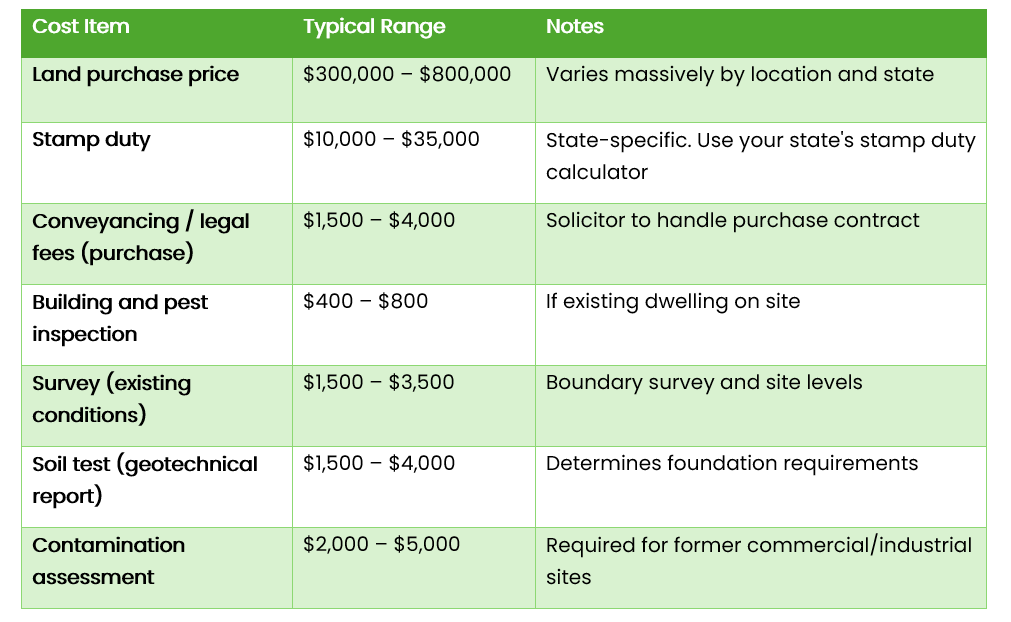 Subtotal: $317,000 – $852,000
Category 2: Professional Fees (Pre-Construction)
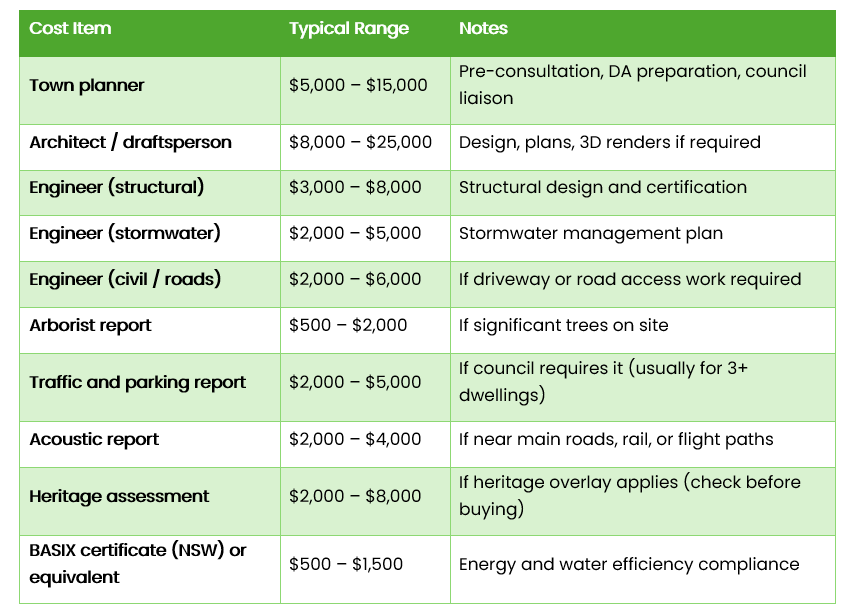 Subtotal: $27,500 – $79,500
Not every project requires every report. A simple subdivision may only need a town planner, surveyor, and engineer. A more complex multi-dwelling project may require all of the above.
Category 3: Council and Government Fees 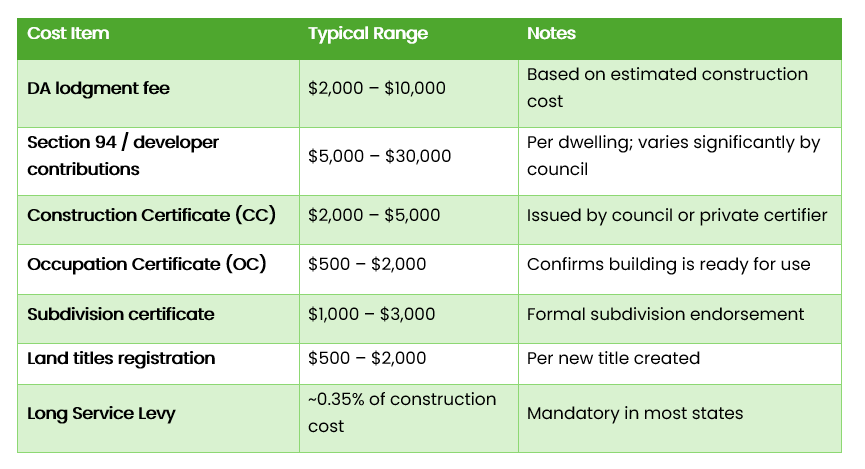 Subtotal: $11,000 – $52,000
Section 94 contributions are one of the most commonly underestimated costs. Some councils charge $20,000 or more per new dwelling. Always check before you buy the site.
Category 4: Construction Costs
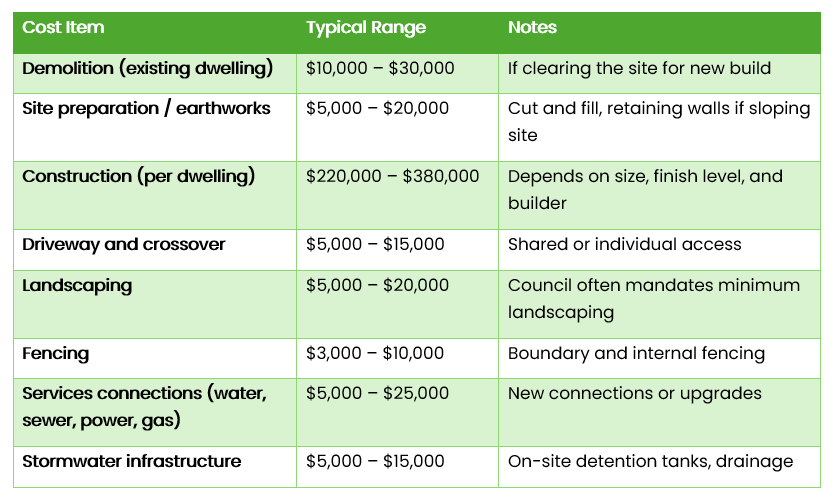 Subtotal (for 2 dwellings): $478,000 – $895,000
Construction costs are the largest line item in any development budget. Get at least three fixed-price quotes from builders with a proven track record on similar projects.
Category 5: Holding Costs
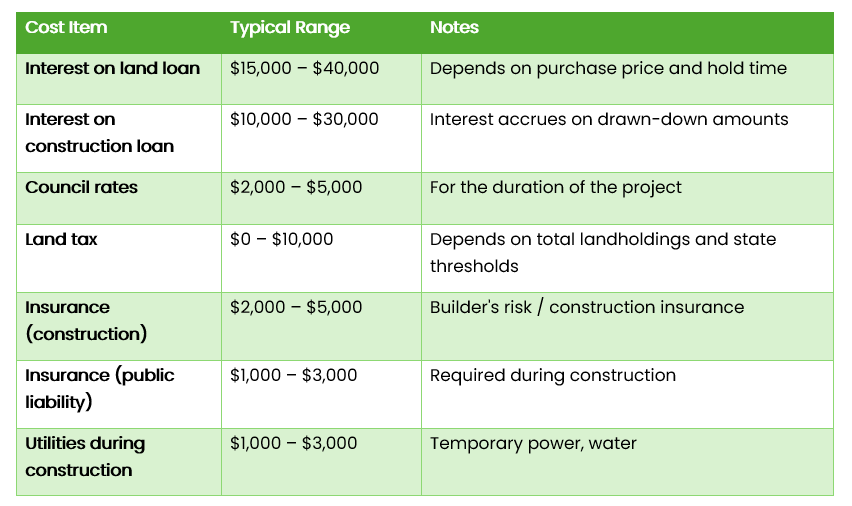
Subtotal: $31,000 – $96,000
Holding costs are often underestimated because people forget that interest, rates, and insurance accumulate every month the project is not finished. Delays cost real money.
Category 6: Sales and Exit Costs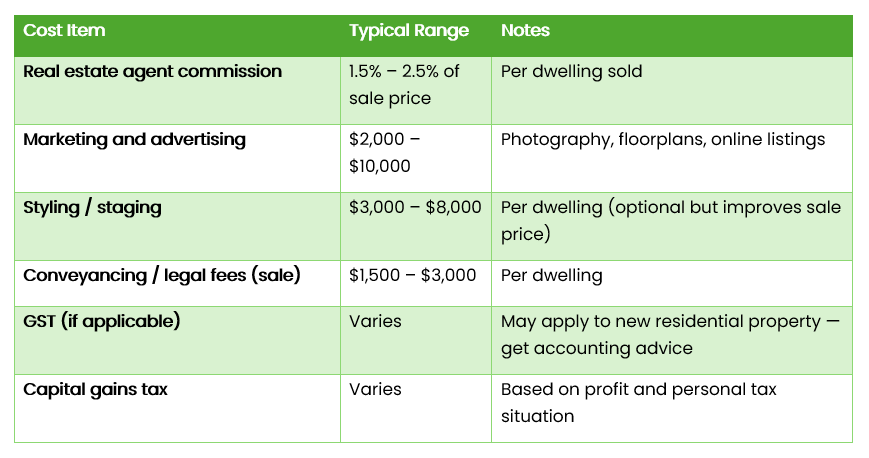 Subtotal (for 2 dwellings): $18,000 – $60,000
Total Project Cost Summary (Duplex Example)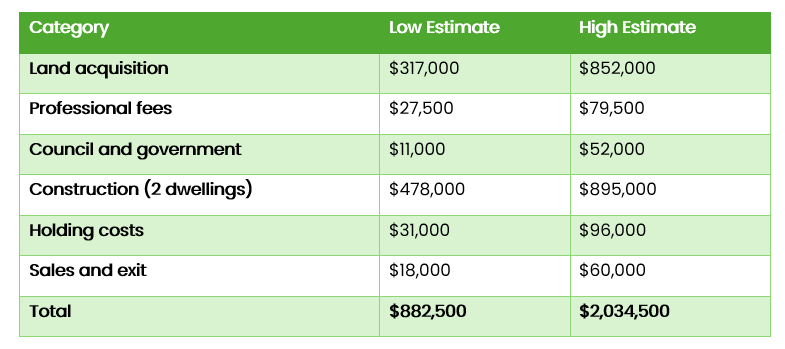 The wide range reflects the reality that costs vary enormously based on location, project type, and market conditions. A duplex in a regional area will cost far less than townhouses in a metropolitan capital city.
The Three Costs That Catch People Out
- Section 94 contributions: Can add $10,000 to $30,000 per dwelling. Always check with council before buying.
- Holding costs: Every month of delay costs you interest, rates, and insurance. A three-month delay on a $1 million project can cost $15,000 to $25,000 in additional holding costs alone.
- Services upgrades: If the site needs a sewer main extension or power upgrade, this can add $10,000 to $50,000 that was not in your original budget.
FAQs
How much profit should I expect from a duplex development?
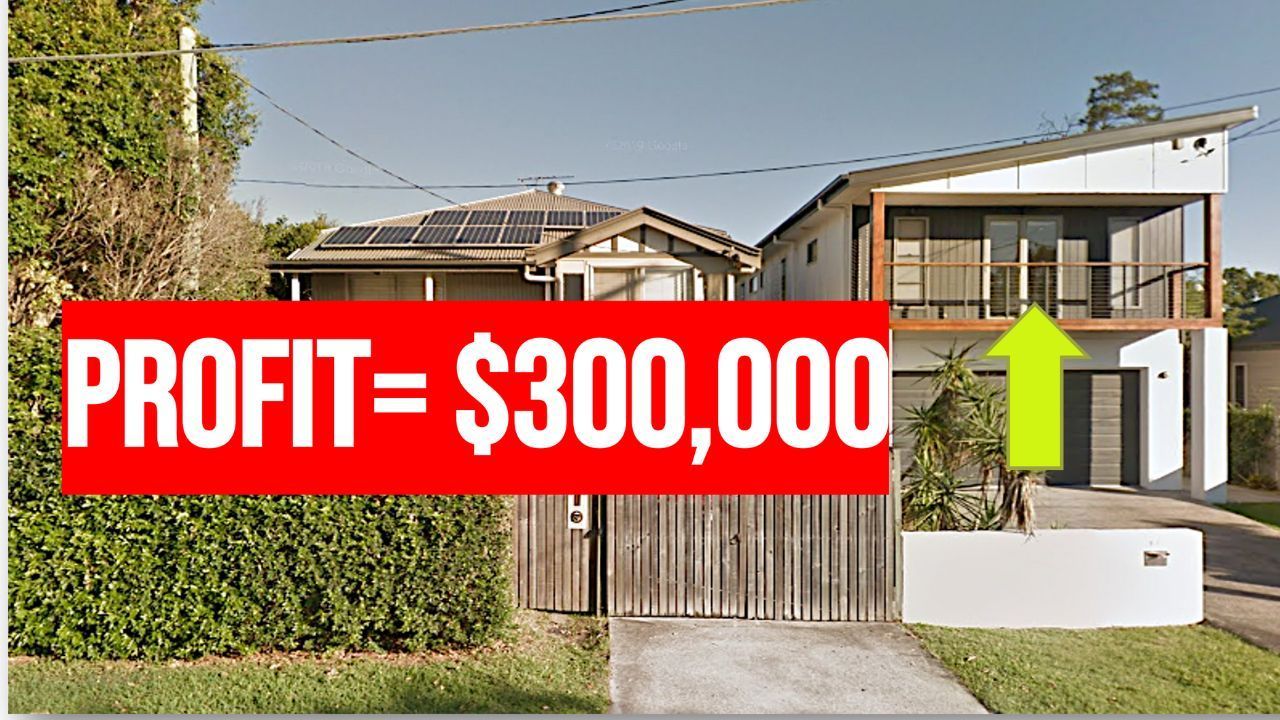
A well-structured duplex project in a solid location typically produces $150,000 to $300,000 in profit. This depends on your purchase price, construction costs, and end sale values. Always run a detailed feasibility before committing.
What is the cheapest type of property development to start with?
Subdivision (splitting land into two or more lots without building) has the lowest upfront costs because there is no construction involved. Wholesale property deals also have minimal costs as you are assigning contracts rather than buying and building.
How much contingency should I include in my budget?
Budget a 10 percent contingency on total project costs. This covers unexpected expenses like soil issues, council-required modifications, or minor construction variations.
Do I need to pay GST on property development profits?
Potentially. If you are carrying on a business of property development, GST may apply to the sale of new residential property. Always get specific advice from your accountant before starting a project.
Can I reduce costs by project managing myself?
You can, but only if you have the knowledge and time. Many developers manage the project themselves (engaging and coordinating specialists) rather than hiring a separate project manager. The specialist team does the technical work — you manage the commercial outcome.
What costs can I claim as tax deductions?
This depends on your structure and whether the development is held as trading stock or capital. Your accountant will advise on deductions for interest, professional fees, depreciation, and other costs. Structure this correctly from day one.
Think Property Club | thinkpropertyclub.com.au
Want to learn how to analyse deals like this every week?
Think Property Club teaches you how to spot opportunities, run feasibilities, and make confident decisions — using the same system that has helped students create over $50 million in property profits.
Discover the simple process behind $50M in property
Learn how to swipe this strategy to generate an extra $100K+ per year on the side, without using your own money.
Recent Posts
Categories
All Categorieshow to analyse a development site
property development australia
property development costs australia
property development finance australia
property development guide australia
property development process australia
property development vs buy and hold
