
Step-by-Step Guide to Property Development in Australia
What Does Property Development Actually Look Like in Australia?
Most Australians hear "property development" and picture cranes, high-rises, and multi-million dollar budgets.
That is not what we are talking about.
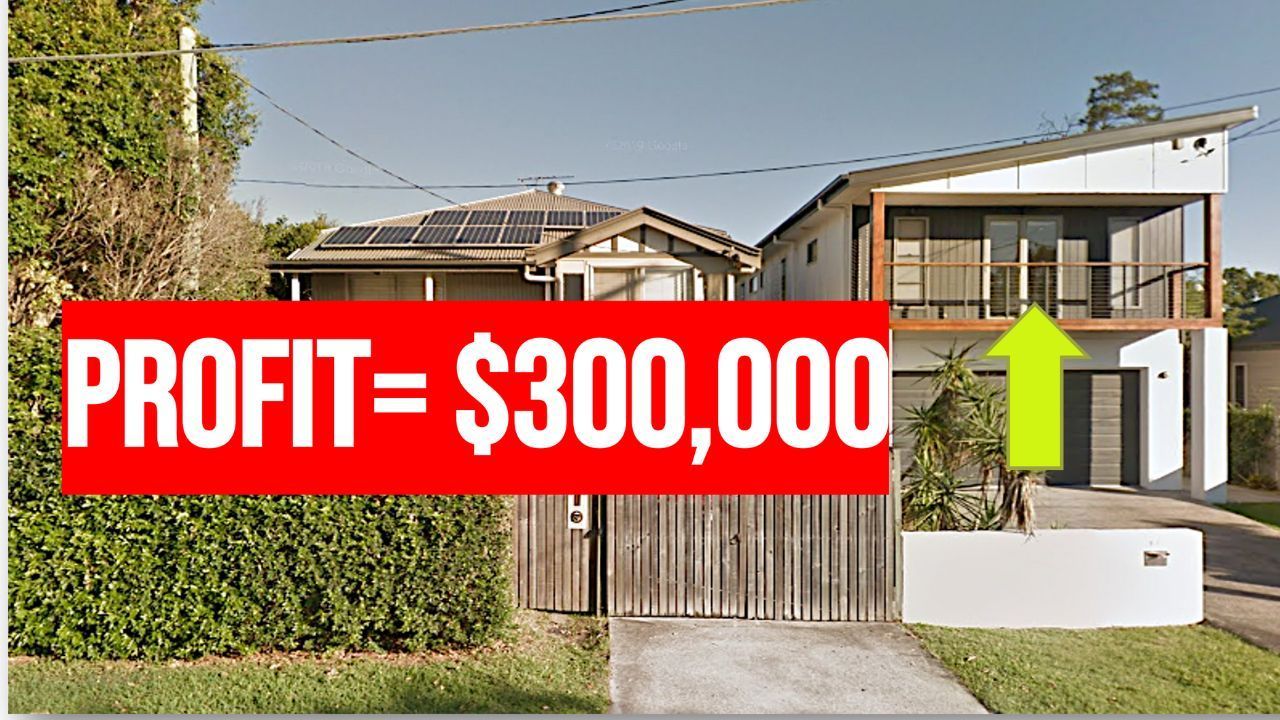
Small-scale property development in Australia typically involves projects like subdividing a block of land, building a duplex, or constructing two to four townhouses on a single site. These projects can generate $100,000 to $500,000 in equity, and many of them can be completed without using your own money.
This guide breaks down the entire process from start to finish so you can see exactly what is involved.
The 12-Step Property Development Process
Step 1: Education and Mindset
Before you touch a single property, you need to understand how development works. This is not buying a house and hoping the market goes up. This is about creating value through strategy.
You need to understand:
- How to read zoning maps
- How to identify the highest and best use of a site
- How subdivisions and small developments create equity
- How to structure deals with joint venture partners
Most successful developers spend their first one to two months learning the system before analysing a single deal.
Step 2: Market Research and Area Selection
Not every suburb is suitable for development. You need areas where:
- Zoning allows subdivision or multi-dwelling construction (look for LMR or MDR zoning)
- There is buyer demand for the end product
- Land values support the numbers (purchase price plus costs must be less than end value)
- Council is reasonably development-friendly
Focus on understanding the local market. What are comparable properties selling for? What density does the council allow? What infrastructure is planned for the area?
Step 3: Site Identification and Analysis
This is where the skill set matters. You are looking for properties where the land value can be increased through development.
Look for:
- Corner lots (easier to subdivide and provide dual access)
- Splitter blocks (wide enough to divide into two or more lots)
- Properties with existing older homes on large blocks
- Sites with zoning that allows higher density than what currently exists
A typical development site in Australia might be a 700 to 1,000 square metre block in a suburb where the zoning allows two or more dwellings.
Step 4: Feasibility Study
Before you commit to anything, you run the numbers. A feasibility study answers one question: does this deal make money?
Here is a simplified example:
|
Item |
Amount |
|---|---|
|
Purchase price |
$450,000 |
|
Stamp duty + legals |
$25,000 |
|
Demolition (if needed) |
$15,000 |
|
Council fees and DA costs |
$20,000 |
|
Construction (2 townhouses) |
$500,000 |
|
Holding costs (interest, rates, insurance) |
$40,000 |
|
Sales and marketing |
$25,000 |
|
Total costs |
$1,075,000 |
|
End value (2 townhouses at $650,000 each) |
$1,300,000 |
|
Profit |
$225,000 |
These numbers are indicative and will vary by location, but they illustrate the principle: you create value by transforming the site, not by waiting for the market to rise.
Step 5: Secure the Site
Once your feasibility checks out, you secure the property under contract. This typically involves:
- Making an offer subject to due diligence (usually 14 to 21 days)
- During due diligence: confirming zoning, getting preliminary advice from a town planner, verifying soil conditions, and locking in your numbers
- If everything checks out, the contract goes unconditional
Many developers use a joint venture partner at this stage. The JV partner provides the capital for the purchase while the developer provides the deal, the knowledge, and the project management.
Step 6: Engage Your Specialist Team
You do not do this alone. A small-scale development requires:
- Town planner: Confirms what you can build and manages the approval process
- Architect or draftsperson: Designs the development to maximise the site
- Surveyor: Provides site survey and boundary identification
- Builder: Constructs the development (use builders with a proven track record — at least 10 completed projects)
- Solicitor: Handles contracts, subdivision paperwork, and settlement
- Broker: Arranges construction finance
- Accountant: Structures the deal for tax efficiency
- Quantity surveyor: Inspects the build at each stage to protect your interests
Step 7: Development Approval (DA)
Your town planner lodges a Development Application with the local council. This process typically takes:
- Complying development: 10 to 20 days (if the project meets all pre-set council rules)
- Standard DA: 40 to 90 days (most common for small-scale development)
- Complex or contested DA: 3 to 12 months (rare for small projects but possible)
Council will assess your plans against their guidelines. If your town planner has done the pre-consultation work correctly, approvals should be straightforward.
Step 8: Construction Finance
Once DA is approved, your broker arranges construction finance. For a small development:
- Loan-to-value ratio: Typically 65 to 80 percent of the total project cost
- Interest rate: Variable, usually 1 to 2 percent above standard home loan rates
- Draw-down structure: The bank releases funds in stages as construction progresses
If you are using a JV structure, the capital partner may fund the project directly, and the bank may not be involved at all.
Step 9: Construction
Your builder constructs the development according to the approved plans. During construction:
- A quantity surveyor inspects at each stage (slab, frame, lock-up, fixing, completion)
- You or your project manager monitor progress and timelines
- Variations (changes to the original plans) should be minimised — they add cost and time
Typical construction timeline for a duplex or two townhouses: 6 to 10 months.
Step 10: Subdivision and Titles
If your project involves subdivision (splitting one title into two or more), this process happens during or after construction:
- Your surveyor prepares the subdivision plan
- Council and the relevant land titles office approve it
- New individual titles are created for each lot or dwelling
This step is critical because individual titles allow you to sell each property separately, which is where the value uplift occurs.
Step 11: Sale or Hold
You now have completed dwellings on individual titles. You have two options:
- Sell: List and sell the completed properties. This is where you realise your profit.
- Hold: Keep one or more properties for rental income and long-term growth. Many developers sell one to recover costs and hold one for cashflow.
Step 12: Repeat and Compound
Your first deal gives you the confidence, the track record, and often the capital to do it again. The compounding effect is powerful:
- Deal one builds your skills and your reputation
- Deal two accelerates because you now have experience and relationships
- Deal three and beyond — you are operating a property development business
What You Do Not Need to Get Started
- You do not need a big deposit. Joint venture structures allow you to develop using other people's capital in exchange for a share of the profit.
- You do not need construction experience. Your specialist team (builder, town planner, surveyor) provides the technical expertise.
- You do not need to renovate. Small-scale development is about creating new value through subdivision and construction, not painting walls and hoping for the best.
Real Numbers From Real Projects
Everyday Australians are already doing this:
- A police officer earning $85,000 per year completed a wholesale deal that made $187,000 in his first 12 months
- A teacher earning $75,000 per year moved from her first deal into a JV project that produced $134,000
- A couple — an IT professional and a retail manager on a combined $140,000 — completed a small development producing $263,000
These are not property professionals. They learned a system, followed the steps, and used specialists to manage the technical work.
FAQs
How much money do you need to start property development in Australia?
You can start with little to no capital if you use joint venture structures. In a JV, a capital partner funds the project while you provide the deal and project management. Many developers start this way and transition to using their own capital as they build equity.
How long does a small-scale property development take from start to finish?
A typical duplex or two-townhouse project takes 12 to 18 months from site purchase to completion. This includes 1 to 3 months for DA approval, 6 to 10 months for construction, and the balance for settlement and sales.
Is property development risky?
All property carries risk, but development risk is largely managed through due diligence, feasibility analysis, and the right specialist team. Deals typically go wrong when people skip steps, ignore the feasibility numbers, or fail to use qualified specialists.
Do I need a licence to develop property in Australia?
No. You do not need a builder's licence to be a property developer. The builder holds the licence. You manage the project and the commercial outcome.
What is the difference between property development and property investing?
Property investing typically means buying an existing property and waiting for it to grow in value over time. Property development means actively creating value — through subdivision, construction, or best-use analysis — and realising that value within 12 to 18 months.
Can I develop property while working a full-time job?
Yes. Many small-scale developers run projects part-time alongside their day job. The key is having the right specialist team in place so you are managing outcomes, not doing the manual work yourself.
What size project should I start with?
Start small. A single subdivision or a duplex project is ideal for a first deal. Avoid jumping into large multi-unit developments on your first project — complexity increases risk, and the compounding approach (one deal, then two, then scale) produces better long-term results.
Ready to learn the system?
Think Property Club teaches everyday Australians how to find, structure, and profit from small-scale property development. Our 4S Framework — System, Strategies, Specialists, Support — gives you the structure to develop with confidence.
[Register for our free webinar and see how the system works →]
Think Property Club | thinkpropertyclub.com.au
Want to learn how to analyse deals like this every week?
Think Property Club teaches you how to spot opportunities, run feasibilities, and make confident decisions — using the same system that has helped students create over $50 million in property profits.
Discover the simple process behind $50M in property
Learn how to swipe this strategy to generate an extra $100K+ per year on the side, without using your own money.
Recent Posts
Categories
All Categorieshow to analyse a development site
property development australia
property development costs australia
property development finance australia
property development guide australia
property development process australia
property development vs buy and hold
