
Property Development vs Buy-and-Hold Investing: Which Strategy Builds Wealth Faster?
Two Paths to Property Wealth
Most Australians who think about property wealth think about one strategy: buy a property, hold it for 10 to 20 years, and hope it goes up in value.
This is buy-and-hold investing. It works, but it is slow.
There is another path: property development. This is where you actively create value — through subdivision, construction, or best-use analysis — and realise that value within 12 to 18 months.
Both strategies can build wealth. But they work very differently, suit different people, and produce very different results in different timeframes.
Here is an honest comparison.
Buy-and-Hold Investing: How It Works
You purchase an existing property, rent it out, and hold it for capital growth over time.
The Numbers
|
Metric |
Typical Range |
|---|---|
|
Average annual capital growth (Australian residential, long-term) |
5% to 7% |
|
Gross rental yield |
3% to 5% |
|
Net rental yield (after expenses) |
1% to 3% |
|
Time to double property value (at 6% growth) |
~12 years |
|
Typical deposit required |
10% to 20% of purchase price |
Example: Buy-and-Hold Over 10 Years
|
Item |
Amount |
|---|---|
|
Purchase price |
$600,000 |
|
Deposit (20%) |
$120,000 |
|
Property value after 10 years (at 6% annual growth) |
$1,074,000 |
|
Capital growth |
$474,000 |
|
Rental income (net, after all expenses, over 10 years) |
~$60,000 |
|
Loan interest paid (over 10 years) |
~$240,000 |
|
Net wealth created |
~$294,000 |
That is $294,000 in wealth created over 10 years, using $120,000 of your own capital.
Pros of Buy-and-Hold
- Relatively passive once the property is purchased
- Leverages bank lending (you control a $600K asset with $120K)
- Long-term capital growth has been reliable in Australia historically
- Rental income covers most holding costs
- Tax benefits (depreciation, negative gearing)
Cons of Buy-and-Hold
- Slow — meaningful wealth takes 10 to 20 years
- Income is capped by rental yields (often negative cashflow after expenses)
- Relies on market movement (you do not control the outcome)
- Requires a large deposit
- Tenant management and maintenance costs
- You are buying at "retail" price — all the easy profit has already been captured
Property Development: How It Works
You find a site with development potential, add value through subdivision or construction, and sell the finished product for more than your total costs.
The Numbers
|
Metric |
Typical Range |
|---|---|
|
Profit per deal (small-scale: duplex, townhouse) |
$100,000 to $300,000 |
|
Project duration |
12 to 18 months |
|
Deals per year (realistic for active developer) |
1 to 3 |
|
Capital required (using JV) |
$0 (JV partner funds the deal) |
|
Capital required (using own equity) |
20% to 35% of total project cost |
Example: Development Over 12 Months
|
Item |
Amount |
|---|---|
|
Total project cost |
$1,100,000 |
|
End value (2 townhouses) |
$1,400,000 |
|
Profit |
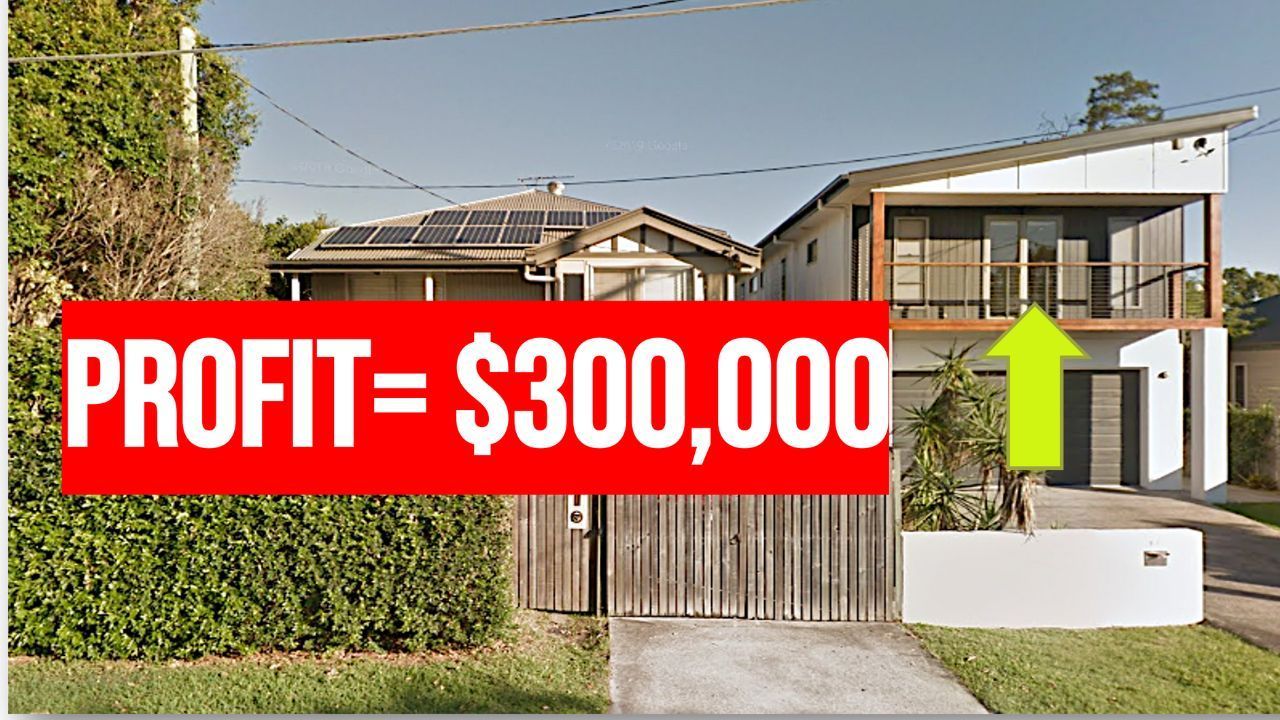
$300,000 |
|
Your equity contribution (JV structure) |
$0 |
|
Your equity contribution (self-funded, 25%) |
$275,000 |
Using a JV structure, you create $150,000 (your 50% share) in 12 months without investing your own capital.
Using your own equity, you create $300,000 in 12 months on a $275,000 equity contribution — a 109% return.
Pros of Development
- Active equity creation — you control the outcome
- Faster returns — profits within 12 to 18 months, not 10 to 20 years
- Can be done without your own money (JV structures, wholesale)
- Higher returns per dollar of equity
- Compounding is accelerated (reinvest profits into the next deal)
- You buy "wholesale" — creating value rather than paying retail
Cons of Development
- Active — requires knowledge, time, and management
- Higher risk per project than holding a rental property
- Requires education (you need to know what you are doing)
- More complex (council approvals, construction, specialist coordination)
- Not passive — you earn by creating, not by waiting
- Tax implications differ (development profits may be taxed as ordinary income, not capital gains)
The Direct Comparison
|
Factor |
Buy-and-Hold |
Development |
|---|---|---|
|
Time to first profit |
5 to 10+ years |
12 to 18 months |
|
Capital required |
$60,000 to $150,000+ (deposit) |
$0 (JV) to $250,000+ (self-funded) |
|
Annual return potential |
8% to 12% (growth + yield + leverage) |
30% to 100%+ on equity |
|
Control over outcome |
Low (market-dependent) |
High (value created through strategy) |
|
Time commitment |
Low (passive) |
Medium (active management) |
|
Risk level |
Lower (per individual deal) |
Higher (per individual deal) |
|
Scalability |
Limited by deposit and borrowing capacity |
Scalable through JVs and retained profits |
|
Tax treatment |
Capital gains (50% discount if held 12+ months) |
Potentially ordinary income (no CGT discount) |
|
Skill required |
Low |
Medium to high |
The Wealth Creation Comparison Over 5 Years
Scenario A: Buy-and-Hold Investor
- Buys 1 property per year (deposit + borrowing capacity permitting)
- After 5 years: owns 3 to 5 properties, total equity created: $200,000 to $400,000 (mostly unrealised paper gains)
Scenario B: Active Developer
- Completes 2 deals per year (using JVs initially, then own capital)
- After 5 years: 10 completed deals, total profit realised: $500,000 to $1,500,000 (cash profit, not paper gains)
The difference is not just the dollar amount. It is the nature of the wealth. Buy-and-hold creates paper equity that requires you to sell or refinance to access. Development creates cash profit that you can reinvest, save, or use immediately.
Which Strategy Is Right for You?
Buy-and-hold may suit you if:
- You want a passive strategy that requires minimal time
- You have a strong income and borrowing capacity
- You are comfortable waiting 10 to 20 years for significant returns
- You prefer lower risk per deal
Development may suit you if:
- You want to actively create wealth rather than wait for it
- You are willing to learn a system and develop new skills
- You want to replace or exceed your income within 1 to 3 years
- You want to build wealth without needing a large deposit
- You want control over the outcome rather than relying on market movement
Many experienced property people do both — they develop for cash profit and hold selected properties from their developments for long-term growth. This combines the best of both strategies.
FAQs
Can I do both development and buy-and-hold?
Yes. Many developers sell one property from a project to take profit and hold the other for long-term rental income and growth. This "sell one, hold one" approach is a common strategy.
Is property development more stressful than investing?
It is more active and requires more decision-making. Whether that is stressful depends on your personality and preparation. Having a system and a specialist team significantly reduces stress because you are not figuring everything out on your own.
Which strategy is better for tax?
It depends. Buy-and-hold benefits from the 50 percent CGT discount (if held for more than 12 months). Development profits may be taxed as ordinary income. Your accountant should advise on the best structure for your situation.
Do property developers still need a day job?
Many developers start while working their day job and transition as their development income grows. A single profitable deal can replace an entire year's salary. Some students transition within their first 12 months; others build gradually over two to three years.
What is the biggest advantage of development over buy-and-hold?
Speed. You can create $100,000 to $300,000 in 12 to 18 months through development, versus waiting 5 to 10 years for similar unrealised gains through buy-and-hold. You also do not need to start with a large deposit.
Want to see how development compares to your current property strategy?
Think Property Club shows you how to actively create wealth through property development — using the same system that has helped everyday Australians generate over $50 million in property profits.
[Register for our free webinar →]
Think Property Club | thinkpropertyclub.com.au
Want to learn how to analyse deals like this every week?
Think Property Club teaches you how to spot opportunities, run feasibilities, and make confident decisions — using the same system that has helped students create over $50 million in property profits.
Discover the simple process behind $50M in property
Learn how to swipe this strategy to generate an extra $100K+ per year on the side, without using your own money.
Recent Posts
Categories
All Categorieshow to analyse a development site
property development australia
property development costs australia
property development finance australia
property development guide australia
property development process australia
property development vs buy and hold
