
Property Development Process Explained: From Site to Sale
How Does Property Development Actually Work in Australia?
Property development is not as complicated as most people think. At its core, the process is straightforward: you find a site, add value through development, and sell the finished product for more than you paid.
The challenge is knowing what to do at each stage, in what order, and who to involve.
This article breaks down the full development process from site identification to final sale, so you can see exactly what happens at every phase.
Phase 1: Discovery (Weeks 1 to 4)
Finding the Right Site
Every development starts with a site. But not every property is a development site. You are looking for land where the zoning, the size, and the location allow you to create more value than currently exists.
What makes a good development site:
- Zoning: The local council allows subdivision or multi-dwelling construction (look for R2, R3, LMR, or MDR zones depending on the state)
- Size: The block is large enough to subdivide or build multiple dwellings (typically 600 square metres and above)
- Shape: Regular-shaped lots are easier to develop than irregular ones
- Access: Corner lots or lots with dual street access are ideal for subdivision
- Location: Areas with strong buyer demand and sales evidence for the end product
At this stage you should be looking at 10 to 20 potential sites per week. Most will not stack up when you run the numbers. That is normal. You are filtering for the right deal, not forcing a deal to work.
Running a Quick Feasibility
Before you go any further, run a back-of-envelope feasibility:
- What can I build here? (Check zoning and council guidelines)
- What will the end product sell for? (Check comparable sales)
- What will it cost? (Rough construction costs, council fees, professional fees)
- Is there enough margin? (Aim for a minimum 20 percent profit on total costs)
If the numbers do not work, move on. If they do, proceed to due diligence.
Phase 2: Due Diligence (Weeks 4 to 8)
Locking Down the Site
Once you have identified a strong site, you make an offer subject to due diligence. This gives you 14 to 21 days to verify everything before committing.
During due diligence:
- Town planner pre-consultation: Confirm what the council will approve on this site. This is critical. A 15-minute conversation with a town planner can save you months of wasted effort.
- Site survey: A registered surveyor confirms boundaries, easements, and site levels.
- Soil test: Determines foundation requirements and construction costs. Clay-heavy soils or reactive sites increase costs.
- Contamination check: Especially important for former commercial or industrial sites.
- Services check: Confirm water, sewer, power, and gas connections are available and adequate.
Detailed Feasibility
Now you firm up the numbers with real quotes and confirmed data:
|
Cost Category |
Typical Range (Duplex Project) |
|---|---|
|
Land purchase |
$350,000 – $600,000 |
|
Stamp duty |
$12,000 – $25,000 |
|
Legal fees (purchase) |
$2,000 – $4,000 |
|
Town planner |
$5,000 – $15,000 |
|
Architect / draftsperson |
$8,000 – $20,000 |
|
DA fees (council) |
$5,000 – $15,000 |
|
Construction (per dwelling) |
$220,000 – $350,000 |
|
Holding costs |
$20,000 – $50,000 |
|
Subdivision costs |
$10,000 – $30,000 |
|
Sales and marketing |
$15,000 – $30,000 |
These ranges vary significantly by state, council area, and project complexity. Always work with confirmed quotes, not estimates.
Phase 3: Approvals (Months 2 to 5)
Development Application (DA)
Your town planner and architect prepare and lodge the DA with council. This package includes:
- Architectural plans (site plan, floor plans, elevations)
- Statement of Environmental Effects
- Stormwater management plan
- Landscaping plan
- Shadow diagrams (if required)
- Traffic and parking assessment (if required)
Council assesses the application against their Development Control Plan (DCP) and any relevant state planning policies.
Typical DA timeframes:
- Complying development (CDC): 10 to 20 business days
- Standard DA: 40 to 90 business days
- DA with neighbour notification: 60 to 120 business days
A good town planner will pre-consult with council before lodging to address potential issues upfront and reduce delays.
Construction Certificate (CC)
Once DA is approved, you need a Construction Certificate before building can start. This involves:
- Detailed engineering plans
- Structural certification
- BASIX certificate (energy and water efficiency — NSW) or equivalent
- Appointment of a Principal Certifying Authority
CC typically takes 2 to 4 weeks after DA approval.
Phase 4: Construction (Months 5 to 12)
Pre-Construction
Before the builder starts:
- Finalise construction contract (fixed-price preferred)
- Confirm construction timeline and milestones
- Arrange construction finance draw-down schedule
- Appoint a quantity surveyor to inspect at each stage
Build Stages
A typical residential construction follows these stages:
- Site preparation and excavation: 1 to 2 weeks
- Slab / foundations: 2 to 3 weeks
- Frame: 2 to 4 weeks
- Roof and lock-up: 2 to 3 weeks
- Internal fit-out (plumbing, electrical, plastering): 6 to 10 weeks
- Finishing (kitchen, bathrooms, flooring, painting): 4 to 6 weeks
- External works (landscaping, driveway, fencing): 2 to 4 weeks
Total construction time for a duplex or two-townhouse project: 6 to 10 months.
Your quantity surveyor inspects at each milestone (slab, frame, lock-up, fixing, completion) to confirm the work meets the approved plans and building standards before the next progress payment is released.
Phase 5: Completion and Sale (Months 12 to 18)
Subdivision and Title Creation
If your project involves creating separate titles (which most do), the subdivision process runs during or after construction:
- Surveyor prepares the subdivision plan
- Council endorses the plan
- Land titles office issues new individual titles
Individual titles are essential. They allow each dwelling to be sold separately, which is where the value uplift occurs. Two townhouses on individual titles are worth significantly more than the same two townhouses on a single title.
Sale
Once titles are created, you list and sell the completed dwellings:
- Engage a local agent with strong sales experience in the area
- Price based on comparable evidence (what similar properties have sold for)
- Allow 4 to 12 weeks for sale and settlement
Some developers pre-sell off the plan during construction to lock in buyers and reduce risk. Others wait until completion to maximise sale price.
Settlement and Profit
Once settlement occurs:
- The bank loan is repaid
- All project costs are settled
- JV partner receives their agreed share (if applicable)
- Your profit is the balance
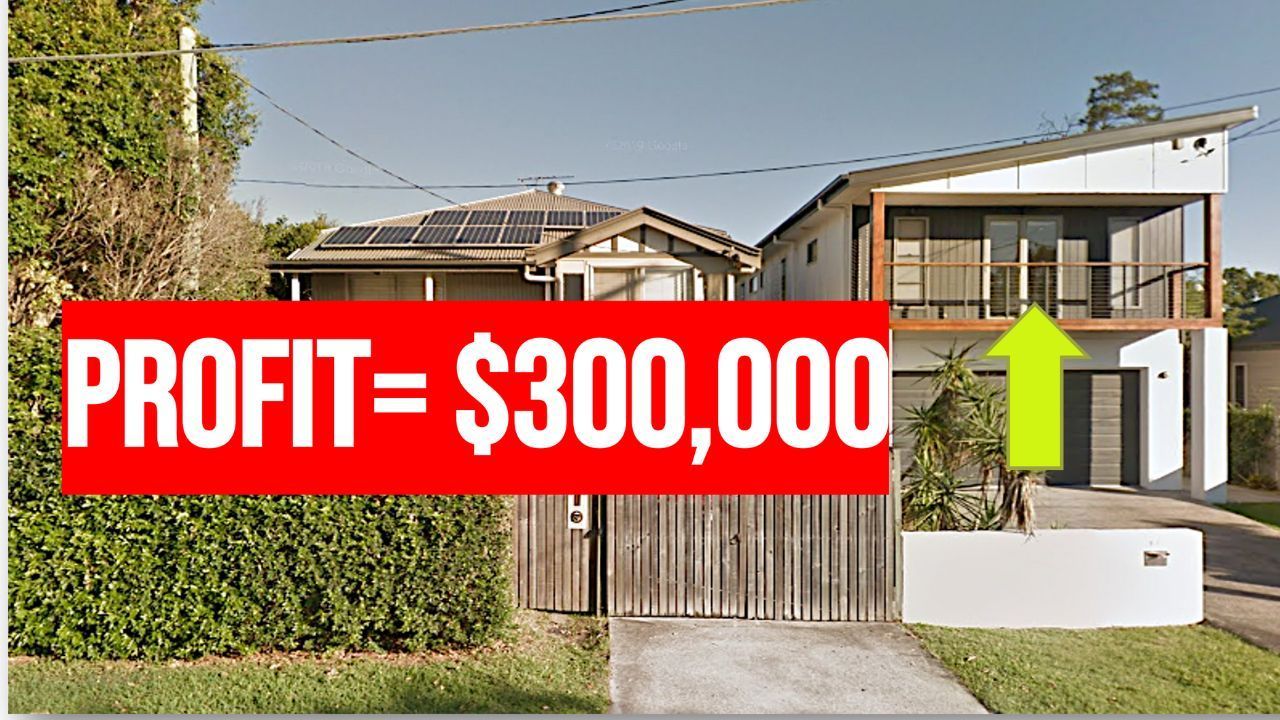
A well-structured duplex project in the right location can produce $150,000 to $300,000 in profit. The exact number depends on your purchase price, construction costs, and end sale values.
What Most People Get Wrong
The biggest mistakes first-time developers make:
- Skipping due diligence: Falling in love with a site before confirming the numbers work
- Not using a town planner early: Council knock-backs waste months and money
- Choosing the cheapest builder: The cheapest quote often leads to the most expensive build
- Over-capitalising: Building a premium product in an area that does not support premium prices
- Going too big on the first deal: A 10-unit development as a first project almost always goes wrong — start small and compound
FAQs
What is the minimum block size for subdivision in Australia?
This varies by council and state. In most areas, you need a minimum of 400 to 500 square metres per lot after subdivision. Some councils require 600 square metres or more. Always check your local council's DCP for minimum lot sizes.
Can I develop property without a builder's licence?
Yes. As a developer, you manage the project and the commercial outcome. The builder holds the licence and is responsible for the construction. You hire the builder as part of your specialist team.
How do I find development sites?
Look on standard property portals (Domain, REA) for properties on larger blocks in areas with favourable zoning. Build relationships with local agents and tell them you are looking for development sites. Many of the best deals come from agents who call you first because they know what you are looking for.
What is the difference between a DA and a CDC?
A Development Application (DA) is assessed by council staff against local and state planning rules. A Complying Development Certificate (CDC) is a faster pathway available when your project meets all preset standards. CDC is quicker but less flexible — if your project does not fit the standard templates, you need a DA.
Do I need my own money to develop property?
Not necessarily. Many first-time developers use joint venture structures where a capital partner funds the project and the developer provides the deal, the management, and the expertise. Profits are typically split 50/50.
What profit margin should I target?
Aim for a minimum 20 percent profit on total project costs. This provides a buffer for unexpected expenses and market movement. A project with less than 15 percent margin is higher risk.
Want to see the full system in action?
Think Property Club's 4S Framework — System, Strategies, Specialists, Support — gives you the structure to develop property with confidence, even if you have never done a deal before.
[Register for our free webinar →]
Think Property Club | thinkpropertyclub.com.au
Want to learn how to analyse deals like this every week?
Think Property Club teaches you how to spot opportunities, run feasibilities, and make confident decisions — using the same system that has helped students create over $50 million in property profits.
Discover the simple process behind $50M in property
Learn how to swipe this strategy to generate an extra $100K+ per year on the side, without using your own money.
Recent Posts
Categories
All Categorieshow to analyse a development site
property development australia
property development costs australia
property development finance australia
property development guide australia
property development process australia
property development vs buy and hold
